Gulf Breeze UFO Wave
Hundreds of people in Gulf Breeze, Florida saw UFOs over years. Ed Walters' photographs sparked controversy, but beyond his story, dozens of credible witnesses reported the same craft. The 'Bubba' UFO that buzzed Pensacola Beach became local legend.
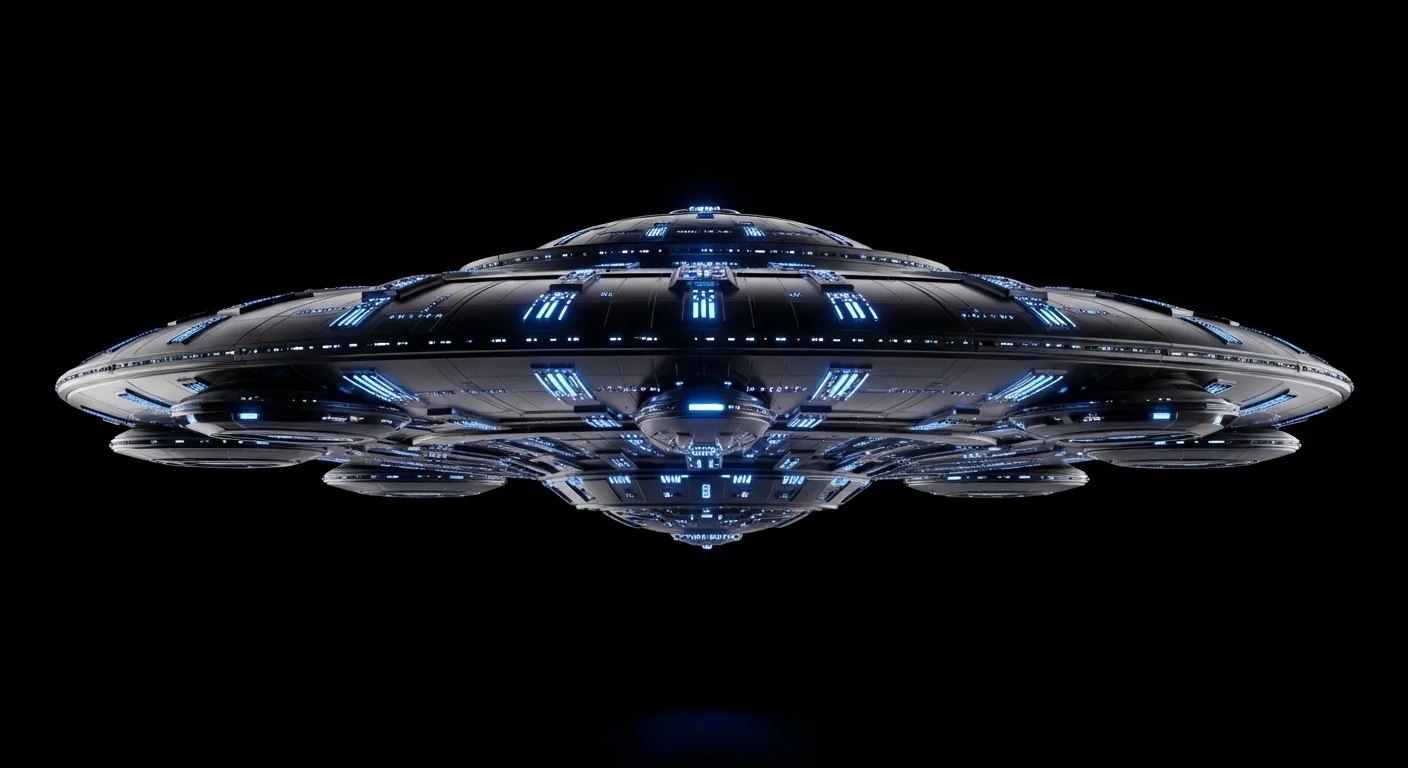
The story of Gulf Breeze, Florida and its extraordinary association with unidentified flying objects is, at its heart, a story about what happens when a small American town becomes the epicenter of a phenomenon it neither invited nor fully understands. Beginning on the evening of November 11, 1987, when a local building contractor named Ed Walters photographed what he claimed was a luminous, structured craft hovering near his home, the coastal community of Gulf Breeze was drawn into a controversy that would span decades, attract international attention, divide the UFO research community, and ultimately raise questions far more interesting than whether one man’s photographs were genuine. For while Ed Walters’ role in the Gulf Breeze saga became mired in accusation and counteraccusation, what is often forgotten is that hundreds of other people in this small Florida community—people with no connection to Walters and no stake in his claims—independently reported seeing the same types of objects in the same skies, over and over again, for years on end.
A Town on the Gulf
Gulf Breeze occupies a narrow peninsula on the north shore of Pensacola Bay in Florida’s panhandle region, a community of modest homes, waterfront properties, and small businesses that had, until 1987, attracted no particular attention beyond that which any pleasant Gulf Coast town might expect. With a population of roughly six thousand, it was the kind of place where neighbors knew one another, where local businesses depended on personal relationships, and where reputation mattered in ways that it might not in a larger, more anonymous city.
The town’s geography is significant to the story. Surrounded on three sides by water—Pensacola Bay to the south and Santa Rosa Sound to the south and east—Gulf Breeze offered wide, unobstructed views of the sky in nearly every direction. The flat terrain of the Florida panhandle, combined with the reflective surfaces of the surrounding waters, meant that anything unusual in the sky was likely to be noticed by multiple observers from multiple vantage points. This would become critically important as the sightings multiplied, because the geography made it extraordinarily difficult for a single hoaxer to create illusions that would be convincing from the many different angles and distances at which witnesses reported their observations.
The military presence in the region also demands attention. Pensacola Naval Air Station, one of the Navy’s premier aviation training facilities, lies just across the bay from Gulf Breeze. Eglin Air Force Base, a sprawling installation that encompasses vast testing ranges and is home to some of the military’s most advanced weapons programs, is located roughly forty miles to the east. Whiting Field Naval Air Station, another major training facility, operates to the north. This concentration of military aviation assets meant that the skies above Gulf Breeze were regularly traversed by military aircraft of every description—helicopters, trainers, fighters, and transport planes. The local population was thoroughly familiar with the appearance and behavior of conventional military aircraft, which makes their insistence that what they were seeing was something entirely different all the more significant.
Ed Walters: The Controversial Catalyst
The Gulf Breeze saga began with Ed Walters, and any honest account of the phenomenon must grapple with both his contributions and the legitimate questions that surround them. Walters was a successful building contractor in Gulf Breeze, a respected member of the community with no prior interest in or association with UFO phenomena. On the evening of November 11, 1987, he claimed to have observed a luminous, structured craft near his home and photographed it using a Polaroid camera.
The photographs were extraordinary. They appeared to show a clearly defined, structured object—a craft with a dome-like upper portion and a ring of illuminated ports or windows around its midsection—hovering in the night sky. Unlike the blurry, ambiguous images that constitute the vast majority of UFO photographs, Walters’ images seemed to show a solid, three-dimensional object with discernible structural details. Over the following weeks and months, Walters continued to photograph similar objects, eventually accumulating a substantial portfolio of images that he shared with the local newspaper, the Gulf Breeze Sentinel, and subsequently with MUFON (the Mutual UFO Network), the largest civilian UFO investigation organization in the United States.
Walters also reported physical effects during his encounters. He described being struck by a blue beam of light from the craft that temporarily paralyzed him, lifting him slightly off the ground before releasing him. He reported hearing a humming sound and experiencing a sensation of mental communication from the occupants of the craft. These claims, combined with the dramatic photographs, quickly attracted national and international attention.
The controversy erupted when, in 1990, a model UFO was discovered in the attic of the house Walters had previously owned. The new owners found a small foam and paper model that bore a rough resemblance to the craft depicted in Walters’ photographs, along with photographs of the model taken against a dark background. For skeptics, this was the smoking gun—proof that Walters had fabricated his photographs using a simple model suspended in front of his camera.
Walters denied that the model was his, suggesting it had been planted to discredit him. His supporters pointed out that the model’s crude construction was inconsistent with the detailed, seemingly three-dimensional objects in his photographs, and that the photographs themselves—many taken with a sealed Polaroid camera that was difficult to manipulate—had passed analysis by several photographic experts. The debate over Walters’ photographs has never been definitively resolved, and it continues to divide UFO researchers to this day.
Beyond One Man’s Camera
The fixation on Ed Walters’ photographs, however, has obscured what may be the most important aspect of the Gulf Breeze phenomenon: the hundreds of independent witnesses who reported similar objects in the same area, many of them before, during, and after the Walters controversy. These witnesses had no connection to Walters, no financial stake in their reports, and in many cases no prior interest in UFOs. They included police officers, military personnel, teachers, business owners, retirees, and children, representing a cross-section of the community that would be extraordinarily difficult to dismiss as collectively deluded or conspiratorial.
The independent witnesses described objects that were remarkably consistent in their characteristics. The craft were typically described as round or oval, with orange or reddish lights arranged in a ring or pattern. Many witnesses reported a distinctive blue beam or light emanating from the bottom of the craft. The objects were silent or nearly so, hovering motionlessly before departing at high speed. These descriptions matched the general characteristics of Walters’ photographs while being reported by people who had no reason to fabricate their accounts.
Constable-grade law enforcement officers from the Escambia County Sheriff’s Office were among the witnesses, providing accounts that carried the weight of professional credibility. Military personnel stationed at nearby bases also came forward, some anonymously due to concerns about career consequences, to report observations that aligned with civilian accounts. The sheer volume and consistency of these independent reports created a body of evidence that could not be invalidated even if Walters’ photographs were entirely fraudulent.
The “Bubba” and Pensacola Beach
Among the most celebrated incidents in the Gulf Breeze wave was the appearance of what locals came to call the “Bubba”—a craft that was observed in broad daylight by multiple witnesses over Pensacola Beach. Unlike many UFO sightings, which occur at night under conditions that make identification difficult, the Bubba sighting took place in clear daylight conditions that allowed witnesses to observe the object in detail.
The witnesses described a structured craft hovering motionlessly over the beach area, close enough to discern its shape and surface characteristics. The object remained in view for an extended period, long enough for multiple people to observe it, discuss what they were seeing, and attempt to photograph it. The daylight conditions and the number of witnesses made this one of the most difficult sightings in the Gulf Breeze series to dismiss.
The Bubba became part of local folklore, a touchstone in conversations about the Gulf Breeze phenomenon. For residents who had been uncertain about the reality of the sightings, the daylight observation over a crowded public beach provided a level of evidential weight that nighttime lights, however impressive, could not match.
MUFON and the Investigation
The Gulf Breeze wave attracted significant attention from the Mutual UFO Network, which mounted one of its most extensive investigations to document and analyze the phenomenon. MUFON investigators conducted hundreds of witness interviews, collected and analyzed photographs and video footage, cataloged sighting reports, and attempted to identify patterns in the timing, location, and characteristics of the observations.
The investigation produced several notable findings. First, the sightings were not concentrated around Ed Walters’ location but were distributed across a wide geographic area encompassing Gulf Breeze, Pensacola Beach, and surrounding communities. This distribution pattern was inconsistent with a single-source hoax and suggested a genuine phenomenon operating over a broad area. Second, the sightings demonstrated temporal patterns, with certain periods producing clusters of reports followed by relative quiet, a pattern that is characteristic of genuine wave phenomena and difficult to produce through coordinated fabrication.
Third, and perhaps most significantly, MUFON investigators were able to document cases in which multiple independent witnesses reported the same object from different locations at the same time, allowing for triangulation of the object’s position and apparent size. These corroborated sightings were particularly valuable because they eliminated the possibility that individual witnesses were misidentifying conventional objects or experiencing some form of perceptual error.
The investigation was not without controversy within the MUFON organization itself. Some investigators believed that the focus on Ed Walters was contaminating the broader investigation, while others argued that Walters’ case, whatever its merits, had brought attention to a genuine phenomenon that might otherwise have gone unnoticed. This internal debate reflected the broader tension within UFO research between the need for rigorous investigation and the risk of being associated with potentially fraudulent cases.
Shoreline Park: The Skywatch Capital
As word of the Gulf Breeze sightings spread, the town became a destination for UFO enthusiasts, researchers, and curious visitors from across the country and around the world. Shoreline Park, a waterfront green space offering panoramic views of Pensacola Bay and the surrounding sky, became the unofficial headquarters of what grew into a regular skywatch community.
On any given evening, particularly during periods of heightened sighting activity, dozens of people could be found at Shoreline Park, cameras and binoculars at the ready, scanning the sky for unusual lights. The atmosphere combined the earnestness of scientific observation with the camaraderie of a social gathering, as longtime watchers shared their experiences with newcomers and debated the significance of what they had seen.
The skywatches produced their own body of evidence. Multiple observers simultaneously watching the same section of sky could confirm one another’s observations in real time, eliminating the possibility of individual misperception. Video cameras captured footage that could be reviewed and analyzed later. The collective nature of the observations—many eyes watching the same sky at the same time—provided a form of verification that isolated individual sightings could not.
The regular sightings at Shoreline Park also created an unusual natural experiment. Over time, the skywatch community developed a collective expertise in identifying the various conventional objects that crossed the Gulf Breeze sky—aircraft from the nearby military bases, satellites, meteors, and atmospheric phenomena. This accumulated experience made the observers increasingly adept at distinguishing the ordinary from the extraordinary, strengthening the evidential value of those sightings that the experienced watchers could not explain.
Military Connections and Speculations
The proximity of Gulf Breeze to major military installations inevitably generated speculation about a connection between the sightings and classified military programs. The Pensacola Naval Air Station and Eglin Air Force Base were both involved in advanced aviation research and testing, and the possibility that the Gulf Breeze objects were experimental military aircraft could not be entirely dismissed.
However, several factors argued against a purely military explanation. The objects were frequently observed hovering motionlessly—a capability that, while not impossible for certain types of military aircraft, was not characteristic of any known platform operating in the area. The blue beam reported by multiple witnesses was unlike any known military technology. And the sheer duration of the phenomenon—years of sightings, not a brief testing period—was inconsistent with the typical pattern of military flight tests, which are conducted over defined periods and in designated test areas.
Some researchers speculated that the military was not producing the objects but rather observing them—that the concentration of military assets in the Pensacola area was related to monitoring a genuine phenomenon rather than creating one. This theory, while unprovable, offered an explanation for why the sightings were concentrated near military facilities without requiring that the military was responsible for them.
The Wave Pattern
One of the most striking aspects of the Gulf Breeze phenomenon is its persistence. While many UFO waves are concentrated in a period of weeks or months before subsiding, the Gulf Breeze sightings continued for years, with the phenomenon showing no signs of permanent cessation. Reports peaked during certain periods—notably in the late 1980s and early 1990s—but never entirely stopped, and new sightings continued to be reported well into the twenty-first century.
This persistence distinguishes Gulf Breeze from most other UFO waves and raises interesting questions about the nature of the phenomenon. If the sightings were the product of mass hysteria or social contagion, one would expect them to fade as public interest waned and the novelty wore off. If they were the result of military testing, one would expect them to follow the schedule of specific programs, with definable beginnings and endings. The open-ended, ongoing nature of the Gulf Breeze sightings suggests something more complex—a genuine phenomenon associated with the geographic location rather than any particular human activity.
Community and Identity
The UFO phenomenon transformed Gulf Breeze in ways that went far beyond the sightings themselves. The town became known nationally and internationally as “UFO Town,” an identity that some residents embraced and others resented. UFO conferences were organized, bringing researchers and enthusiasts to the community. Local businesses found ways to capitalize on the attention, offering UFO-themed merchandise and experiences. The phenomenon became part of the town’s identity, woven into its public image in ways that would have been unimaginable before November 1987.
The community’s response was complex. Some residents were proud of the attention and believed that the sightings represented something genuinely significant. Others were embarrassed by the association and frustrated that their town had become a punchline in jokes about alien-obsessed Americans. Still others occupied a middle ground, neither believers nor debunkers, simply acknowledging that something unusual had been seen by too many people to ignore while declining to speculate about its ultimate nature.
The Skeptical Perspective
Skeptics offered several explanations for the Gulf Breeze phenomenon, ranging from the specific to the general. The discovery of the model in Walters’ former home provided ammunition for those who believed the entire episode was a hoax, though this explanation struggled to account for the hundreds of independent witnesses who had no connection to Walters.
Military flares from exercises conducted at Eglin Air Force Base were proposed as an explanation for some sightings, and this possibility could not be entirely dismissed. Flares dropped from aircraft can produce unusual visual effects, particularly when observed from a distance and under atmospheric conditions that distort light. However, flares do not hover indefinitely, do not emit blue beams, and do not maneuver with the precision and purposefulness described by many witnesses.
The social contagion theory held that the intense publicity surrounding the Walters photographs had primed the Gulf Breeze community to interpret ambiguous stimuli—conventional aircraft, satellites, atmospheric phenomena—as UFOs. This explanation had the virtue of accounting for the wave-like nature of the phenomenon, with sightings increasing during periods of heightened media attention. However, it struggled to explain the consistency of the descriptions across independent witnesses and the observations of trained military and law enforcement personnel who were presumably less susceptible to suggestion than the general public.
A Phenomenon That Will Not Be Resolved
The Gulf Breeze UFO wave defies simple categorization. It cannot be reduced to the photographs of one controversial individual, nor can it be dismissed as mass hysteria in a suggestible community. The sheer volume of independent reports, the consistency of the descriptions, the corroboration provided by multiple simultaneous observers, and the persistence of the phenomenon over many years create a body of evidence that demands explanation even as it resists easy resolution.
Whether the objects seen over Gulf Breeze were advanced military technology, genuine extraterrestrial craft, some natural phenomenon not yet understood by science, or something else entirely, the Gulf Breeze wave demonstrated that UFO phenomena can attach themselves to specific locations and persist there for extended periods. The town’s experience suggests that whatever is being seen in skies around the world is not random or arbitrary but follows patterns that, if properly understood, might reveal something fundamental about the nature of the phenomenon.
Today, Gulf Breeze has largely moved on from its moment in the UFO spotlight, though sightings continue to be reported and the community retains an awareness of its unusual history. Shoreline Park still offers its panoramic views of the bay and the sky, and on clear evenings, visitors still occasionally turn their eyes upward, wondering what the previous generation of watchers saw in those same skies. The lights that appeared over the Gulf of Mexico may have dimmed, but the questions they raised remain as bright and unresolved as ever.
Sources
- CIA UFO/UAP Reading Room — Declassified CIA documents on UAP