Gulf Breeze Sightings
A Florida contractor photographed UFOs repeatedly over several months. The case divided researchers between those who found the photos compelling and those who suspected hoax.
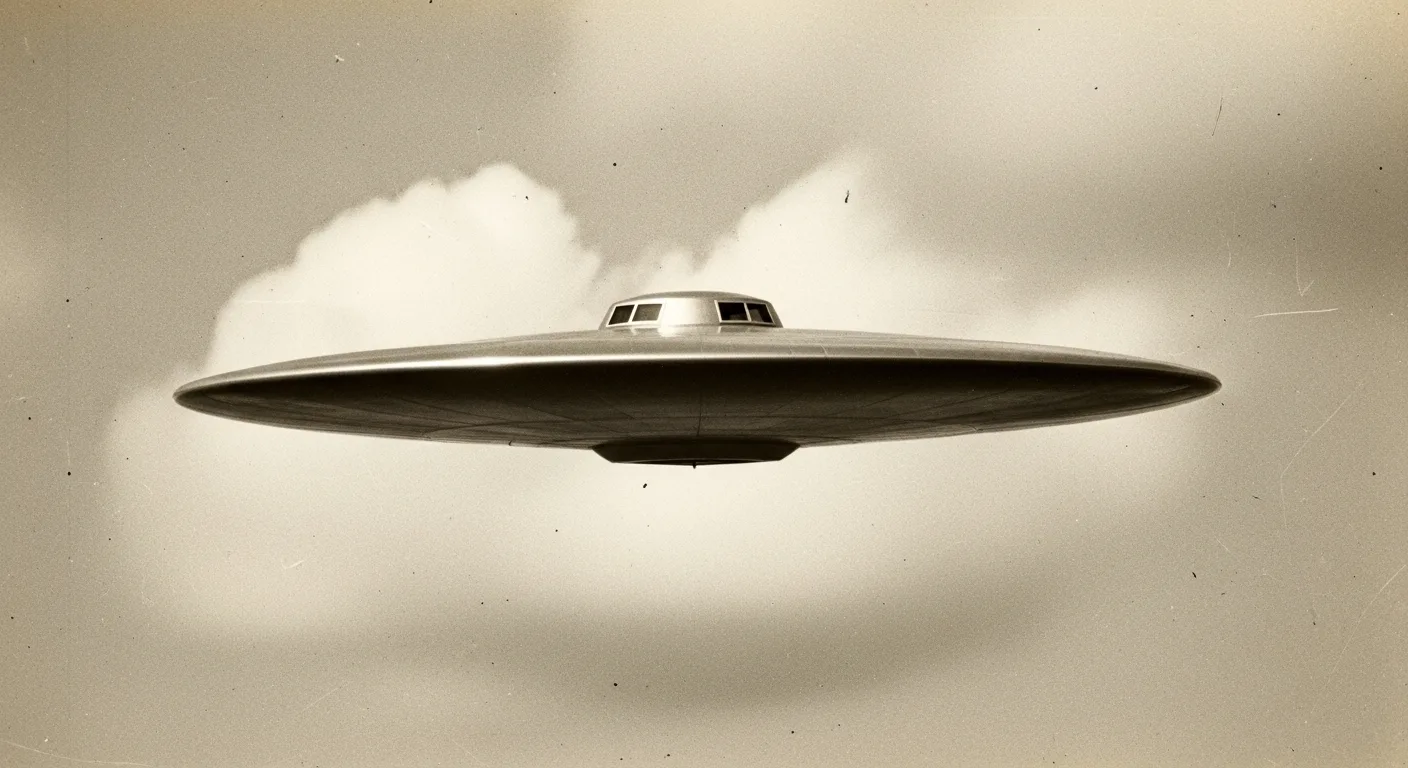
Few UFO cases have generated as much passionate debate, as much meticulous analysis, and as much acrimony within the research community as the Gulf Breeze sightings of 1987 and beyond. What began as one man’s Polaroid photographs of a glowing craft near his home in the Florida panhandle grew into a years-long phenomenon involving hundreds of independent witnesses, extensive photographic documentation, physical effects on the primary witness, and a controversy that split the UFO research community into bitterly opposing camps. The Gulf Breeze case is simultaneously one of the best-documented and most disputed UFO events in history, a paradox that reveals as much about the challenges of investigating anomalous phenomena as it does about the phenomena themselves.
Gulf Breeze, Florida
Gulf Breeze is a small, affluent city of roughly six thousand residents situated on a peninsula between Pensacola Bay and Santa Rosa Sound in the Florida panhandle. In 1987, it was a quiet, prosperous community whose residents were primarily retirees, military families associated with the nearby Pensacola Naval Air Station, and professionals who appreciated the area’s combination of Southern charm and coastal beauty. It was not a place associated with the unusual or the paranormal, and its residents were, by and large, the kind of respectable, middle-class Americans whom one would not expect to become embroiled in a UFO controversy.
The geography of the area is relevant to the case. Gulf Breeze sits at the intersection of several bodies of water, with clear sight lines across bays and sounds that allow observers to see objects at considerable distances. The proximity of Pensacola Naval Air Station means that residents are thoroughly familiar with military aircraft of all types, including jets, helicopters, and transport planes. They are also accustomed to the civilian air traffic associated with the Pensacola Regional Airport. In short, the people of Gulf Breeze knew what normal aerial activity looked like, and they knew when something did not fit.
Ed Walters: The Central Figure
The Gulf Breeze case centers on Ed Walters, a successful building contractor who lived with his wife, Frances, in a comfortable home in the city. Walters was a well-known figure in the community, respected for his professional accomplishments and his active participation in local affairs. He was not, prior to November 1987, associated with UFOs, the paranormal, or any fringe interests. His transformation from unremarkable businessman to the most controversial UFO witness of his era was as sudden as it was dramatic.
On the evening of November 11, 1987, Walters claimed to see a glowing, structured craft hovering near his home. Acting on instinct, he grabbed a Polaroid camera and began taking photographs. The resulting images showed a clearly defined, disc-shaped object emitting light from its underside, hovering above the rooflines of his neighborhood. The photographs were, by the standards of UFO imagery, extraordinarily clear and detailed. Where most UFO photographs showed ambiguous points of light or blurry shapes, Walters’s Polaroids showed a structured craft with discernible features, proportions, and lighting patterns.
This initial sighting was just the beginning. Over the following weeks and months, Walters reported repeated encounters with the same or similar objects. He continued to photograph them, amassing a collection of images that eventually numbered in the dozens. He also reported physical effects during the encounters: a blue beam of light that allegedly paralyzed him, leaving him unable to move while the craft hovered nearby; telepathic communication from the occupants of the craft; and marks on his body that appeared after particularly intense encounters.
Walters initially shared his photographs with the Gulf Breeze Sentinel, the local newspaper, under a pseudonym. The images caused an immediate sensation in the community and quickly attracted the attention of UFO researchers, media outlets, and curiosity seekers from across the country.
The Photographs
The photographic evidence produced by Ed Walters became the central focus of both the investigation and the controversy. The images showed a craft that was remarkably consistent across dozens of photographs taken over several months. The object appeared as a somewhat flattened disc or top-shaped craft with a ring of lights along its lower portion and a distinct structural form that suggested a solid, manufactured object rather than a natural phenomenon or optical artifact.
Several features of the photographs attracted particular attention. The images were taken with Polaroid cameras, which produce instant prints without negatives. This was significant because Polaroid images are inherently more resistant to conventional photographic manipulation than film negatives, which can be double-exposed, retouched, or otherwise altered in a darkroom. The Polaroid format meant that the images were created in a single step, reducing the opportunities for fakery.
However, the Polaroid format was also a limitation. Without negatives, certain types of technical analysis were impossible. And while Polaroid manipulation was more difficult than film manipulation, it was not impossible. Researchers noted that a model suspended on a string or wire could be photographed in front of a landscape to create an image that appeared to show a craft in the sky. The clarity of Walters’s photographs, ironically, was used both to support and to undermine their authenticity: supporters argued that the detail was consistent with a genuine large object at a distance, while skeptics argued that the sharpness suggested a small model close to the camera.
Walters later transitioned to using a sealed, stereo camera system provided by researchers, which produced simultaneous images from two lenses, making model photography virtually impossible. Photographs produced with this system showed the same type of craft and were more resistant to allegations of fakery. However, critics argued that the damage to Walters’s credibility from the Polaroid controversy could not be repaired by subsequent images.
The Community Response
What transformed the Gulf Breeze case from a single-witness controversy into something far larger was the response of the community. Beginning shortly after Walters’s first photographs were published, other residents of Gulf Breeze and the surrounding area began reporting their own sightings. Within months, hundreds of people claimed to have seen unusual objects in the skies over the Florida panhandle.
These independent witnesses came from all walks of life: military personnel, teachers, business owners, retirees, students, and visitors to the area. Many produced their own photographs, some of which showed objects consistent with those in Walters’s images. Others provided detailed verbal descriptions that aligned with the photographic record. The volume and diversity of the independent testimony created a body of evidence that was difficult to dismiss, regardless of one’s opinion of Ed Walters personally.
Some of the independent sightings occurred on the same nights that Walters reported encounters, providing temporal corroboration. In several instances, witnesses at different locations reported seeing an object at the same time, allowing researchers to triangulate approximate positions and altitudes. These triangulations suggested an object of substantial size at a significant distance, inconsistent with a small model close to a camera.
The community response also included organized sky-watching groups that formed spontaneously among Gulf Breeze residents. Groups of citizens began gathering at specific locations on evenings when conditions seemed favorable, hoping to observe and document the phenomena. On multiple occasions, these groups were rewarded with sightings, producing additional photographs and video recordings that added to the growing body of evidence.
MUFON Investigation
The Mutual UFO Network (MUFON), the largest civilian UFO research organization in the United States, launched an extensive investigation of the Gulf Breeze case. The investigation was led by several prominent researchers, including Dr. Bruce Maccabee, a physicist with the U.S. Navy who had established a reputation for rigorous photographic analysis of UFO imagery.
Maccabee subjected Walters’s photographs to detailed technical analysis, examining them for evidence of manipulation, measuring apparent distances and sizes based on known reference points in the images, and comparing the characteristics of the photographed objects with those of potential hoax methods. His analysis concluded that the photographs did not show obvious signs of manipulation and that the objects appeared to be at a distance consistent with a large, genuine craft rather than a small model close to the camera.
MUFON investigators also administered polygraph examinations to Walters and to several independent witnesses. Walters passed his polygraph tests, though skeptics noted that polygraph results are not universally accepted as reliable indicators of truthfulness. Independent witnesses also passed, adding to the overall evidential weight of the case.
The organization’s investigation was thorough by the standards of civilian UFO research. Investigators spent hundreds of hours in Gulf Breeze, conducting interviews, analyzing photographs, and documenting the broader pattern of sightings. Their initial assessment of the case was positive, with many investigators concluding that the evidence supported the reality of the phenomenon.
The Model Discovery
The most damaging blow to the Gulf Breeze case came with the discovery of a UFO model in a house that Ed Walters had previously owned. The model, a small craft made of foam plates, was found hidden in the attic by the new owners of the house. It bore a resemblance to the objects in Walters’s photographs, and its discovery provided ammunition to skeptics who had argued from the beginning that the photographs showed suspended models.
The impact of the model discovery on the case cannot be overstated. For many researchers who had been open to or supportive of the Gulf Breeze evidence, the model was the smoking gun that confirmed their worst suspicions. The discovery shifted the burden of proof decisively onto Walters, who now had to explain not just his photographs but the existence of a model that could have been used to produce them.
Walters and his supporters offered several explanations for the model. They argued that it did not match the photographed objects in important details, that it could have been planted by someone seeking to discredit Walters, and that the model was too crude to have produced the relatively detailed photographs. These arguments persuaded some researchers but not others, and the model discovery became the fault line along which the UFO research community divided.
The Schism
The Gulf Breeze case produced one of the most bitter and consequential divisions in the history of UFO research. On one side stood researchers who believed that the totality of the evidence, including the hundreds of independent witnesses, the stereo camera photographs, and the positive polygraph results, supported the reality of the phenomenon. On the other side stood those who believed that the model discovery, combined with other suspicious aspects of Walters’s account, proved that the case was an elaborate hoax.
The debate extended beyond the specifics of Gulf Breeze to broader questions about methodology and standards of evidence in UFO research. How much weight should be given to photographic evidence versus eyewitness testimony? How should researchers handle cases where a central witness is discredited? Can a case be partly genuine and partly hoaxed? These questions had no easy answers, and the Gulf Breeze controversy exposed deep philosophical differences within the research community.
Some researchers attempted to separate the Walters photographs from the broader Gulf Breeze phenomenon, arguing that even if Walters had hoaxed some or all of his images, the independent witnesses were genuine and the phenomenon they reported was real. This position allowed for a nuanced assessment that acknowledged the problems with the Walters evidence while preserving the value of the community-wide sighting reports.
Others argued that the entire case was contaminated by the hoax allegations and that any sightings associated with Gulf Breeze were suspect. They pointed out that publicity generates sightings, that people who are primed to see UFOs are more likely to interpret ambiguous stimuli as anomalous, and that the intense media coverage of the Walters photographs created an environment in which misidentifications and fabrications were inevitable.
Dr. Bruce Maccabee’s Analysis
Among the researchers most closely associated with the Gulf Breeze case, Dr. Bruce Maccabee occupied a unique position. As a physicist with technical expertise in optics and photographic analysis, he brought a level of scientific rigor to the case that few other investigators could match. His analysis of the Walters photographs was detailed, methodical, and technically sophisticated.
Maccabee’s conclusions were controversial. He determined that several of the photographs were consistent with a genuine large object at a significant distance, rather than a small model close to the camera. He based this conclusion on analysis of focus, perspective, light distribution, and the relationship between the photographed object and known reference points in the images. His methodology was published in detail, allowing other researchers to evaluate and challenge his findings.
Critics argued that Maccabee’s analysis was flawed, that his conclusions were influenced by his personal belief in the case, and that the limitations of Polaroid photography made definitive analysis impossible. The technical debate over the photographs became extraordinarily detailed, involving discussions of focal length, depth of field, atmospheric scattering, and other optical properties that were accessible only to specialists.
Maccabee stood by his analysis despite the criticism, maintaining that the photographic evidence, when properly analyzed, supported the reality of the phenomenon. His willingness to defend his conclusions against intense professional criticism demonstrated both the strength of his convictions and the depth of the divide within the research community.
Ongoing Sightings
One of the most remarkable aspects of the Gulf Breeze case is that UFO sightings in the area did not cease when the controversy over Walters peaked. Long after the model discovery and the ensuing debate had driven Walters from the spotlight, residents of Gulf Breeze and the surrounding communities continued to report unusual objects in the sky.
These ongoing sightings came from witnesses who had no connection to Walters and no stake in the outcome of the debate over his photographs. They described objects that were consistent with the earlier reports, glowing craft displaying unusual flight characteristics, hovering over the water or moving silently across the sky. Some produced their own photographs and videos, adding to a body of evidence that existed independently of anything Walters had produced.
The persistence of the sightings posed a challenge to the hoax hypothesis. If Walters had fabricated his photographs, why were independent witnesses continuing to see similar objects years after the controversy had faded? Either the area was experiencing genuine anomalous activity that Walters had exploited for personal gain, or the publicity surrounding the case had created a self-perpetuating cycle of misidentification and suggestion. Both explanations were plausible, and neither could be definitively confirmed or excluded.
Physical Effects
Walters’s claims of physical effects during his encounters added a dimension to the case that went beyond visual observation. He described being struck by a blue beam of light that emanated from the craft and rendered him unable to move. During these episodes of paralysis, he reported hearing voices or experiencing telepathic communication from the craft’s occupants. After the encounters, he sometimes discovered marks on his body, including what appeared to be small puncture wounds or abrasions that he could not explain through normal activities.
These physical claims were inherently difficult to verify. The paralysis episodes were experienced only by Walters and could not be independently corroborated. The body marks were documented but could have been self-inflicted. The telepathic communication was, by its nature, entirely subjective.
However, the physical effects Walters described were consistent with reports from other close encounter witnesses around the world. Paralysis, telepathic communication, and unexplained physical marks are common features of close encounter reports and had been documented in cases that predated Gulf Breeze by decades. This consistency could be interpreted as evidence that Walters was experiencing a genuine phenomenon or as evidence that he was familiar with the UFO literature and had incorporated standard elements into a fabricated account.
Legacy and Assessment
The Gulf Breeze sightings remain one of the most contentious cases in UFO history. The case demonstrated several important truths about the investigation of anomalous phenomena. It showed that extensive photographic evidence, far from resolving debates, can intensify them. It revealed the difficulty of separating genuine observations from potential hoaxes in a media-saturated environment. It exposed the vulnerability of the UFO research community to cases that divide rather than unite.
Most fundamentally, Gulf Breeze demonstrated that a community-wide UFO experience creates a cultural impact that outlasts any resolution of the evidence. Regardless of whether Ed Walters photographed genuine UFOs or suspended models, the broader Gulf Breeze phenomenon, encompassing hundreds of witnesses, years of sightings, and a profound effect on the community’s identity, was real in its social and cultural dimensions.
The debate continues. Researchers who lived through the controversy tend to have strong opinions that have not softened with time. Newcomers to the case find a body of evidence that supports multiple interpretations and a history of investigation that reveals the limits of human certainty in the face of the genuinely anomalous. Gulf Breeze remains what it has always been: a case that challenges easy conclusions and rewards careful thought, a reminder that the truth about UFOs, if truth there is, may be more complex than any single case can reveal.
Sources
- CIA UFO/UAP Reading Room — Declassified CIA documents on UAP