Gulf Breeze UFO Sightings
Beginning in 1987, Ed Walters photographed numerous UFOs over Gulf Breeze, Florida. The images showed a blue beam craft and generated massive media attention. Hundreds of others reported sightings. A model UFO was later found in Walters' former home, creating controversy about authenticity.
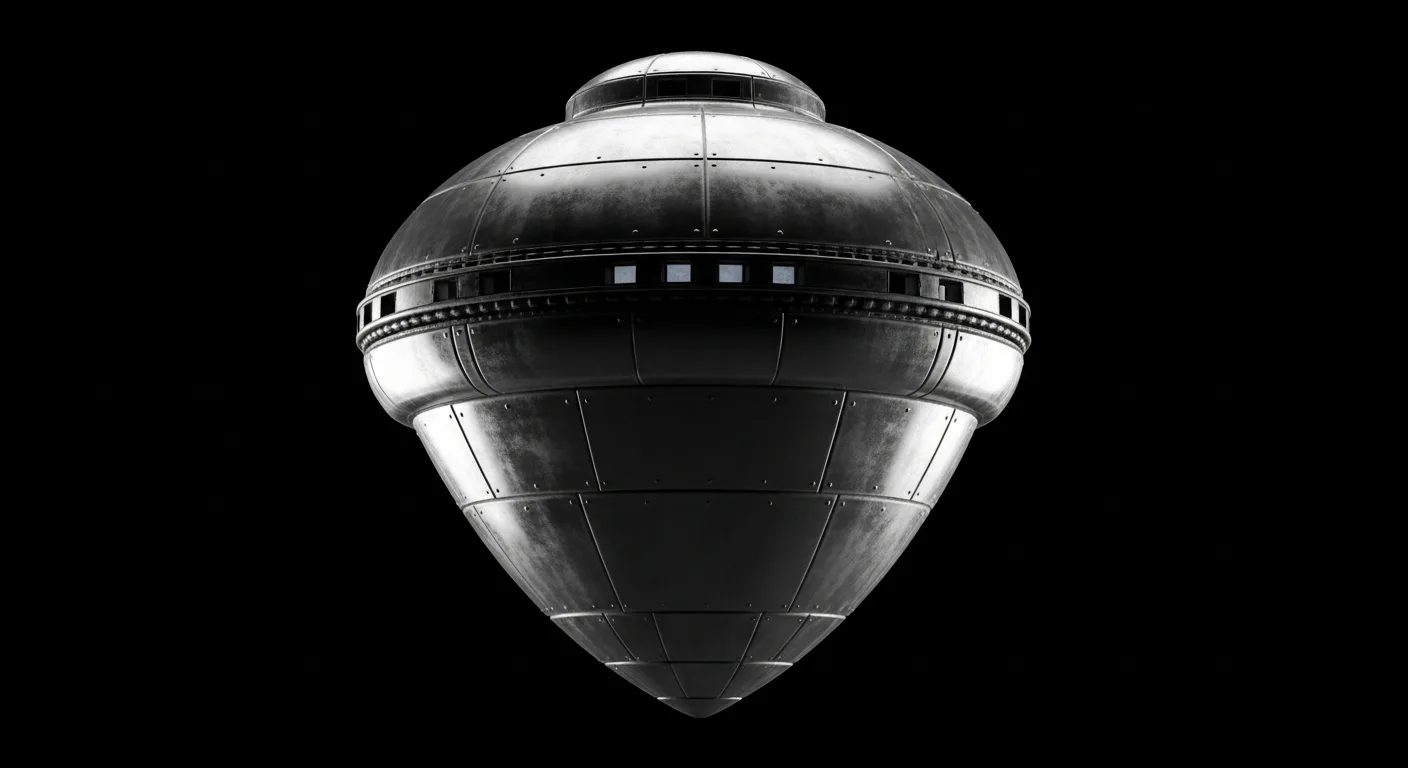
Florida’s most controversial UFO photo case.
The Photographer
In November 1987, a Gulf Breeze, Florida builder named Ed Walters looked out his window and saw something that would transform his life and ignite one of the most contentious debates in UFO history. According to his account, a disc-shaped craft hovered in the sky above his neighborhood, its form clearly visible against the evening darkness. Walters grabbed his Polaroid camera and began photographing what he was seeing.
Over the following months, Ed Walters would photograph UFOs over Gulf Breeze on multiple occasions, producing a series of images that showed disc-shaped craft emitting blue beams of light. The photographs were striking, showing craft with apparent structural detail and demonstrating what Walters claimed were attempts to abduct him using the mysterious blue beam. His images circulated through UFO research communities and eventually reached mainstream media, making Gulf Breeze one of the most famous UFO hotspots of the late 20th century.
Walters documented his experiences in a book, “The Gulf Breeze Sightings,” co-authored with his wife Frances. He claimed multiple encounters over an extended period, often accompanied by physical effects—paralysis, strange sounds, communication attempts. His story was elaborate, consistent in its telling, and supported by photographic evidence that resisted easy debunking.
The Photographs
Ed Walters’ photographs showed disc-shaped craft of a distinctive design, different from the classic flying saucer but clearly intended to represent extraterrestrial technology. The craft emitted a blue glow or beam in many images, a feature that became iconic in depictions of the Gulf Breeze phenomenon. Walters used both Polaroid instant cameras and 35mm film to capture his images, providing multiple sources of photographic evidence.
The photographs were analyzed by various researchers, with conclusions ranging from authentication to fraud. Some analysts noted that the images appeared genuine, showing craft that did not seem to be obvious models or double exposures. Others pointed to inconsistencies in lighting, suspicious sharp edges, and other features that suggested fabrication. The debate over the authenticity of the Gulf Breeze photographs continues to this day, with neither side achieving definitive victory.
The Sightings
Ed Walters was not the only person claiming to see UFOs over Gulf Breeze during this period. Hundreds of other witnesses reported sightings in the area, creating a flap that drew UFO researchers from around the country. Local skywatching groups formed, and on some nights dozens of people gathered at designated observation points hoping to catch a glimpse of the craft that had put their community on the paranormal map.
The area that became known as “Bubba” was a particular hotspot, with regular gatherings of enthusiasts and curious onlookers. Some nights produced sightings; others yielded nothing. But the consistency of reports from multiple independent witnesses gave weight to the claim that something unusual was happening over Gulf Breeze, whatever one made of Ed Walters’ particular testimony.
The Controversy
In 1990, the Gulf Breeze case suffered a devastating blow. A young man named Tommy Smith, who had bought Ed Walters’ former home, discovered a model UFO hidden in the attic. The model bore a striking resemblance to the craft depicted in Walters’ photographs—so striking that it appeared to be the source of the images. Smith reported his discovery to the local newspaper, and the story exploded.
Ed Walters denied any knowledge of the model, suggesting it had been planted by skeptics or enemies seeking to discredit him. He pointed out that he had moved from the house before the model was discovered, that anyone could have placed it there in the interim. His defenders noted inconsistencies in how the discovery was reported and questioned the motivations of those involved.
But for many observers, the model was conclusive proof of fraud. Here was physical evidence—a prop that appeared to have been used in creating the photographs that had made Ed Walters famous. The discovery damaged his credibility severely and cast doubt on the entire Gulf Breeze phenomenon.
The Debate
The Gulf Breeze case remains deeply controversial within UFO research communities. MUFON, the Mutual UFO Network, investigated extensively, with some investigators concluding the case was genuine and others declaring it a hoax. The photographic evidence has been analyzed repeatedly with conflicting results. The model discovery is either definitive proof of fraud or a planted red herring, depending on whom you ask.
Those who believe in Ed Walters point to the other witnesses, the consistent details of his accounts, and the difficulty of explaining how an amateur could produce such convincing photographs with 1980s technology. Those who believe he was a hoaxer point to the model, inconsistencies in his stories, and his financial benefit from the case.
The truth, whatever it may be, remains obscured by decades of argument and the impossibility of definitive verification.
The Legacy
Gulf Breeze remains a destination for UFO enthusiasts, drawing visitors who remember the 1987-1992 flap and hope to experience something similar. Annual conferences brought researchers and believers together for years, and sightings continue to be reported from the area, though nothing approaching the intensity of the original wave.
Ed Walters’ photographs remain among the most controversial UFO images ever produced. They are either evidence of genuine extraterrestrial visitation or among the most successful UFO hoaxes in history. The model in the attic is either a smoking gun or a planted deception. The hundreds of other witnesses either confirm something real or demonstrate the power of suggestion and social contagion.
Gulf Breeze stands as a case study in the difficulties of UFO research—compelling evidence undermined by damaging discoveries, multiple witnesses whose testimony supports conflicting conclusions, and a central figure whose credibility has been questioned but never definitively resolved.
Sources
- CIA UFO/UAP Reading Room — Declassified CIA documents on UAP