The Magenta Italy UFO Crash
A bell-shaped or saucer-like craft allegedly crashed near Magenta. Mussolini's government reportedly formed RS/33, a secret cabinet overseen by Guglielmo Marconi, to study the wreckage. The case gained new attention in 2023 when whistleblower David Grusch cited it as evidence of retrieved non-human craft.
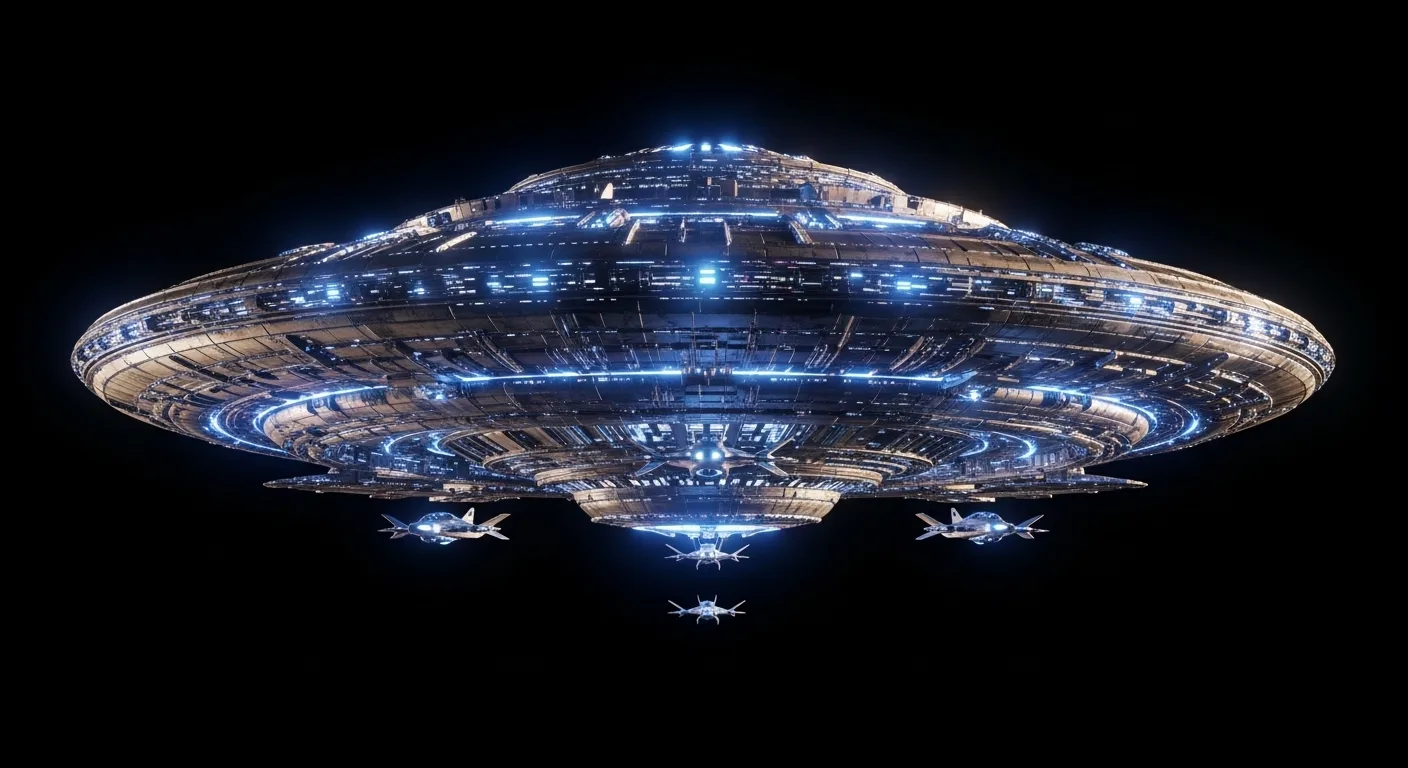
On June 13, 1933, a bell-shaped or saucer-like craft allegedly crashed in the countryside near Magenta, in the Lombardy region of Italy. According to documents that surfaced decades later, Benito Mussolini’s fascist government took immediate action to recover and conceal the wreckage, forming a secret study group known as RS/33 (Gabinetto RS/33) under the oversight of the famous inventor Guglielmo Marconi. The case remained obscure until 2023, when U.S. intelligence whistleblower David Grusch cited it as evidence of a long history of non-human craft retrievals.
The Incident
The Crash
What allegedly occurred was a crash on June 13, 1933, in the vicinity of Magenta, Lombardy. The object involved was a bell-shaped or saucer-like craft, which had sustained damage and remained largely intact at the time of its arrival. Immediately following the incident, the government initiated a rapid response, undertaking efforts to secure the crash site quickly.
Initial Response
The Italian government reportedly secured the crash site swiftly and removed all debris from the area. The wreckage was then transported to a secure location for further analysis. Simultaneously, all witness testimony was suppressed, and the event was classified immediately.
RS/33 Cabinet
Formation
Mussolini’s response to the incident involved the creation of a secret study group designated RS/33 (Gabinetto RS/33). This cabinet was tasked with analyzing the recovered craft, and high-level scientific oversight was maintained to ensure the integrity of the investigation.
Guglielmo Marconi
The famous inventor, Guglielmo Marconi, was appointed to oversee RS/33. He was regarded as a leading scientist of the era and held the distinction of being a Nobel Prize winner (1909). As a pioneer in radio and wireless technology, his credentials were deemed perfectly suited to understanding an unknown technology.
Purpose
The cabinet’s mission centered around the study of the recovered craft, specifically to investigate its propulsion system, attempt to reverse-engineer its technology, maintain absolute secrecy regarding the project, and report directly to Mussolini.
The Craft
Physical Description
Based on alleged documents, the craft was described as bell-shaped or disc-like in appearance. It was constructed primarily of metallic materials and featured an advanced design. Notably, there was no visible propulsion system, and it differed significantly from any known aircraft of the time.
Technology Implications
What the craft suggested was the presence of non-conventional propulsion, advanced metallurgy, aerodynamic impossibilities, and technology beyond 1933 capabilities. Its origin remained entirely unknown.
Post-War Transfer
American Acquisition
According to some accounts, the craft was transferred to the United States after World War II, primarily through the Operation Paperclip era. It was subsequently incorporated into the American collection and continued to be classified.
Vatican Involvement
Some claims suggested that the Vatican was aware of the recovery and may have played an intermediary role. Records related to this involvement may exist, and diplomatic channels were reportedly utilized to maintain silence. The Church maintained a policy of careful discretion regarding the matter.
Documentary Evidence
The Italian Documents
Evidence emerged in the 1990s in the form of documents that had surfaced from RS/33 archives. These documents were attributed to Italian researcher Roberto Pinotti and included detailed technical descriptions of the craft alongside government letterheads, confirming their official origin.
Authentication Debates
The controversy surrounding the documents stems from the fact that they remain disputed. While some elements have been verified, others have been questioned. There has been no definitive authentication of the documents, and research into their veracity continues.
The Grusch Testimony
2023 Revelations
Whistleblower David Grusch, a former U.S. intelligence officer, testified before Congress, specifically citing the Magenta case. He claimed that the U.S. recovered craft from the site and that it represented evidence of a retrieval program.
Significance
Grusch’s mention of the Magenta case is significant because it predates the Roswell incident by fourteen years. This suggests a potentially longer history of international recoveries and a pattern of government secrecy surrounding these events. It validates earlier researchers’ claims that the Magenta case holds a place in the broader narrative of unidentified aerial phenomena.
Historical Context
1933 Italy
The setting for the alleged incident was Italy in 1933, under the rule of a fascist government led by Benito Mussolini. Mussolini’s regime was characterized by a high level of control, a pre-WWII military buildup, and a prioritization of scientific advancement. These factors created an environment conducive to secrecy.
Aviation in 1933
In 1933, aviation technology was limited to propeller aircraft, lacking jet engines or disc-shaped craft. Hovering capabilities were nonexistent, and the description of the crashed object contrasted sharply with the existing state of aviation technology.
Analysis
Supporting Factors
Some find the Magenta case credible due to the existence of disputed documents, a pattern of other recoveries, the plausibility of government secrecy, and Marconi’s involvement. Grusch’s testimony adds weight to the narrative.
Skeptical Factors
Reasons for doubt include the unverified nature of the documents, the lack of publicly available physical evidence, the considerable time gap since the alleged event, and the potential for an elaborate hoax. Extraordinary claims, such as this one, require compelling proof to gain widespread acceptance.
The Question
In 1933, something allegedly crashed near Magenta, Italy. It wasn’t a plane, nor a balloon. It was something else. According to documents that surfaced decades later, Mussolini’s government didn’t wait to investigate. They moved immediately, secured the craft, formed a secret cabinet—RS/33—to study it, and put one of the greatest inventors of the age, Guglielmo Marconi, in charge.
For years, the story remained in the shadows of UFO research. Interesting but unverifiable, documents existed, but their authenticity was questioned. Then came 2023. David Grusch, a former U.S. intelligence officer with high-level clearances, testified before Congress. He spoke of a secret program to retrieve non-human craft. And he specifically mentioned Italy, 1933. Fourteen years before Roswell.
If Grusch is right—if the documents are authentic—then the history of UFO retrievals goes back further than most people imagine. It becomes an international phenomenon, a pattern of crashes, recoveries, and cover-ups spanning nearly a century.
The Magenta crash of 1933. A bell-shaped craft in an Italian field. A fascist government’s secret response. A Nobel laureate tasked with understanding the impossible. And decades of silence. Until now.
The truth about Magenta—whatever it is—may finally be emerging. But we’re still waiting for proof. Still waiting for the evidence that would confirm or deny what allegedly happened that June day in Lombardy. Until then, the Magenta crash remains what it has been for ninety years. A mystery. A controversy. A question mark in history. Waiting for an answer.
Sources
- Europeana — Digitised European cultural heritage