Florence Italy UFO Stadium Incident
A football match at Florence's stadium was interrupted when UFOs appeared over the city. Thousands of spectators and players watched objects fly over, leaving behind mysterious angel hair.
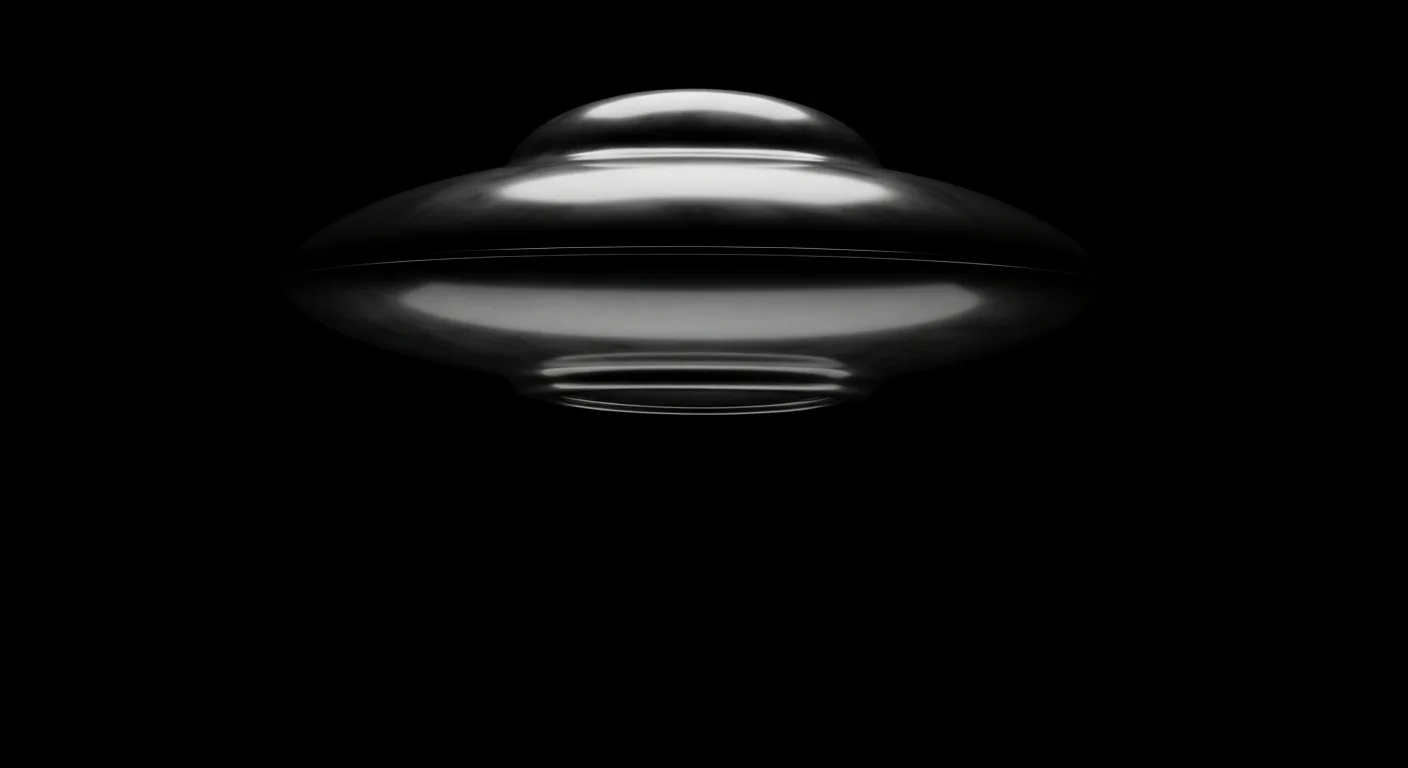
There are UFO sightings witnessed by a handful of people on lonely roads at night, and then there is what happened in Florence, Italy on October 27, 1954. On that autumn afternoon, approximately ten thousand spectators gathered in the Stadio Artemio Franchi to watch a football match between Fiorentina and Pistoiese. They came to watch sport. What they witnessed instead was one of the most extraordinary mass sightings in the history of unidentified aerial phenomena—objects passing over the city in broad daylight, observed simultaneously by thousands of people in a stadium, and accompanied by the fall of a mysterious substance that drifted down from the sky like cobwebs from heaven. The Florence stadium incident is unique in the annals of UFO research not only for its scale but for its setting: a public event, in daylight, before a crowd of thousands, in one of the most celebrated cities in the world. Whatever appeared in the sky above Florence that afternoon, it chose the most conspicuous stage imaginable.
The City and the Stadium
Florence in 1954 was a city still bearing the scars of the Second World War, which had ended less than a decade earlier. The retreating German forces had destroyed all of the city’s bridges except the Ponte Vecchio, and parts of the historic center had been damaged by bombing and artillery. But Florence was also a city in recovery, fueled by the energy of the Italian economic miracle that was beginning to transform the country. Football was an essential part of that recovery—a communal ritual that brought together people of all classes and backgrounds, providing a shared experience of excitement, rivalry, and civic pride.
The Stadio Artemio Franchi, originally known as the Stadio Comunale, was itself a symbol of this civic ambition. Designed by the pioneering engineer Pier Luigi Nervi and completed in 1931, the stadium was considered an architectural masterpiece, with its dramatic reinforced concrete spiral staircases and cantilevered roof. It could hold over forty thousand spectators for major matches, though the reserve team fixture between Fiorentina and Pistoiese on October 27 drew a more modest crowd of approximately ten thousand.
The match was not an event of particular sporting significance. Reserve team fixtures attracted a devoted but smaller audience than first-team matches, drawing the dedicated supporters who followed the club through all its competitive endeavors. These were, by and large, knowledgeable football fans—people accustomed to focusing their attention on the pitch, tracking the movement of players and ball with the practiced eye of experienced spectators. They were not the kind of audience one would expect to be easily distracted by atmospheric phenomena or prone to collective hallucination.
The Interruption
The match was underway on a clear autumn afternoon when the first signs of something unusual appeared in the sky above the stadium. The exact sequence of events varies slightly between accounts, but the core narrative is consistent across dozens of witnesses. Objects appeared in the sky—moving over the stadium from roughly south to north—and one by one, then in clusters, the spectators began looking upward.
The reaction spread through the crowd like a wave. Players on the pitch noticed that the spectators’ attention had shifted from the game to the sky and paused to look upward themselves. Within moments, the match had effectively stopped. Ten thousand people—players, referees, coaches, spectators—stood in the Stadio Artemio Franchi and watched as unknown objects traversed the sky above one of Europe’s great cities.
The interruption was not brief. The objects were visible for several minutes, long enough for the entire stadium to become aware of them, for conversations to develop about what people were seeing, and for the match to be thoroughly and completely abandoned as a subject of interest. This was not a fleeting glimpse of something that might have been a bird or an airplane—it was a sustained, collective observation of objects that no one in the stadium could identify.
What Was Seen
Witness descriptions of the objects were remarkably consistent given the number of observers and the passage of time. The objects were described as disc-shaped or egg-shaped, moving through the sky at a steady pace, sometimes individually and sometimes in apparent formation. They were observed in clear daylight conditions, against a sky that witnesses described as blue and largely cloudless—conditions that maximized visibility and minimized the possibility of misidentification.
Ardico Magnini, who played for Fiorentina and was on the pitch that afternoon, provided one of the most widely cited firsthand accounts. In interviews years later, Magnini described seeing bright, egg-shaped objects moving slowly across the sky. “Everyone was looking up, and we all saw these glowing things moving overhead,” he recalled. “It was something you could not explain. We all saw it—every player, every person in the stands.” Magnini was emphatic that what he witnessed was not a conventional aircraft, a weather balloon, or any other recognizable object.
Other witnesses corroborated Magnini’s account while adding their own details. Some described the objects as silvery or metallic in appearance, reflecting the afternoon sunlight as they moved. Others emphasized the formation flying—the objects moving in coordinated patterns that suggested intelligent control rather than the random drift of balloons or debris. The estimated number of objects varied between accounts, with some witnesses reporting two or three and others describing as many as a dozen, but the general consensus was that multiple objects were visible simultaneously.
The sighting was not confined to the stadium. Across Florence, people in the streets, in offices, and in homes noticed the objects and stopped what they were doing to watch. The phenomenon was visible over a wide area of the city, and reports came in from various neighborhoods and vantage points, all describing the same general phenomenon: unusual objects moving through the sky in broad daylight.
The Angel Hair
If the visual sighting of the objects was extraordinary, what followed was perhaps even more remarkable. As the objects passed over the city, a strange substance began to fall from the sky—a fine, filamentous material that drifted down like cobwebs or gossamer, settling on rooftops, trees, streets, and the clothing and skin of people below. This substance, which would come to be known as “angel hair,” was unlike anything the witnesses had encountered before.
The material was white or silvery, extremely fine and delicate, with a texture that witnesses compared to spider silk or cotton candy. It fell in strands and clumps, sometimes in quantities substantial enough to drape over surfaces and accumulate in visible deposits. The angel hair exhibited a peculiar property that would complicate later analysis: it dissolved rapidly when handled. Contact with warm skin caused the substance to disintegrate, and exposure to heat accelerated its decomposition. This evanescent quality meant that collecting and preserving samples for scientific analysis was extremely difficult.
Despite these challenges, some samples were collected and brought to Giovanni Canneri, a professor of chemistry at the University of Florence. Canneri conducted spectrographic analysis of the material and reported that it contained boron, silicon, calcium, and magnesium. He described the substance as being of unknown origin and stated that it did not correspond to any naturally occurring material or any known industrial product. His analysis, while limited by the small quantity of material available, represented the only scientific examination of the Florence angel hair and provided the physical evidence dimension that elevated the incident beyond a purely visual observation.
The angel hair phenomenon was not unique to Florence. Similar substances have been reported in association with UFO sightings in other locations and at other times, though the Florence incident produced some of the most extensive deposits and the most rigorous scientific analysis. The composition reported by Canneri has been the subject of ongoing debate, with some researchers noting similarities to borosilicate glass fibers and others pointing to the presence of magnesium as inconsistent with any known synthetic material of the period.
A skeptical hypothesis has been advanced suggesting that the angel hair was the product of migrating spiders—a phenomenon known as “ballooning,” in which spiders produce strands of silk that catch the wind and carry them to new locations. Spider ballooning can produce large quantities of fine, web-like material that falls from the sky and drapes over surfaces in a manner consistent with some descriptions of angel hair. However, this explanation struggles to account for the chemical composition reported by Canneri, the association with the visual sighting of structured objects, and the witnesses’ insistence that the material was unlike ordinary spider silk.
The 1954 Italian Wave
The Florence stadium incident did not occur in isolation but was part of a broader wave of UFO sightings that swept across Italy—and much of Western Europe—in the autumn of 1954. The Italian wave was one of the most intense concentrations of UFO reports in European history, with sightings reported from the Alps to Sicily over a period of several weeks.
The wave had begun in early October with scattered reports from various Italian regions. As the month progressed, the frequency and geographic spread of the reports increased dramatically. Objects were seen over rural areas and major cities alike, by individual witnesses and by crowds. The Florence incident was the most dramatic and best-witnessed event of the wave, but it was one of hundreds of reports filed during this extraordinary period.
The broader European context was equally striking. France experienced its own massive wave of sightings in October 1954, with hundreds of reports pouring in from across the country. Sightings were also reported in significant numbers from Spain, Portugal, Germany, and other European countries. The geographic scope and temporal concentration of these reports have never been satisfactorily explained, and they remain one of the most challenging data sets in UFO research.
The 1954 wave occurred against the backdrop of the Cold War, and some researchers have speculated that the sightings might be connected to secret military testing by either NATO or Soviet forces. However, no military program has ever been identified that could account for the volume, variety, and geographic distribution of the reports. The objects described by witnesses did not correspond to any known aircraft of the period, and the physical effects reported—including angel hair and electromagnetic interference—were not characteristic of any military technology then or since.
The Media Response
The Italian press covered the Florence incident extensively, with major newspapers including La Nazione (Florence’s principal daily), Corriere della Sera (Milan’s leading paper), and others devoting front-page coverage to the event. The combination of the public setting, the mass of witnesses, and the mysterious angel hair made the story irresistible to editors, and the coverage was detailed and largely straightforward, treating the accounts of the witnesses with respect rather than ridicule.
This media response was significant because it occurred in an era when UFO reports were often dismissed or mocked by mainstream media. The sheer scale of the Florence incident—ten thousand witnesses at a public sporting event—made it difficult to frame the story as the delusion of a few eccentric individuals. The reporters who covered the event interviewed witnesses, examined the angel hair, and reported the facts as they found them, creating a contemporary record that would prove invaluable for later researchers.
The photographic record of the event is more limited than one might expect given the number of witnesses. In 1954, cameras were not the ubiquitous personal accessories they would later become, and the spectators at a reserve team football match were unlikely to have brought photographic equipment. Some photographs were taken, primarily by press photographers who arrived after the event and by individuals who captured images of the angel hair deposits, but clear photographs of the objects themselves are rare and of limited quality.
Witness Credibility at Scale
The question of witness credibility takes on a fundamentally different character when the number of witnesses reaches into the thousands. A single witness, however credible, can be mistaken, delusional, or dishonest. A dozen witnesses might share a common misperception, particularly if they are in communication with one another and influenced by social dynamics. But ten thousand witnesses, observing the same phenomenon simultaneously from different positions within a stadium and across a city, represent a qualitative shift in evidential weight.
The crowd at the Stadio Artemio Franchi included people from every walk of life—factory workers, shopkeepers, students, professionals, retirees. They had no common agenda, no shared commitment to proving or disproving the existence of UFOs, and no prior expectation that anything unusual would occur. They had come to watch football, and what they saw instead was something that fifty years later, those who survived continued to describe in remarkably consistent terms.
The players and officials on the pitch added another dimension of credibility. These were public figures whose identities were known and whose statements could be verified. Ardico Magnini’s account, given repeatedly over the years and never retracted or significantly altered, carried the weight of a man who had no reason to fabricate such a story and everything to lose—in terms of reputation and professional credibility—by telling it.
Theories and Explanations
The Florence stadium incident has generated numerous attempts at explanation over the seven decades since it occurred. The migrating spider hypothesis, which accounts for the angel hair through the ballooning phenomenon, remains the most frequently cited conventional explanation. Proponents argue that a large swarm of migrating spiders could produce quantities of silk sufficient to cover a city, and that the unusual appearance of the silk against the sky—particularly if illuminated by sunlight—might be misinterpreted as structured objects by observers on the ground.
This explanation is elegant but faces several serious objections. The chemical analysis conducted by Professor Canneri identified elements in the angel hair that are not consistent with spider silk, which is composed primarily of proteins. The structured, egg-shaped or disc-shaped objects reported by witnesses do not resemble spider swarms, even under unusual lighting conditions. And the duration of the sighting—several minutes of sustained observation by thousands of people—is difficult to reconcile with a brief flash of misperception.
Other explanations have been proposed, including military aircraft in unusual formations, experimental balloons, atmospheric optical phenomena, and mass hysteria triggered by the broader UFO wave then sweeping Europe. Each of these explanations accounts for some aspects of the observations while failing to address others, and none has gained widespread acceptance as a complete and satisfactory resolution of the mystery.
An Enduring Mystery
The Florence stadium UFO incident remains one of the most compelling and frustrating cases in UFO research. Compelling because of its extraordinary scale—ten thousand witnesses, daylight conditions, a public venue, physical evidence. Frustrating because, despite these advantages, the mystery remains unresolved, trapped between explanations that are too prosaic to account for the evidence and interpretations that are too extraordinary to be accepted without further proof.
The players who stood on the pitch that afternoon, looking up at the sky with the same bewilderment as the spectators in the stands, have mostly passed into history. The stadium still stands, still hosts football matches, still fills with crowds who come to watch their team compete. The sky above it is the same sky that produced those mysterious objects on that October afternoon in 1954. And somewhere in the archives of the University of Florence, the remnants of Professor Canneri’s analysis may still exist—a chemical fingerprint of something that fell from the sky, settled on a city, and dissolved before it could be fully understood.
Whatever appeared above Florence that day, it chose its audience well. A city of art, a stadium of witnesses, a sky of mysteries. The match between Fiorentina and Pistoiese has been forgotten, its score a footnote of no consequence. But the interruption—the moment when ten thousand people stopped watching football and started watching the sky—has become one of the defining events of UFO history, a reminder that sometimes the most extraordinary things happen in the most ordinary of settings, in the middle of the afternoon, in front of everyone.
Sources
- Project Blue Book — National Archives — USAF UFO investigation files, 1947–1969
- CIA UFO/UAP Reading Room — Declassified CIA documents on UAP