The Los Alamos Green Fireball Conference
A classified conference convened at Los Alamos attended by Dr. Edward Teller, Dr. Joseph Kaplan, Dr. Lincoln LaPaz, and military brass. Remarkably, there was no debate about whether green fireballs existed - nearly everyone present had witnessed at least one. The only question was what they were.
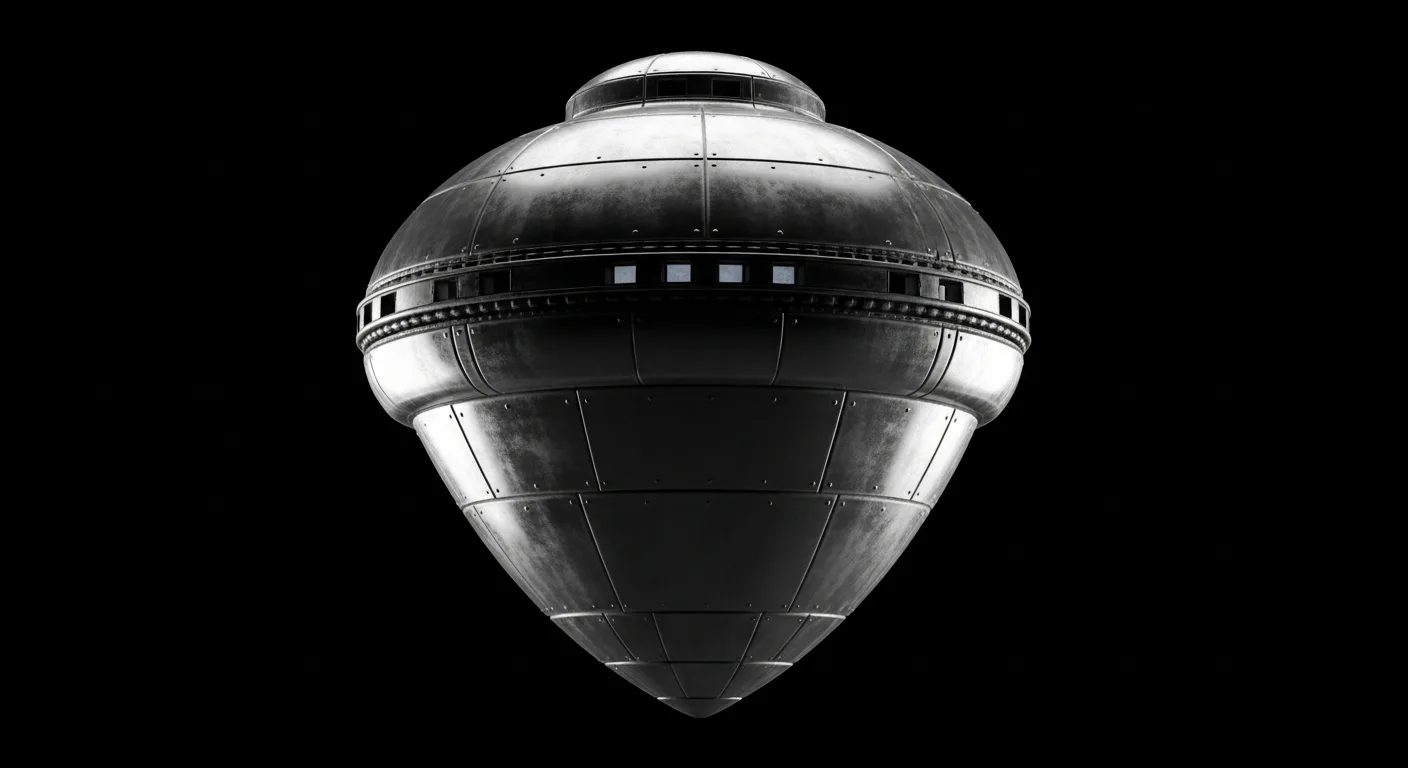
In February 1949, a remarkable classified conference convened at Los Alamos, New Mexico, to address a phenomenon that had been plaguing the nation’s most sensitive nuclear facilities. In attendance were some of the greatest scientific minds of the era, including Dr. Edward Teller (future “father of the hydrogen bomb”), Dr. Joseph Kaplan (authority on upper atmosphere physics), and Dr. Lincoln LaPaz (meteor expert). What made this conference extraordinary was that there was no debate about whether green fireballs existed - nearly everyone present had personally witnessed at least one.
The Attendees
Dr. Edward Teller
His presence was marked by his future role as “father of the hydrogen bomb,” his experience within the Manhattan Project, his status as a Los Alamos scientist, and his pioneering work in nuclear weapons. He took the phenomenon seriously, recognizing its potential implications.
Dr. Joseph Kaplan
His expertise centered on upper atmosphere physics, and he was a UCLA professor and a member of the National Academy. His scientific credibility made him a key technical advisor during the conference.
Dr. Lincoln LaPaz
Dr. LaPaz served as the Director of the Institute of Meteoritics at the University of New Mexico and had been investigating these events since December 1948. He was central to the discussion, bringing his expertise as a meteor and fireball expert.
Military Brass
Also present were Los Alamos security personnel, Air Force intelligence, AEC (Atomic Energy Commission) representatives, Kirtland AFB officers, and other high-level officials, reflecting the serious concern surrounding the situation.
The Remarkable Consensus
No Debate on Existence
The unprecedented situation was characterized by a shared acknowledgment of the green fireballs as real; nearly everyone present had seen one, and there was no skepticism about these sightings. The central question explored was simply: what were they? This represented a complete acceptance of the phenomenon.
Personal Witnesses
The attendees’ experience was defined by the fact that scientists, military personnel, and security officers had all seen the green fireballs. This widespread, first-hand knowledge further strengthened the compelling nature of the observations.
The Phenomenon Under Discussion
Green Fireball Characteristics
What the attendees were examining was a series of distinctive characteristics, including a brilliant green coloration, flat trajectories (unlike meteors), the complete lack of debris or fragments recovered, a concentration near nuclear facilities, and their appearance since late 1948.
Geographic Pattern
The observed appearance of these fireballs followed a specific geographic pattern, with sightings reported in the Los Alamos area, Sandia Base, Kirtland AFB, the White Sands region, and all nuclear-related facilities.
Why It Mattered
The concern was heightened by the fact that the fireballs were overflying most secret installations, and the pattern suggested a deliberate intelligence, not a random distribution. This raised the potential for a security threat and necessitated a detailed explanation.
The Debate
Natural Phenomenon Camp
Some argued that the fireballs represented an unusual meteor type, a particular atmospheric phenomenon, and were generated by ionized oxygen. They preferred a natural explanation and minimized any threat implications.
Artificial Origin Camp
Others believed the behavior was too consistent and the trajectories too flat, and the geographic concentration was suspicious. They posited the possibility of foreign technology and emphasized the need for a security response.
Dr. LaPaz’s Position
The expert, Dr. LaPaz, declared that the fireballs were not typical meteors, had extensively investigated them, and had triangulated multiple sightings, calculating impossible trajectories, suggesting the presence of an anomalous element.
The Conference Conclusions
Official Determination
The conference concluded with a decision to label the phenomena as “a natural phenomenon of some kind,” with a recommendation for further investigation. Cambridge Research Laboratory was assigned to the task, and a proposal for Project Twinkle was put forward – a monitoring program designed to systematically observe the fireballs.
Unanswered Questions
What remained unknown was the exact nature of the phenomenon, the reasons for its concentration near nuclear facilities, the absence of any debris ever found, and the specific reason for its appearance in New Mexico, requiring deeper investigation.
Aftermath
Project Twinkle
The result of this effort was a photographic monitoring program, plans for Cinetheodolite stations in the White Sands area, and a systematic observation attempt. The project represented a scientific approach to understanding the strange occurrences.
Continued Sightings
The green fireballs continued to appear throughout 1949, 1950, and 1951, maintaining the same pattern, remained unexplained, and persisted despite the conference.
Historical Significance
Scientific Legitimacy
What the conference demonstrated was that top scientists took the phenomenon seriously, personal observation by experts was being documented, and the government concern was genuine. It was not dismissed as fantasy, recognizing the phenomenon as a real event.
The Nuclear Connection
A disturbing pattern emerged – the concentration of the fireballs was undeniable, and the security implications were clear, suggesting surveillance and a need for threat assessment. These factors were never satisfactorily explained.
The Question
February 1949. Los Alamos, New Mexico.
The birthplace of the atomic bomb hosts a different kind of meeting.
In the room: Edward Teller, who will build the hydrogen bomb. Joseph Kaplan, who knows the upper atmosphere better than almost anyone alive. Lincoln LaPaz, the nation’s foremost meteor expert. Military brass. Security officials. Scientists who’ve spent their careers demanding proof.
They’re not here to debate whether green fireballs exist.
They all know they exist.
They’ve seen them.
Almost everyone in the room has personally watched a brilliant green light streak across the New Mexico sky. Flat trajectory. Wrong behavior for a meteor. Always near the nuclear facilities.
The question isn’t IF.
The question is WHAT.
What are the green fireballs?
Sources
- Project Blue Book — National Archives — USAF UFO investigation files, 1947–1969
- CIA UFO/UAP Reading Room — Declassified CIA documents on UAP
- Chronicling America — Historic US newspapers (1690–1963)