Black Knight Satellite
Conspiracy theorists claim an alien satellite called the Black Knight has been orbiting Earth for 13,000 years. It allegedly traces back to Nikola Tesla's radio signals in 1899. NASA photos from 1998 show a dark object that believers say is the satellite. NASA says it's a lost thermal blanket.
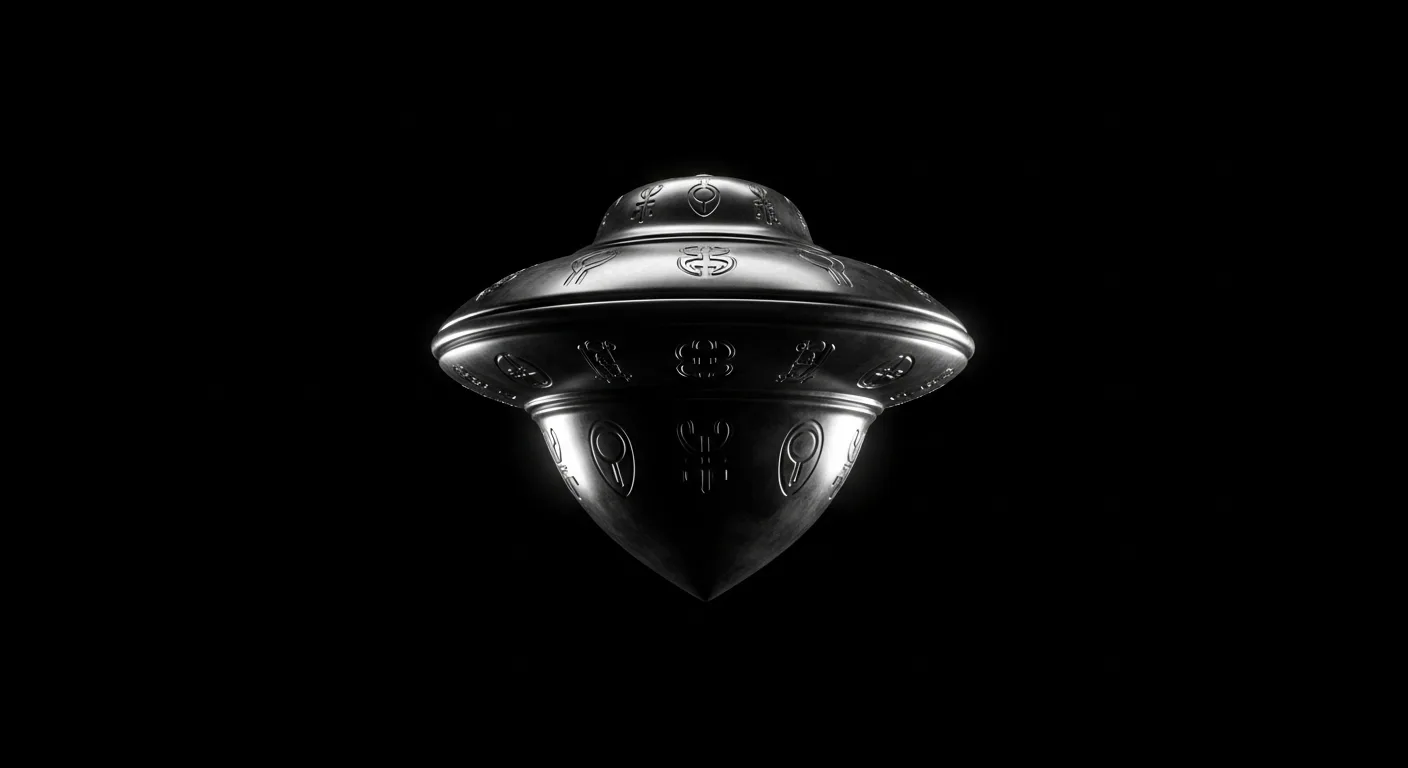
An ancient alien satellite allegedly watches Earth from orbit, and has done so for thirteen thousand years. The Black Knight Satellite represents one of the most enduring and complex UFO conspiracy theories, weaving together over a century of anomalous observations, scientific discoveries, and misidentified space debris into a compelling narrative of extraterrestrial surveillance.
The Legend
The Black Knight legend claims that an artificial satellite of non-human origin has been orbiting Earth since before human civilization began. Believers assert this object has been monitoring humanity’s development for approximately thirteen thousand years, predating the earliest human civilizations by millennia. The satellite allegedly first came to human attention in 1899 and has been intermittently detected ever since, with NASA photographs from 1998 providing what proponents consider definitive visual evidence of its existence.
The legend draws its power from combining genuine scientific anomalies with imaginative interpretation. Each piece of supposed evidence, examined in isolation, has mundane explanations—but when woven together, they create a narrative that resonates deeply with those who believe humanity is being watched from above.
Tesla’s Signals
The origin story begins with Nikola Tesla, the visionary inventor who was conducting radio experiments in Colorado Springs in 1899. Tesla reported receiving strange, repetitive signals that he believed might be communications from extraterrestrial intelligence. He described the signals as having a mathematical regularity that suggested intelligent origin, writing that he had been “the first to hear the greeting of one planet to another.”
Modern scientists have proposed several explanations for what Tesla actually detected. The most likely candidate is natural radio emissions from pulsars—rapidly rotating neutron stars that emit regular bursts of radiation. However, pulsars were not discovered until 1967, so Tesla would have had no framework for understanding such signals. His extraterrestrial interpretation, while incorrect, was not unreasonable given the scientific knowledge of his era. Conspiracy theorists, however, point to Tesla’s signals as the first evidence of the Black Knight’s presence.
The 1960 Object
In 1960, media reports emerged claiming that a dark, tumbling object had been detected in polar orbit around Earth. The discovery was significant because, according to the reports, neither the United States nor the Soviet Union had the capability to place an object in polar orbit at that time. The object was allegedly too heavy for contemporary rocket technology, and its orbit was inconsistent with any known satellite launch.
The US Air Force investigated the sightings and determined the object was likely debris from a Discoverer satellite—part of the Corona reconnaissance program that was classified at the time. Unable to reveal the true source due to Cold War secrecy, the Air Force offered only vague denials that fed rather than quelled speculation. This gap between official explanations and public curiosity became fertile ground for the growing Black Knight mythology.
The 1998 Photos
The most compelling evidence for Black Knight believers came during Space Shuttle Endeavour’s STS-88 mission in 1998. Astronauts photographed a dark, irregularly shaped object near the shuttle. The images spread across the early internet, with enthusiasts identifying the object as the long-rumored alien satellite finally captured on camera.
NASA’s explanation was considerably more prosaic: the object was a thermal blanket that had come loose during a spacewalk earlier in the mission. The blanket, lost during an EVA to connect modules of the International Space Station, was photographed tumbling away from the shuttle before burning up in the atmosphere. For skeptics, this explanation is definitive. For believers, it represents another government cover-up.
The Debunking
When examined critically, the Black Knight Satellite narrative dissolves into a collection of unrelated observations. Tesla’s signals were likely natural phenomena. The 1960 object was classified reconnaissance satellite debris. The 1998 photographs show a thermal blanket. The “13,000-year orbit” claim appears to have no original source and may be pure invention. The various dark objects reported over the decades are not a single persistent satellite but multiple pieces of space debris, each with its own mundane origin.
Space agencies track thousands of objects in Earth orbit, from defunct satellites to discarded rocket stages to tools lost during spacewalks. Dark, tumbling debris is common, and occasional photographs of such objects are inevitable. The Black Knight legend has conflated these disparate sightings into a single, coherent alien artifact—an act of mythology-making rather than investigation.
The Culture
Despite thorough debunking, the Black Knight Satellite legend persists and even thrives. It appeals to deep human desires: the hope that we are not alone, the suspicion that governments conceal profound truths, the romantic notion of ancient aliens guiding human destiny. The existence of actual NASA photographs—however thoroughly explained—provides a visual anchor that gives the legend an air of credibility absent from purely anecdotal UFO claims.
The Black Knight has appeared in documentaries, inspired fiction, and generated millions of web searches. It represents a fascinating case study in how conspiracy theories form and spread, combining genuine mysteries with misidentification and imagination to create something greater—and more persistent—than the sum of its parts.