Gulf of Guinea USO Encounter
Three crew members of the Fort Salisbury witnessed a huge dark object shining lights down toward the waters before it disappeared beneath the waves - an early Unidentified Submerged Object encounter.
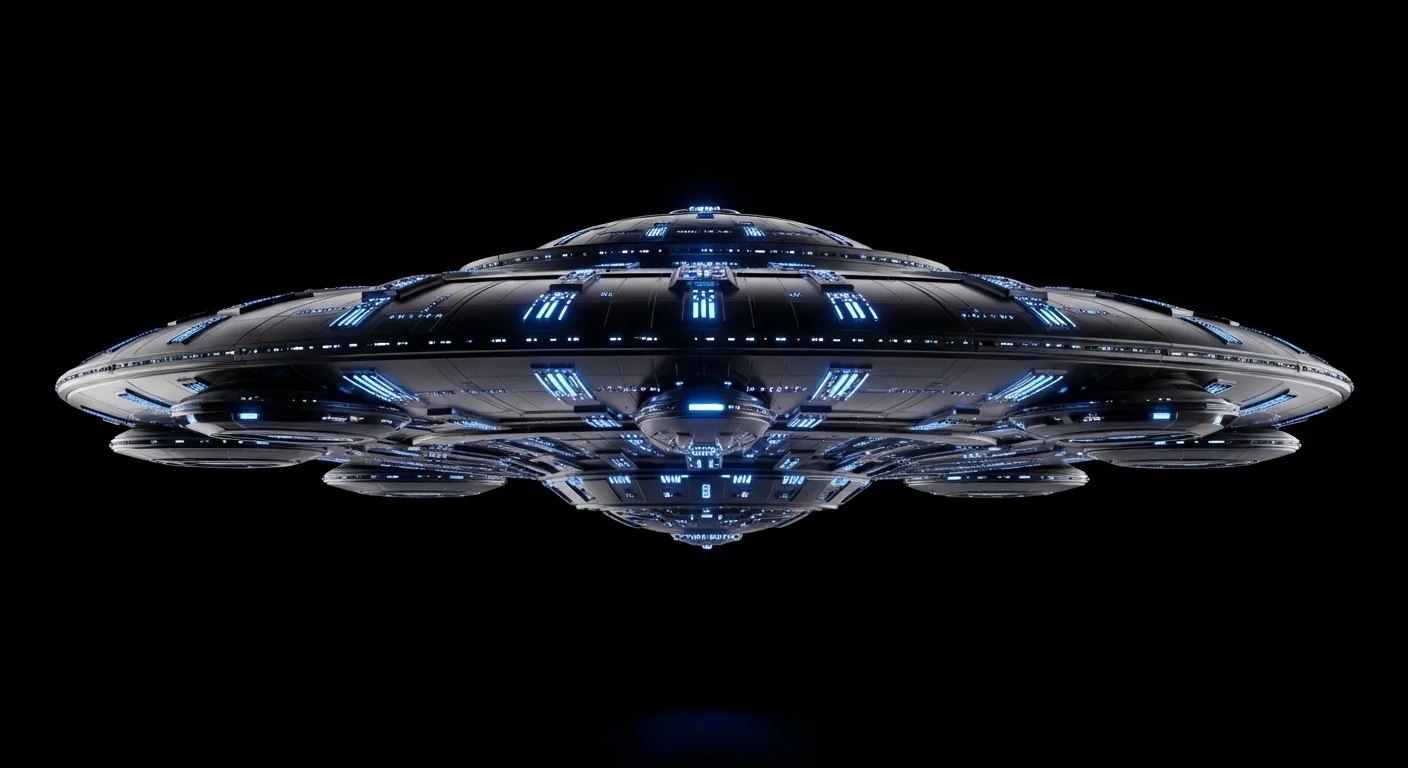
The Gulf of Guinea USO Encounter
In the early morning hours of October 28, 1902, three crew members aboard the British ship Fort Salisbury witnessed an extraordinary sight in the Gulf of Guinea off the coast of West Africa. A huge, dark object appeared in the sky, projecting lights down toward the ocean surface. Then, in an act that would be repeated in USO (Unidentified Submerged Object) reports for over a century, the object descended and disappeared beneath the waves.
The Sighting
Time and Location
The encounter occurred on October 28, 1902, approximately at 3:00 AM. It took place in the Gulf of Guinea, off the coast of West Africa. The conditions were nighttime at sea, with clear enough visibility to observe the object.
The Witnesses
Three experienced sailors were observing. They were on night watch, and multiple independent observers confirmed each other’s account, with no prior history of unusual claims.
The Object
Initial Appearance
What they first saw was a huge, dark object that appeared in the sky and was clearly structured, definitively not a natural phenomenon. It approached their position.
The Lights
The object projected unusual illumination downwards, with beams directed at the water. This illumination appeared to be searching and exhibited deliberate behavior, rather than random flickering.
The Descent
The object descended toward the ocean, approached the water surface, and then disappeared beneath the waves. Notably, there was no splash or disturbance noted, and the object submerged completely.
Significance
Early USO Report
This case represents one of the earliest documented USO encounters, exhibiting transmedium behavior (air to water), multiple credible witnesses, and taking place in the pre-aviation era. It established a pattern that would repeat throughout history.
Transmedium Capability
The object demonstrated aerial flight capability, controlled descent, entry into water, submersion capability, and technology unknown in 1902.
Historical Context
Maritime Era
The setting was the age of sail transitioning to steam. There were no submarines in the area, no aircraft existed, and naval technology was primitive. No conventional explanation was possible.
British Merchant Marine
The witnesses were professional sailors, experienced at sea, trained observers, and knew normal phenomena. They recognized this sighting as abnormal.
Analysis
What It Wasn’t
The object could not have been an aircraft (none existed), a balloon (couldn’t submerge), a meteor (controlled descent), a weather phenomenon (too structured), or a submarine (couldn’t fly).
What It Might Have Been
Possible explanations included an unknown natural phenomenon, misidentification of something, an early UAP/USO encounter, something beyond explanation, or genuinely anomalous behavior.
The USO Pattern
Recurring Elements
This case established patterns seen later, including objects operating both in air and water, lights directed at the ocean, controlled submersion, no debris or disturbance, and behavior inexplicable by known technology.
Similar Cases Through History
Later reports would include objects entering and exiting water, “transmedium” capability, lights beneath waves, and submarine UAP sightings, maintaining consistent behavior patterns.
The Question
At 3 AM on October 28, 1902, three sailors in the Gulf of Guinea saw something impossible. A huge dark object in the sky. Shining lights down at the water. Then diving beneath the waves and vanishing. Not a bird. Not a balloon. Not a meteor. Something that could fly. And something that could swim. In 1902, nothing human-made could do both. Submarines couldn’t fly. Aircraft didn’t exist. The technology to build a transmedium craft wouldn’t exist for… well, we still don’t have it. So what did those sailors see? The Gulf of Guinea USO remains one of the earliest documented encounters with an object that defied the boundary between air and sea. It established a pattern that would repeat for over a century: unusual craft in the sky, interest in the ocean, controlled submersion, and complete disappearance. Today we call these USOs - Unidentified Submerged Objects. The Pentagon acknowledges “transmedium” capabilities in some UAP. But in 1902, three sailors on a British merchant ship just saw something they couldn’t explain. Something that flew. Something that dove. Something that vanished into the depths of the Gulf of Guinea. And was never seen again. The ocean keeps its secrets. This was one of them.