Voronezh UFO Landing
Multiple witnesses, mostly children, reported a UFO landing in a park with giant humanoids emerging. TASS news agency carried the story, marking the first Soviet acknowledgment of a UFO landing.
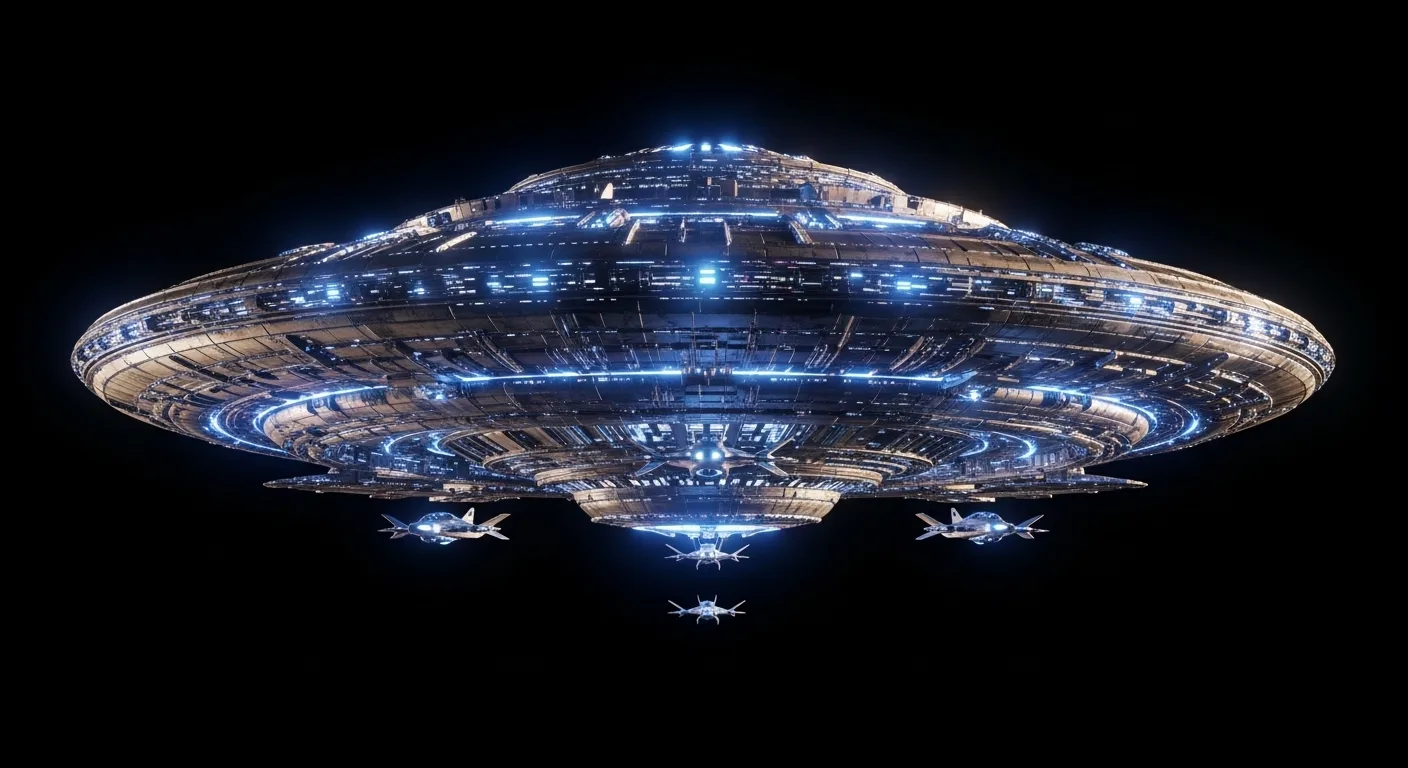
On the evening of September 27, 1989, a group of children playing football in a public park in Voronezh, a major industrial city roughly three hundred miles south of Moscow, witnessed something that would transform the landscape of Soviet ufology and send shockwaves through newsrooms across the globe. A luminous sphere descended from the overcast sky, hovered above the trees, and settled onto the grass of the park. A hatch opened in the side of the craft, and from within emerged beings of staggering proportions — towering humanoid figures standing roughly three meters tall, with small heads, three eyes, and gleaming silvery suits. What followed was a series of encounters so bizarre and so thoroughly reported that even the official Soviet news agency TASS felt compelled to carry the story, marking one of the most extraordinary moments in the history of UFO disclosure.
Voronezh: An Unlikely Setting
To appreciate the full weight of these events, one must first understand the city in which they unfolded. Voronezh in 1989 was a typical Soviet industrial metropolis — a city of nearly one million people, its skyline punctuated by smokestacks and concrete apartment blocks, its economy driven by heavy manufacturing and aerospace engineering. The Voronezh Aircraft Production Association was one of the city’s principal employers, producing military and civilian aircraft for the Soviet state. This was not a remote village prone to superstition but a center of technical expertise and Soviet pragmatism.
The park where the events occurred, located in the southwestern residential district near Levoberezhny, was an unremarkable stretch of green space surrounded by apartment blocks. Families gathered there on warm evenings, children played football on its pitches, and pensioners sat on benches reading newspapers. Nothing about the place suggested it would become the stage for one of the most discussed UFO incidents of the twentieth century.
The timing was equally significant. September 1989 placed these events squarely within one of the most turbulent periods in Soviet history. The Berlin Wall would fall just weeks later in November. The Baltic states were pressing for independence. Mikhail Gorbachev’s policies of glasnost and perestroika had opened Soviet society to an unprecedented degree, loosening censorship and encouraging public discourse on topics that would have been unthinkable just a few years earlier. Whether this atmosphere of openness contributed to the willingness of Soviet media to report the Voronezh events remains a matter of debate, but it is impossible to separate the incident from the extraordinary political moment in which it occurred.
The First Encounter
The initial sighting on September 27 began around 6:30 in the evening, while daylight still lingered. A group of boys aged between ten and sixteen were engaged in a football match on the park’s playing field when they noticed a deep crimson glow forming in the sky to the west. What they initially took for an unusual sunset phenomenon quickly resolved itself into a distinct shape — a large sphere, pinkish-red in color, estimated at roughly fifteen meters in diameter, moving with deliberate slowness toward the park.
The sphere descended in stages, pausing and hovering at intervals as though surveying the ground below. According to the children’s accounts, a crowd began to gather as the object became more visible, with adults from the surrounding apartment blocks joining the group of young witnesses. Estimates of the total number of people who observed at least some portion of the event range from several dozen to over a hundred, though precise figures are impossible to establish.
As the sphere settled onto the grass of the park, a rectangular hatch opened in its lower section. What emerged from within defied any frame of reference the witnesses possessed. A being of enormous stature — roughly three meters tall, or just over ten feet — stepped out onto the ground. Its proportions were broadly humanoid but grotesquely distorted by human standards. The head was disproportionately small compared to the massive body, and upon the face were set three luminous eyes, with the central eye described as distinctly different from the two flanking it — some witnesses said it appeared to function independently, sweeping the surroundings like a searchlight.
The being wore a silvery suit that caught the fading light, and on its chest some witnesses reported a disc-shaped emblem or device. Behind the giant figure, a second entity emerged — described by several children as a robot or mechanical companion, boxy in shape and moving with stiff, deliberate motions. The pair surveyed the park with what witnesses interpreted as calm curiosity, apparently unbothered by the crowd of terrified onlookers.
One of the most striking details in the children’s testimony concerned the behavior of the tall being toward a particular witness. According to multiple accounts, one of the boys was so frightened that he began screaming. The giant humanoid turned its gaze upon the boy, and all three of its eyes appeared to focus on him simultaneously. The boy froze, rendered immobile — whether by fear or by some external force, he could not say. Some accounts describe this as a kind of paralysis beam emanating from the being’s eyes, though such details may reflect the embellishments that inevitably accumulate around extraordinary events.
After what witnesses estimated as several minutes — though the distortion of time perception under extreme stress makes such estimates unreliable — the beings retreated into the sphere. The hatch closed, and the craft rose silently from the park, accelerating upward until it vanished into the twilight sky. The children stood in stunned silence, then erupted into a chaos of shouting and running, scattering to their homes to tell parents who were, for the most part, deeply skeptical.
The Subsequent Sightings
The events of September 27 might have been dismissed as a collective hallucination or a children’s game had they not been followed by additional sightings over the next several days. On September 29, witnesses again reported a luminous sphere above the park, and on October 2, the most dramatic repeat encounter occurred.
During the October 2 incident, witnesses described a scene remarkably similar to the initial event. The glowing sphere returned to the park, and the tall beings once again emerged from within. This time, however, additional details were reported. The giant humanoid was said to carry a tube-like device, approximately fifty centimeters long, which it pointed at various objects on the ground. When the device was aimed at a sixteen-year-old boy who had approached too closely, the boy reportedly vanished from sight entirely, only to reappear after the craft had departed. This claim, perhaps the most extraordinary in an already extraordinary account, was made by multiple witnesses independently — though it remains, understandably, the most contentious element of the entire affair.
The repeated nature of the sightings lent them a credibility that a single isolated event might not have achieved. Different groups of witnesses on different dates described fundamentally consistent phenomena: the same pinkish-red sphere, the same towering beings, the same deliberate and unhurried behavior. While skeptics have pointed out that later witnesses may have been influenced by stories from the first encounter, proponents note that several details in the subsequent accounts added new information rather than simply echoing what had already been reported.
The Physical Evidence
What elevated the Voronezh incident above many other UFO reports was the presence of physical evidence at the landing site. When investigators arrived in the park in the days following the sightings, they discovered a depression in the ground at the precise location where witnesses said the sphere had landed. The depression was roughly circular, consistent with the reported size of the craft, and within it were four distinct indentations arranged in a pattern suggestive of landing gear.
Soil samples taken from the depression revealed anomalies that attracted considerable scientific interest. Geochemists who analyzed the samples reported elevated levels of certain elements and, most provocatively, traces of radioactivity above normal background levels. The radioactive anomaly was modest — not dangerous to human health — but it was measurable and repeatable, and it was confined to the area of the depression and its immediate surroundings.
Mineralogical analysis of rocks found within the depression also yielded unusual results. Some specimens displayed a crystalline structure unlike anything typically found in the Voronezh region’s geology, leading some researchers to speculate that they might be fragments left behind by the craft or byproducts of its propulsion system. Others cautioned that the rocks could have been brought to the site by any number of mundane means and that their unusual properties, while genuine, did not necessarily require an extraterrestrial explanation.
The physical evidence was investigated by several groups, including a team led by Genrikh Silanov, head of the Voronezh Geophysical Laboratory. Silanov and his colleagues applied rigorous scientific methodology to their analysis, and their findings — while not conclusive proof of an extraterrestrial landing — established that something unusual had occurred at the site. The ground had been subjected to forces and energies not easily explained by conventional means, and the physical traces were consistent with the accounts given by witnesses.
The TASS Report
On October 9, 1989, the Soviet news agency TASS — Telegrafnoye Agentstvo Sovetskogo Soyuza, the official mouthpiece of the Soviet government — transmitted a report on the Voronezh sightings to its subscribers worldwide. The dispatch was brief and factual in tone, stating that scientists had confirmed a UFO landing in Voronezh and that traces at the site supported witness accounts. The story was attributed to Silanov’s laboratory and presented without the skeptical hedging that Western media would typically apply to such material.
The impact of the TASS report was immediate and enormous. Western news agencies, accustomed to treating UFO stories as curiosities or human-interest fillers, were confronted with the spectacle of a superpower’s official news service reporting an alien landing as established fact. The New York Times, the Washington Post, the BBC, and news organizations around the world carried the story, and for several days the Voronezh landing was among the most discussed events on the planet.
The reaction within the Soviet Union was more mixed. Some Soviet scientists publicly supported the investigation, while others expressed embarrassment that the national news agency had lent its credibility to what they considered a mass delusion. The Soviet Academy of Sciences maintained a cautious distance from the affair, neither endorsing nor explicitly rejecting the TASS report. Several prominent Soviet skeptics published articles arguing that the children had been influenced by science fiction films and television programs, and that the physical evidence could be explained by natural geological processes or industrial contamination in a heavily industrialized city.
In the West, the TASS report was interpreted through the lens of Cold War politics and the ongoing upheaval of perestroika. Some commentators speculated that the story was a deliberate disinformation campaign, though its purpose was never satisfactorily explained. Others saw it as evidence of a new Soviet openness — that glasnost had progressed to the point where even UFO stories could be publicly discussed. Still others took the report at face value, arguing that the Soviet scientific establishment would not have risked its reputation without genuine evidence.
The Witnesses
The credibility of the Voronezh incident rests substantially on the testimony of its witnesses, the majority of whom were children and teenagers. This has been both a strength and a weakness of the case. Children’s testimony is often dismissed by skeptics as unreliable, colored by imagination and susceptible to the influence of fantasy and popular culture. Yet the Voronezh children demonstrated a consistency in their accounts that impressed even skeptical investigators, and several of them were interviewed independently by different researchers without significant contradictions emerging.
Vasya Surin, one of the older boys present at the initial sighting, provided particularly detailed testimony. He described the descent of the sphere in careful stages, the texture of its surface — which he compared to burnished metal with a reddish translucency — and the movements of the tall beings with a precision that suggested genuine observation rather than invention. Under questioning, Vasya maintained his account without embellishment, acknowledging uncertainties where they existed and declining to speculate about details he had not clearly observed.
Zhenya Blinov, another key witness, corroborated Vasya’s account while adding details of his own. Zhenya described the robot companion in particular detail, noting the way it moved with jerky, mechanical precision and the sounds it emitted — a low humming punctuated by clicks. He also described the emotional atmosphere during the encounter, saying that the initial terror gave way to a strange calm, as if the beings were projecting an aura of reassurance even as their appearance inspired dread.
Adult witnesses, though fewer in number and generally less willing to speak publicly, added weight to the children’s accounts. Several residents of the surrounding apartment blocks reported seeing the luminous sphere from their windows, and at least two adults claimed to have been present in the park during the landing. Their accounts were less detailed than the children’s — they had observed from greater distances — but they confirmed the essential elements of the sighting: a large glowing object descending into the park and subsequently departing.
Investigation and Controversy
In the weeks and months following the sightings, Voronezh became a destination for ufologists, journalists, and curiosity-seekers from across the Soviet Union and beyond. The park was visited by numerous investigative teams, some conducting rigorous scientific analysis and others approaching the matter with less discipline. The resulting body of research is substantial but uneven in quality, and the Voronezh case has been both championed and criticized within the ufological community.
Jacques Vallee, the French-American astronomer and ufologist, expressed cautious interest in the case while noting that the involvement of primarily child witnesses and the spectacular nature of the claims — giant three-eyed beings, disappearing teenagers, robot companions — placed it in a category of high-strangeness cases that resisted straightforward interpretation. Vallee suggested that such cases might represent a phenomenon more complex than simple extraterrestrial visitation, potentially involving dimensions of human consciousness that conventional science had not yet begun to explore.
Soviet investigators, for their part, approached the case with the methodological rigor characteristic of Soviet science, whatever their personal beliefs about the phenomena. Silanov’s geophysical laboratory conducted extensive analysis of the landing site, producing technical reports that documented the physical anomalies in detail. Other researchers undertook psychological evaluations of the witnesses, administered polygraph tests, and conducted controlled interviews designed to detect fabrication or confabulation.
The case also attracted its share of hoax allegations. Some critics argued that the entire affair had been staged by the children as a prank that spiraled beyond their control when adult investigators and national media became involved. Others suggested that local authorities had encouraged or embellished the reports for reasons of publicity or tourism. These allegations were never substantiated, and the physical evidence at the landing site argued against a simple hoax — children playing a prank would not have had the means to create measurable radioactive anomalies or anomalous soil compression patterns.
Legacy and Significance
The Voronezh UFO landing occupies a unique position in the history of ufology. It was not the first UFO report from the Soviet Union, nor the most spectacular in terms of its claims. What made it extraordinary was the response of the Soviet state. For the first time, the official news apparatus of a superpower had reported a UFO landing as fact, lending the phenomenon a legitimacy it had never before enjoyed in official channels.
The TASS report, whatever its motivations, demonstrated that the UFO question could not be dismissed as a peculiarly Western obsession or a byproduct of American Cold War anxiety. Soviet citizens, raised in a rigorously materialist educational system that left no room for the supernatural, had witnessed something they could not explain. Soviet scientists, trained in the same tradition, had found physical evidence they could not easily dismiss. And the Soviet media, long accustomed to strict editorial control, had judged the story significant enough to share with the world.
In the years following the incident, several of the child witnesses were re-interviewed as adults. Their accounts remained broadly consistent with their original testimony, though time had naturally softened some details and sharpened others. None of the principal witnesses recanted, and several expressed frustration at not being taken more seriously by the scientific establishment. Whatever they had seen in that park in September 1989, they remained convinced it was real.
The park itself has returned to its unremarkable existence. Children play football on the same pitches where the sphere allegedly landed. Pensioners sit on the same benches. The apartment blocks still overlook the green space with their rows of identical windows. No monument marks the spot, no plaque commemorates the event. The depression in the ground filled in long ago, and the radioactive traces have faded to background levels.
Yet the Voronezh landing endures in the collective memory of ufology as a case that defied easy categorization. It combined the testimony of numerous witnesses with measurable physical evidence and the imprimatur of an official state news agency. It occurred at a moment of extraordinary historical transition, when the old certainties of the Soviet system were crumbling and new possibilities — in politics, in society, and perhaps in the skies above — seemed suddenly within reach.
Whether the children of Voronezh encountered beings from another world, experienced a shared psychological phenomenon triggered by the anxieties of a collapsing empire, or witnessed something that our current frameworks of understanding cannot adequately describe, their testimony remains on the record. The giants with three eyes walked in that park on an autumn evening in 1989, at least in the minds of those who saw them. And the official Soviet Union, in one of its final acts of relevance on the world stage, told the world it had happened.
Sources
- CIA UFO/UAP Reading Room — Declassified CIA documents on UAP