Height 611 Dalnegorsk UFO Crash
On January 29, 1986, a reddish sphere crashed into Height 611 hill near Dalnegorsk in the Soviet Far East. Scientists recovered unusual metallic debris with extraordinary properties - mesh-like material, beads containing unknown alloys, and traces of elements that couldn't be explained. Russia's Roswell remains unsolved.
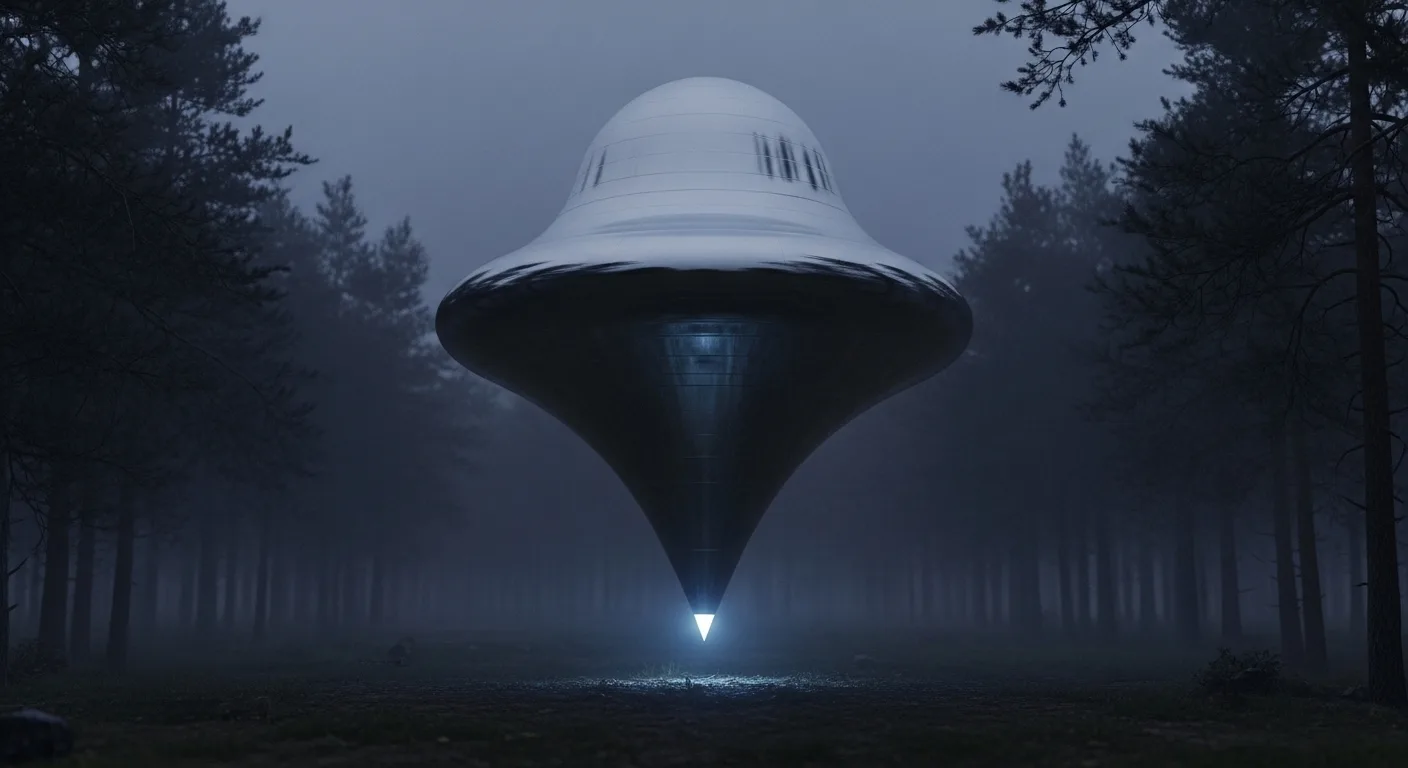
The Height 611 incident near Dalnegorsk is recognized as the most thoroughly documented UFO crash case in Russian history. Unlike other cases where debris disappears or witnesses recant, the Dalnegorsk materials were collected, analyzed by Soviet scientists, and found to contain anomalies that defied explanation.
At approximately 7:55 PM local time on January 29, 1986, residents of Dalnegorsk, a mining town in the Soviet Far East near the Sea of Japan, observed a reddish, ball-shaped object moving silently across the sky. The object was described as approximately the size of half the full moon, reddish-orange in color, glowing, and moving parallel to the ground, not falling. It traveled at a relatively slow speed before impacting Height 611 – a rocky hill, 611 meters tall, giving it its name – on the outskirts of town. The sphere appeared to “brush” the hilltop, bouncing or skipping slightly, before finally crashing and igniting.
The investigation into the incident was conducted with institutional backing by Soviet scientists. Valeri Dvuzhilny, a local scientist and the first investigator on the scene, reached the crash site within days and began collecting samples. Scientists from multiple institutes within the Soviet Academy of Sciences eventually examined the materials, and the Soviet military reportedly took interest in the case and conducted their own investigation.
When investigators reached the summit of Height 611, they found a burned area – a patch approximately 2 meters by 2 meters – showing signs of extreme heat. The rocks were blackened and partially vitrified, or turned to glass. Metallic debris, small pieces of an unknown material, were scattered across the site. These became the most important evidence. Nearby vegetation showed unusual damage, with dead branches in patterns that didn’t match normal fire damage. Remarkably, there was no impact crater – suggesting the object had not been falling when it struck but moving horizontally.
The recovered materials were analyzed by Soviet scientists who found extraordinary anomalies. They discovered tiny spherical beads of a lead-based alloy, containing unusual elements in proportions that didn’t match any known industrial process. A fine mesh-like material, resembling metal netting, was also recovered, primarily composed of lead, silicon, iron, and in unusual proportions. Fine threads of what appeared to be quartz glass were found, suggesting extreme temperatures far beyond ordinary fires, and microscopic gold particles were found embedded in some samples. Furthermore, some samples showed elevated radioactivity, though not dangerously high.
The materials displayed several properties that puzzled Soviet scientists. The metal compositions didn’t match any known terrestrial alloy or manufacturing process. The vitrification of rocks and the presence of certain materials suggested temperatures of at least 3,000°C - far beyond what a normal fire could produce. The crystalline structure of some samples showed patterns that couldn’t be replicated in laboratory conditions. Remarkably, some mesh samples reportedly displayed a shape-memory property, returning to their original form after being deformed.
Scientists concluded they could not explain the materials using known technology or natural processes.
Following the crash, Height 611 became a focus for unusual activity. Multiple witnesses reported seeing glowing objects near or over the hill on several occasions between 1987 and 1989. Some of these subsequent sightings described objects similar to the original sphere. Researchers continued to study the site throughout the late Soviet period. Whether these subsequent sightings were related to the original crash or represented coincidence (or heightened attention) remains debated.
The Soviet government’s response was unusual for the era. Scientists were permitted to study the materials and publish findings—a level of openness uncommon for UFO cases in either East or West. Despite analysis, no official explanation was ever provided. The case was never declared a hoax or misidentification, and the materials were not confiscated by shadowy agencies. Continued interest persisted, with Russian researchers continuing to study the case post-USSR, with materials still available for analysis.
Several theories have been proposed regarding the incident. The most common suggests space debris re-entering the atmosphere, however, the object’s horizontal movement and the unusual composition of the debris argue against this. Another theory posits a crashed experimental aircraft, but this doesn’t explain the anomalous materials or the lack of wreckage typical of aircraft crashes. Some speculate about a natural phenomenon, such as ball lightning, or an unknown atmospheric phenomenon, though ball lightning has never been documented leaving metallic debris with exotic compositions. Finally, a more sensational theory suggests a non-terrestrial craft, an object of unknown origin that crashed, leaving fragments of technology we cannot replicate or explain.
Today, some Dalnegorsk materials remain available for study, reportedly held by Russian research institutions. Analyses have been published in Russian scientific literature, and independent researchers have examined portions of the debris. The materials continue to resist explanation. Whatever crashed on Height 611 in January 1986, it was made of something we cannot identify or reproduce.
The Height 611 incident represents perhaps the best-documented physical evidence case in UFO history. The debris wasn’t confiscated by shadowy agencies. It was studied by credentialed scientists who published their findings. Their conclusion: unknown origin, unknown technology. The reddish sphere that struck a Russian hilltop on a winter evening left behind fragments that still challenge our understanding of what’s possible.
Sources
- CIA UFO/UAP Reading Room — Declassified CIA documents on UAP