Voronezh Russia UFO Landing
Multiple witnesses in the Soviet city of Voronezh reported a UFO landing with tall, robotic beings. The story was reported by TASS, the official Soviet news agency, stunning the world.
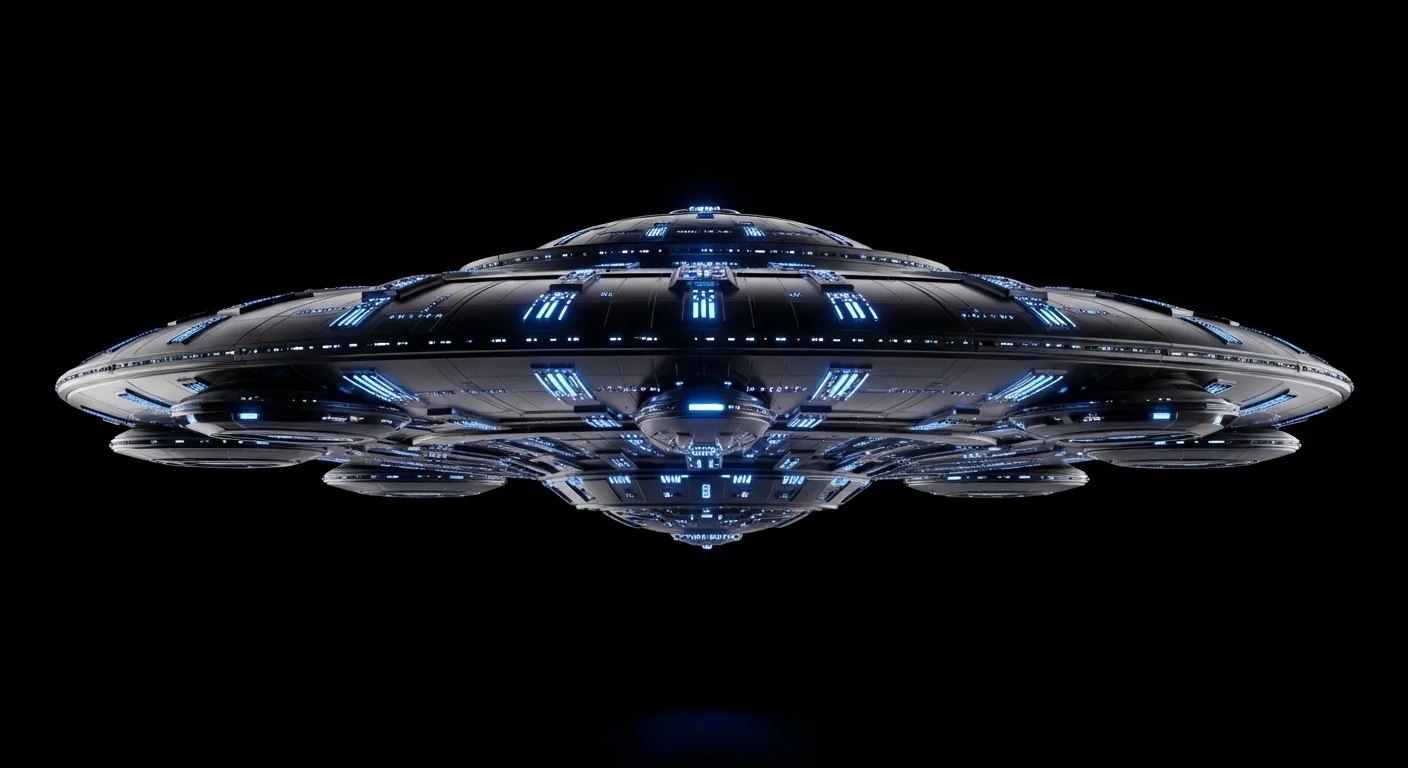
On the evening of September 27, 1989, in a public park in the industrial city of Voronezh in southern Russia, something happened that would have been dismissed as the ravings of overexcited children or the delusions of provincial townsfolk had it not been for one extraordinary fact: the official Soviet news agency, TASS, reported the incident as news. According to multiple witnesses, a large spherical craft descended into the park, landed on mechanical legs, and disgorged beings of enormous stature, approximately nine feet tall, with small heads and three eyes, accompanied by what appeared to be a mechanical robot. One of the beings allegedly pointed a device at a boy, causing him to become paralyzed, before the entities returned to their craft and departed. The TASS report, transmitted around the world, stunned the international community and marked the first and only time that a superpower’s official news agency had reported a UFO landing as established fact. Whether genuine encounter, mass hysteria, or glasnost experiment, the Voronezh incident remains one of the most remarkable episodes in the history of UFO phenomena.
The City and the Moment
Voronezh in 1989 was a quintessential Soviet industrial city, its skyline dominated by factory smokestacks and apartment blocks, its streets filled with citizens going about the routines of daily life under a system that was visibly crumbling around them. With a population of approximately nine hundred thousand, it was large enough to be significant but far enough from Moscow and Leningrad to exist somewhat outside the spotlight of international attention. The city’s economy was built on aerospace manufacturing, chemical production, and heavy industry, and its population was predominantly working-class, practical, and unlikely to generate the kind of sensational claims that might emerge from more cosmopolitan or eccentric communities.
The timing of the incident was as significant as the location. September 1989 was a moment of extraordinary upheaval in the Soviet Union and across Eastern Europe. Mikhail Gorbachev’s policies of glasnost and perestroika had opened cracks in the system that were rapidly widening into chasms. The Berlin Wall would fall just six weeks after the Voronezh incident. The Baltic states were demanding independence. The Communist Party’s monopoly on truth, which had been absolute for seven decades, was dissolving in the light of transparency and free expression.
This political context is essential to understanding why the Voronezh incident became the sensation it did. Under the old Soviet system, a UFO landing reported by provincial witnesses would have been suppressed, ignored, or explained away by official ideology. Dialectical materialism had no room for extraterrestrial visitors, and the Soviet media, rigidly controlled by the state, would never have transmitted such a story. But glasnost had changed the rules. The media was freer than at any point in Soviet history, and TASS, long the mouthpiece of the Communist Party, was testing the boundaries of its new editorial independence.
The Evening in the Park
The events of September 27 unfolded in a park on the southern outskirts of Voronezh, an ordinary urban green space where children played after school and adults walked their dogs. According to the accounts that would later be compiled by investigators, the incident began in the early evening hours, when the park was still occupied by children and a number of adult passersby.
The first thing witnesses reported was the appearance of a reddish or pink glow in the sky above the park. This glow intensified and resolved into a discernible shape, a large sphere or disc that descended slowly toward the ground. The object was described as enormous, estimated at perhaps forty-five feet in diameter, and its descent was controlled and deliberate rather than the tumbling fall of a natural object or the powered flight of a conventional aircraft.
As the sphere approached the ground, it extended what witnesses described as landing legs or supports, mechanical appendages that deployed from the underside of the craft and made contact with the earth. The object settled onto these supports with what witnesses described as a gentle but perceptible impact, leaving impressions in the soil that would later be examined by investigators.
The children who were closest to the landing site described their reactions in terms that ranged from fascination to terror. Several ran toward the object, drawn by curiosity, while others fled in the opposite direction, overwhelmed by fear. The adults who were present reacted with varying degrees of composure, some watching in stunned silence and others calling out to the children to get away from the craft.
The Beings
What happened next elevated the Voronezh incident from a remarkable UFO sighting to something far more extraordinary. According to multiple witnesses, a door or hatch opened in the side of the sphere, and entities emerged.
The beings were described with a consistency that is remarkable given the chaos of the situation. Witnesses agreed that there were three entities, all of approximately the same enormous height, estimated at nine feet or roughly three meters tall. Their bodies were roughly humanoid in shape but proportioned differently from human beings, with torsos and limbs that seemed too large for their heads, which were described as disproportionately small. The most distinctive feature, reported by nearly every witness, was that the beings appeared to have three eyes, the third located centrally above the other two.
The entities moved slowly and deliberately, their gait described as stiff and mechanical but clearly purposeful. They surveyed the park and the witnesses with what observers interpreted as calm curiosity, showing no signs of aggression or fear despite the crowd of humans watching them. Their clothing, if that is what it was, appeared to be a form-fitting silvery suit that covered their entire bodies except for the head and hands.
Accompanying the three tall beings was a fourth entity that witnesses described as a robot. This mechanical figure was shorter than the beings and had a roughly box-like or rectangular shape. It moved in coordination with the beings, apparently under their direction, though the means of control was not evident. The robot’s purpose was unclear, but its presence added another dimension of strangeness to an already extraordinary scene.
The Boy
The most dramatic and disturbing element of the Voronezh encounter involved the interaction between one of the beings and a young boy who was among the children in the park. According to multiple accounts, one of the entities noticed the boy, turned toward him, and pointed a device of some kind in his direction. The boy immediately became rigid and unable to move, as if paralyzed by whatever the device had emitted.
The paralysis of the boy generated panic among the other witnesses. Adults shouted, children screamed, and some people ran from the park in terror. The being, apparently unperturbed by this reaction, continued to survey the area for a few moments before turning back toward the craft. As it did so, the boy was released from his paralysis and immediately fled, terrified but physically unharmed.
This element of the encounter, more than any other, attracted both the most intense interest and the most determined skepticism. The idea that an alien being had pointed a device at a human child and paralyzed him was deeply alarming, and it raised immediate questions about the potential danger posed by whatever had visited Voronezh. Skeptics pointed out that the paralysis account came primarily from children and suggested that the entire episode might be a product of childhood imagination amplified by fear and confusion.
However, some of the adults present confirmed at least the broad outlines of the account. They reported seeing the boy become suddenly motionless and rigid, his body locked in place as if frozen, before regaining mobility when the being turned away. Whether this paralysis was caused by a technological device, by psychological shock, or by the power of suggestion remains a matter of debate.
The Departure
After a period estimated by witnesses at between five and fifteen minutes, though the perception of time during such an extraordinary event is notoriously unreliable, the beings and their robot companion returned to the sphere. They entered through the same opening through which they had emerged, and the hatch closed behind them. The sphere then rose from the ground, retracting its landing supports as it did so, and ascended rapidly into the sky. Within moments, it had disappeared from view, leaving behind a park full of stunned witnesses and a set of impressions in the soil where the object had rested.
The TASS Report
The element of the Voronezh incident that transformed it from a local curiosity into a global sensation was the decision by TASS, the official news agency of the Soviet Union, to report the landing as news. On October 9, 1989, TASS transmitted a story describing the Voronezh encounter in matter-of-fact terms, citing witness testimony and noting that Soviet scientists had investigated the landing site and found anomalies consistent with the accounts provided by observers.
The impact of the TASS report cannot be overstated. For seventy years, the Soviet government had maintained iron control over its domestic media, and TASS had served as the authoritative voice of the Communist state. A TASS report was not a tabloid headline or a sensational broadsheet story. It was an official statement from one of the world’s two superpowers, transmitted through the same channels that carried news of Politburo decisions, arms control negotiations, and state visits. When TASS reported that a UFO had landed in a Russian city and that alien beings had walked among Soviet citizens, the world took notice.
International media picked up the story immediately, and it made headlines around the globe. Western news organizations, initially uncertain whether the report was genuine, confirmed that TASS had indeed transmitted the story and that Soviet authorities appeared to be standing behind it. The reaction ranged from astonishment to skepticism to outright hilarity, but the sheer unprecedented nature of the report ensured that it received enormous attention.
The TASS report was carefully worded, presenting the witness accounts without editorial commentary and noting that scientific investigation was underway. It did not explicitly state that extraterrestrial beings had visited Voronezh, but the clear implication of the report was that something genuinely extraordinary had occurred and that the Soviet state was taking it seriously. This approach, neither confirming nor denying an extraterrestrial explanation, generated more questions than it answered and fueled speculation that the report might serve purposes beyond simple news dissemination.
The Investigation
Soviet scientists who examined the landing site in the days following the incident reported finding physical anomalies consistent with the witness accounts. Impressions in the soil at the location where the sphere was said to have landed showed evidence of significant pressure, as if a heavy object had rested there. The soil within and around the impressions showed chemical and mineralogical anomalies that investigators could not explain through normal environmental processes.
Geophysical measurements at the site reportedly revealed unusual readings, including elevated levels of certain types of radiation and disturbances in the local magnetic field. These findings were presented as supporting evidence for the witnesses’ claims, though skeptics pointed out that such anomalies could have multiple causes and did not necessarily confirm the landing of an extraterrestrial craft.
The investigators also conducted extensive interviews with the witnesses, including both the children who had been closest to the landing site and the adults who had observed from greater distances. The interview process revealed a core group of witnesses whose accounts were consistent, detailed, and resistant to challenges, surrounded by a larger number of people who had seen something unusual but could provide less specific information.
Skepticism and Context
The Voronezh incident attracted vigorous skeptical analysis from the moment it became public. Critics raised numerous objections to the accounts, questioning the reliability of child witnesses, the possibility of mass hysteria, and the motivations of both the witnesses and the Soviet authorities in promoting the story.
The prominence of children among the primary witnesses was a particular focus of criticism. Skeptics argued that children are highly suggestible, prone to imagination, and capable of elaborating simple observations into elaborate narratives through a process of mutual reinforcement. In a group setting, where children are observing something unusual and discussing it excitedly among themselves, the potential for collective embellishment is significant. A strange light in the sky could become a landing craft, an unusual shadow could become a nine-foot being, and a moment of confusion could become a paralysis ray.
The glasnost context provided another avenue for skeptical interpretation. Some analysts suggested that the TASS report was not a genuine news story but rather an experiment in the limits of the new press freedom, a test case to see how far the media could go in reporting sensational claims without triggering a backlash from the party apparatus. Others proposed that the report was a deliberate distraction, designed to divert public attention from the political and economic crises that were consuming the Soviet Union in the autumn of 1989.
Still others took a more nuanced view, suggesting that the incident was genuine but that the witnesses had misinterpreted what they had seen. A military test, an unusual atmospheric phenomenon, or some other mundane event might have been observed and then filtered through cultural expectations and childhood imagination into the extraordinary narrative that eventually emerged. This interpretation acknowledged that the witnesses had seen something real while questioning the accuracy of their descriptions.
A Historic Moment
Regardless of what actually happened in that Voronezh park on the evening of September 27, 1989, the incident occupies a unique position in the history of the UFO phenomenon. It is the only case in which a superpower’s official news agency reported a UFO landing as established fact, lending the story a level of institutional credibility that no other UFO case has ever received. The TASS report, whatever its motivations, crossed a threshold that no government had previously approached, and it remains a singular moment in the relationship between state authority and the UFO question.
The Voronezh incident also captures a specific moment in world history, the twilight of the Soviet empire, when the old certainties were dissolving and the boundaries of the possible were being redrawn across every domain of human experience. In that atmosphere of upheaval and possibility, the idea that alien beings might land in a Russian city park seemed, if not plausible, at least consistent with a world in which everything that had seemed permanent was proving temporary.
Whether the beings that walked in Voronezh were visitors from another world, projections of collective imagination, or something that resists easy categorization, they remain part of the historical record. The witnesses who saw them are real. The impressions in the soil were real. The TASS report was real. And the questions that the incident raised about the nature of reality, the reliability of perception, and the relationship between belief and truth remain as unanswered and as urgent as they were on that extraordinary evening when something descended from the sky into an ordinary park in an ordinary city, and nothing was quite ordinary again.
Sources
- CIA UFO/UAP Reading Room — Declassified CIA documents on UAP