Robert Taylor Encounter
Forestry worker Robert Taylor encountered a spherical craft in the woods. Two smaller spheres attacked him, tearing his trousers and leaving him unconscious. Police treated it as a criminal assault.
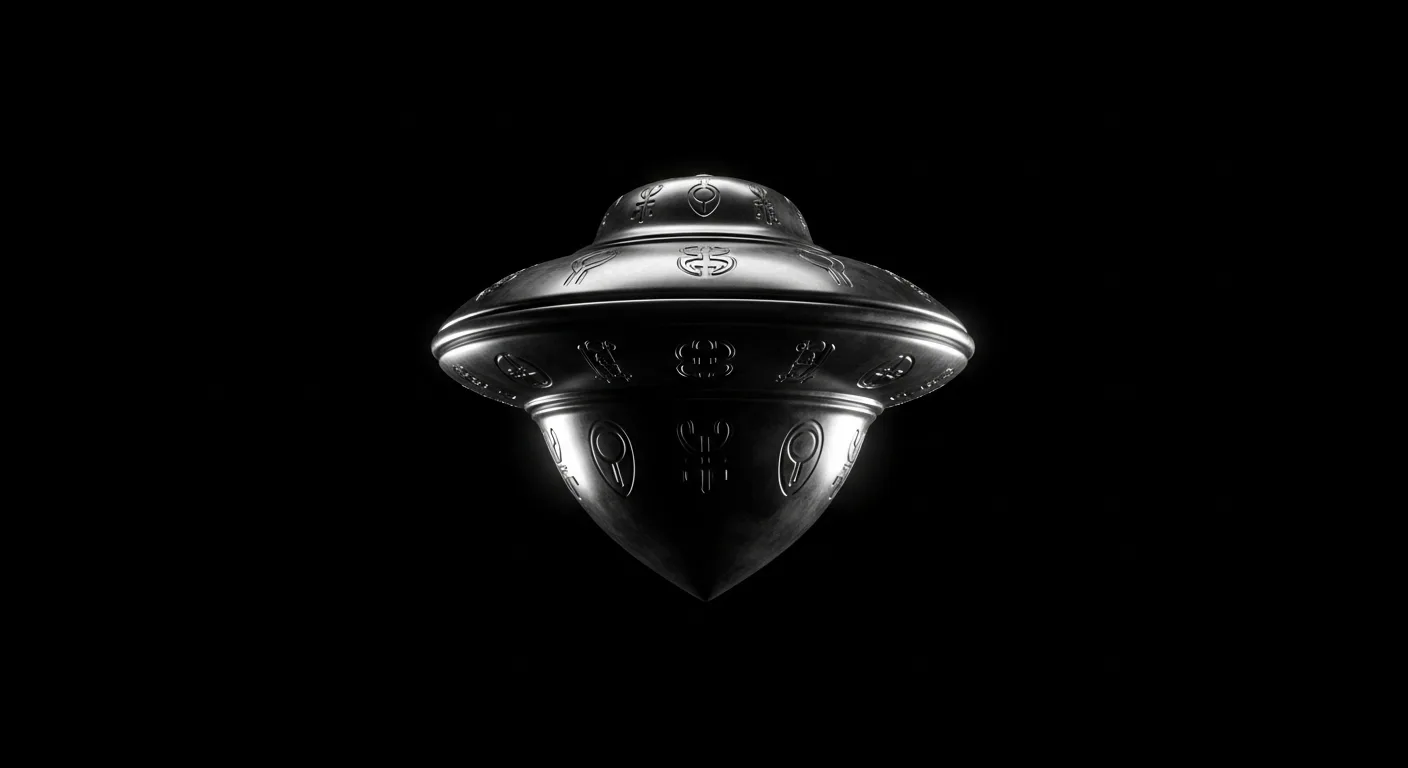
On the morning of November 9, 1979, a sixty-one-year-old forestry worker named Robert Taylor drove his pickup truck along a rutted track into Dechmont Woods, a quiet stretch of woodland near the town of Livingston in West Lothian, Scotland. He had made this journey countless times before. His job with the Livingston Development Corporation involved inspecting young trees, checking fences, and monitoring the progress of new plantings across the corporation’s land. It was mundane work, and Taylor was a mundane man—steady, reliable, well-liked by his colleagues, and utterly uninterested in anything related to flying saucers or the paranormal. By the time he returned home that afternoon, dazed and terrified, his trousers torn and his legs bruised, he had become the central figure in the only UFO encounter in British history to be investigated by police as a criminal assault.
The Man in the Woods
To appreciate the significance of what happened in Dechmont Woods, one must first understand the kind of man Robert Taylor was. Born in 1919, Taylor had spent his working life in practical, outdoor occupations. He was a forester by trade and by temperament—a man who knew trees and soil and weather, who could read the health of a sapling at a glance and predict rainfall by the behavior of birds. His colleagues at the Livingston Development Corporation regarded him as one of the most dependable men on the staff. He was not given to flights of fancy, did not drink excessively, and had no history of mental illness or neurological disorders.
Taylor lived with his wife Mary in a modest home in Livingston, a planned new town that had been developed in the 1960s to accommodate Glasgow’s overspill population. The landscape around Livingston was a mixture of new housing estates and ancient woodland, and Dechmont Woods—also known as Dechmont Law after the volcanic hill at its center—was one of these older patches of forest, a place of birch and pine that had stood largely undisturbed for generations.
Those who knew Taylor universally described him as honest and straightforward. He was not the sort of man who sought attention or enjoyed telling tall tales. When he later described what he had seen in the woods, those who knew him best believed him without reservation—not because they necessarily accepted the existence of extraterrestrial craft, but because they knew Robert Taylor simply was not capable of fabricating such a story.
Into the Clearing
The morning of November 9 was overcast but dry, a typical late-autumn day in central Scotland. Taylor parked his truck at the end of an access track and set off on foot into the woods, accompanied by his red setter, Lara. His plan was routine: walk through a section of young trees, check for damage from deer or weather, and return to his vehicle. The path he followed was one he had walked many times before, a familiar route through terrain he knew intimately.
As Taylor rounded a bend in the path and entered a clearing on the lower slopes of Dechmont Law, he stopped abruptly. There, hovering silently above the ground, was an object unlike anything he had ever seen. It was roughly spherical, perhaps twenty feet in diameter, and appeared to be made of a dark grey metallic material. The surface was not smooth but textured, and Taylor later described it as having a rough finish, almost like sandpaper. Around the circumference of the sphere ran a narrow rim or flange, from which protruded a series of stems or antennae. The object hovered motionless, making no sound whatsoever, suspended a few feet above the grass of the clearing.
Taylor stood transfixed. In interviews afterward, he struggled to convey the sheer strangeness of the moment—the absolute incongruity of this object in the familiar setting of the Scottish woodland. The forest was silent around him. Even the birds had stopped singing. His dog stood rigid beside him, apparently as startled as her master. The sphere seemed to shimmer slightly at its edges, as though the air around it were disturbed, and through this shimmer Taylor could occasionally glimpse the trees behind it, as if the object were partially transparent or capable of bending light around itself.
What happened next transformed the encounter from a sighting into something far more disturbing.
The Attack
As Taylor stood staring at the sphere, two smaller objects detached from it—or perhaps dropped from beneath it—and began rolling toward him across the grass. These objects were roughly the size of footballs and appeared to be made of the same dark material as the larger craft. Their surfaces, however, were not smooth but covered in spikes or protrusions that made them resemble naval mines. They moved with apparent purpose, rolling directly toward Taylor as if guided by some intelligence.
Before Taylor could react, the two spiked spheres reached him and attached themselves to his trousers, one on each leg just below the hip. He felt a sharp tugging sensation, as though the objects were attempting to drag him toward the larger sphere. At the same moment, an acrid, choking smell filled his nostrils—a chemical odor that burned his throat and made his eyes water. Taylor described the smell as unlike anything he had encountered before, though he sometimes compared it to burning brake linings or a strong solvent.
The tugging intensified. Taylor felt himself being pulled forward against his will, his feet dragging across the ground. He could hear the fabric of his trousers tearing where the objects had seized him. The choking sensation grew worse, and Taylor felt consciousness slipping away from him. His last clear memory was of struggling against the pull, trying to resist whatever force was dragging him toward the hovering sphere. Then everything went black.
Aftermath in the Clearing
When Taylor regained consciousness, he was lying face down on the grass of the clearing. The sphere and its smaller companions had vanished. His dog, Lara, was barking frantically and running in circles around him. Taylor tried to stand but found that his legs would not support him properly. He was shaking violently, his mouth was dry, and he had a pounding headache. The acrid smell still lingered in his nostrils.
Looking down at himself, Taylor discovered that his trousers had been badly torn. There were rips on both legs, running from the waistband downward in a distinctive ladder pattern. His legs beneath the tears were bruised and scratched. He also noticed that his chin was grazed, presumably from falling face-first onto the ground when he lost consciousness.
Disoriented and frightened, Taylor attempted to walk back to his truck but found he could barely stagger. His coordination was severely impaired, and he later estimated that it took him nearly twenty minutes to cover a distance he would normally walk in five. When he finally reached his vehicle, he discovered he could not speak properly—his voice had been reduced to a hoarse croak, presumably from the choking fumes he had inhaled. He tried to radio his supervisor but could not make himself understood. Unable to drive his truck because his legs were too weak to operate the pedals, Taylor eventually managed to half-walk, half-crawl the mile or so to his home.
Mary Taylor was alarmed when her husband staggered through the door, disheveled, muddy, and clearly distressed. His trousers were in tatters, his face was scratched, and he was barely able to speak. When he managed to croak out a garbled account of what had happened, Mary’s first thought was that he had been attacked by someone in the woods. She telephoned Dr. Gordon Adams, the family doctor, and Malcolm Drummond, Taylor’s supervisor at the Livingston Development Corporation.
The Police Investigation
Malcolm Drummond arrived at the Taylor home within the hour and immediately recognized that something genuinely alarming had occurred. Taylor was visibly shaken in a way that was entirely out of character for the normally stoic forester. Drummond drove back to Dechmont Woods to examine the clearing Taylor had described and found physical evidence that corroborated the account. In the grass of the clearing were two parallel tracks—deep indentations in the turf, each about three and a half inches wide—running in a pattern that suggested something heavy had been dragged across the ground. There were also approximately forty holes punched into the earth in a circular pattern, each hole roughly three and a half inches in diameter and arranged in two concentric rings. The marks were fresh and did not correspond to any machinery or natural process Drummond could identify.
Drummond contacted the police. The case was assigned to Detective Constable Ian Wark of the Lothian and Borders Police, and the investigation that followed was unprecedented in British law enforcement. Because the physical evidence—Taylor’s torn clothing, his injuries, the marks on the ground—was consistent with an assault, the police opened the case as a criminal investigation under the category of assault by persons unknown. It remains the only UFO-related incident in the United Kingdom to receive this classification.
The police approach was methodical and thorough. The clearing was treated as a crime scene. Officers took plaster casts of the ground markings and photographed the site from multiple angles. Taylor’s torn trousers were collected as evidence and sent for forensic analysis. The laboratory examination revealed that the tears in the fabric were consistent with the trousers having been seized and pulled by some mechanical device—the damage showed clean ripping along the seams rather than the random tearing that might result from catching on branches or barbed wire. The direction of the tears was upward, from the lower leg toward the waist, consistent with Taylor’s account of being pulled or dragged.
Dr. Adams examined Taylor and confirmed the physical injuries: bruising to both legs, abrasions to the chin, and irritation to the throat consistent with exposure to an irritant chemical or gas. Taylor’s vital signs were otherwise normal, and there was no evidence of alcohol consumption or drug use. The doctor found no medical explanation for Taylor’s sudden collapse and subsequent disorientation.
Searching for Explanations
The Lothian and Borders Police pursued their investigation diligently but were unable to identify any perpetrator or provide a conventional explanation for the incident. The ground markings defied easy categorization. Some investigators suggested they might have been caused by a piece of forestry equipment, but no such machinery had been used in that area, and the pattern of the marks did not match any known vehicle or tool. The circular arrangement of the holes was particularly puzzling—they appeared to have been made by something pressing down into the turf with considerable force, but the spacing and regularity suggested mechanical precision rather than random impact.
Various explanations have been proposed over the years. Skeptics have suggested that Taylor may have suffered an epileptic seizure or a similar neurological episode, and that his memory of the encounter was a confabulation produced by his disoriented brain. This theory accounts for the loss of consciousness and the subsequent confusion, but it does not explain the torn trousers, the ground markings, or the testimony of those who examined the site. Taylor had no history of epilepsy, and subsequent medical examinations found no evidence of any neurological condition that might produce such symptoms.
Others have proposed that Taylor encountered some kind of secret military craft or experimental vehicle. Scotland has long hosted military installations, and it is not impossible that some form of classified technology was being tested in the area. However, no military authority has ever claimed responsibility for such a test, and the behavior of the object as described by Taylor—hovering silently, deploying smaller objects that physically attacked a civilian—seems inconsistent with any plausible military exercise.
The most straightforward explanation, and the one that Taylor himself maintained until his death, is that he encountered a craft of unknown origin. Taylor never wavered from his account. He did not embellish it, did not seek publicity, and did not attempt to profit from his experience. In the years following the incident, he reluctantly gave a small number of interviews but generally preferred to avoid the subject entirely. He found the attention embarrassing and the experience itself deeply unsettling.
The Character of the Witness
What makes the Robert Taylor case so compelling to UFO researchers is not merely the physical evidence—though that is significant—but the character of the witness himself. Taylor had no interest in UFOs before his encounter and developed none afterward. He did not read books about flying saucers, did not attend conferences, and did not join organizations dedicated to the study of unidentified aerial phenomena. He was, by every account, a practical man who had seen something he could not explain and who reported it honestly because that was his nature.
His colleagues at the Livingston Development Corporation rallied around him. Far from questioning his sanity or integrity, they accepted his account because they knew the kind of man he was. Malcolm Drummond, who had examined the clearing and seen the evidence firsthand, never doubted that something extraordinary had occurred. The police officers who investigated the case, while careful to make no definitive claims about the nature of the object Taylor had seen, treated his testimony as credible and his injuries as genuine.
Taylor continued working for the Livingston Development Corporation until his retirement and lived quietly in the Livingston area until his death on March 14, 2007, at the age of eighty-nine. He never changed his story, never recanted, and never offered any alternative explanation for what had happened to him that November morning in 1979. To the end of his life, he simply said that he had seen what he had seen.
The Legacy of Dechmont Woods
The Robert Taylor incident has become one of the most significant UFO cases in British history, and its importance extends well beyond the community of UFO enthusiasts. The fact that a police force investigated a UFO encounter as a criminal assault, using the same forensic methods and evidentiary standards they would apply to any other violent crime, gives the case a unique standing in the literature. The physical evidence—the torn trousers, the ground markings, the medical examination—provides a degree of corroboration that is rare in UFO reports, which more typically rely on eyewitness testimony alone.
In 1992, a plaque was placed at the site of the encounter in Dechmont Woods, and the location has become something of a pilgrimage site for those interested in the UFO phenomenon. The woodland itself remains much as it was in 1979—a quiet, unremarkable stretch of birch and pine on the outskirts of a Scottish new town. Visitors who walk through the clearing where Taylor had his experience often remark on the ordinariness of the setting, the sheer improbability that anything extraordinary could have occurred in such a mundane landscape.
Yet it is precisely this ordinariness that gives the Taylor case its power. This was not a sighting reported by someone scanning the skies for anomalies or by an enthusiast primed to interpret ambiguous stimuli as evidence of extraterrestrial visitation. This was a working man going about his daily routine in a place he knew as well as his own garden, who stumbled upon something that defied every frame of reference he possessed. His response was not wonder or excitement but fear and confusion—the entirely human reaction of a practical man confronted with something that should not exist.
The ground markings that police documented have never been satisfactorily explained. The tears in Taylor’s trousers have never been replicated by any conventional mechanism. The acrid smell he described has never been identified. And the object itself—a dark grey sphere hovering silently above a Scottish clearing on a grey November morning—has never been seen again in Dechmont Woods, though the memory of its presence lingers like the fading scent of something chemical and strange in the still air between the trees.
Whatever Robert Taylor encountered that morning, it left marks—on the ground, on his clothing, on his body, and on his mind. The criminal case was never closed, because the assailant was never identified. In the files of the Lothian and Borders Police, somewhere among the records of assaults and batteries and grievous bodily harm, there remains an open case involving an unidentified attacker in the woods near Livingston. It is a case that will almost certainly never be solved, because the perpetrator—if perpetrator is even the right word—came from somewhere beyond the jurisdiction of any earthly authority and departed to a place no detective could follow.
Sources
- CIA UFO/UAP Reading Room — Declassified CIA documents on UAP
- UK National Archives — UFO Files — MoD UFO investigation records
- British Newspaper Archive — UK press archive