Robert Taylor Incident (Dechmont Woods)
A Scottish forester encountered a metallic sphere that sent smaller objects to grab him. He lost consciousness. His trousers were torn. Police investigated it as an assault. The only UFO case treated as a crime.
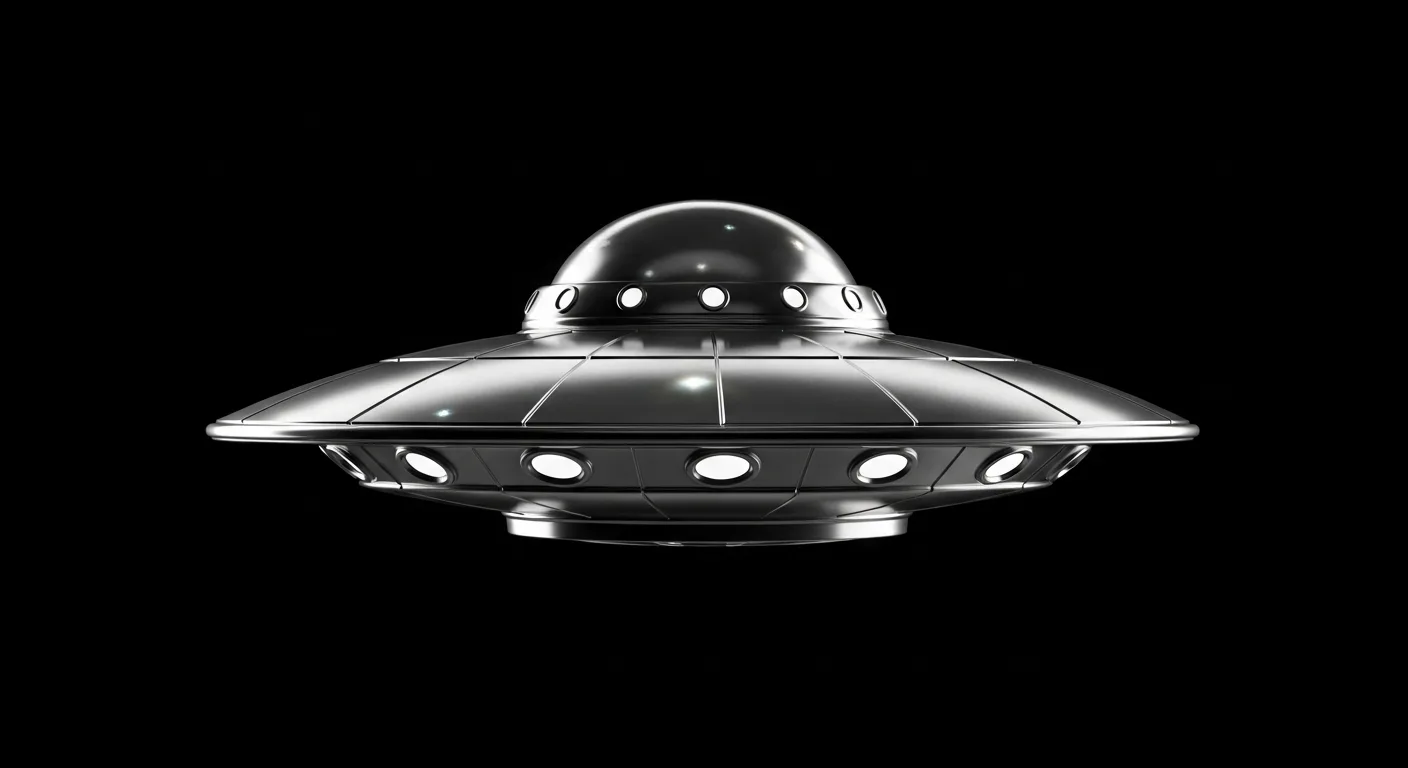
In the annals of UFO encounters, the Robert Taylor Incident holds a singular distinction: it is the only case in history investigated by police as a criminal assault. On November 9, 1979, in a quiet woodland clearing near Livingston, Scotland, a respected forestry worker encountered something that left him unconscious, his clothing torn, and investigators baffled. The case file remains officially open to this day.
The Encounter
According to documented accounts, Robert Taylor was working his regular duties for the Forestry Commission on that autumn morning. He parked his pickup truck at the edge of Dechmont Woods and began walking into the forest with his dog, a routine inspection of trees he had performed countless times before.
As Taylor entered a clearing in the woods, he stopped abruptly. Hovering just above the ground before him was a large metallic sphere, approximately twenty feet in diameter. The object was gray in color with a texture Taylor later described as resembling sandpaper, rough and irregular rather than smooth. Dark patches on its surface might have been windows or ports, though Taylor could not be certain.
Before he could react, two smaller spheres emerged from the main craft. These objects, roughly the size of soccer balls, were covered in protruding spikes like naval mines. They rolled rapidly across the ground directly toward him, moving with apparent purpose.
The Attack
The smaller spheres reached Taylor within seconds. They attached themselves to his trouser legs, one on each side, gripping the fabric with their spike-like appendages. Then they began dragging him toward the larger sphere. Taylor struggled against them, but their grip was firm.
As he was pulled forward, Taylor became aware of an acrid, burning smell that filled his nostrils and throat. The odor was overwhelming, choking, unlike anything he had encountered in his years working outdoors. His vision began to blur, his strength failed, and he lost consciousness.
When he awoke, he was lying face-down on the ground. The spheres, both large and small, were gone. His dog was running in frantic circles around him, barking. Taylor tried to stand but found he was too disoriented. He tried to speak but could not form words properly. His trousers were torn where the smaller objects had gripped them.
Physical Evidence
Taylor eventually managed to stumble back toward his truck, but in his confused state, he drove it into soft ground and became stuck. He abandoned the vehicle and somehow made his way home on foot, arriving in a state that alarmed his wife. She immediately called the police and a doctor.
Investigators from Lothian and Borders Police arrived at the Taylor home and then proceeded to Dechmont Woods. What they found there transformed a strange story into a criminal investigation. In the clearing where Taylor claimed the encounter occurred, police documented two parallel ladder-like tracks in the ground, consistent with where a heavy object might have rested. Surrounding these larger marks were thirty-two smaller circular holes in a pattern that matched Taylor’s description of the spiked spheres and their movements.
Taylor’s torn trousers were taken as evidence. The tears were examined and found to be consistent with something gripping the fabric and pulling with considerable force. The pattern of damage matched Taylor’s account of the smaller spheres attaching to his legs.
Police Investigation
Lothian and Borders Police treated the case with complete seriousness. Having no other explanation for the injuries, torn clothing, and physical evidence at the scene, they opened an investigation into criminal assault by an unknown assailant. Officers photographed the clearing, made plaster casts of the ground marks, and catalogued every piece of evidence.
Detectives interviewed Taylor multiple times, finding his account consistent and his demeanor that of a genuinely traumatized individual rather than someone perpetrating a hoax. They consulted with various experts attempting to find a conventional explanation for what had occurred. None was ever found, and the case remains officially unsolved and open on police books.
The Witness
Robert Taylor was precisely the kind of witness investigators consider most reliable. He had worked for the Forestry Commission for decades, a position requiring practical competence and steady judgment. He was well-known and respected throughout his community, with a reputation for honesty and level-headedness. He had no history of making unusual claims or seeking attention.
After the incident, Taylor actively avoided publicity. He gave interviews only reluctantly and never sought to profit from his experience. He found the attention embarrassing and simply wanted to return to his normal life. He maintained his account without variation or embellishment until his death in 2007, never wavering from his description of events despite decades of questioning and skepticism.
Medical Findings
Doctors who examined Taylor after the incident found physical evidence consistent with his account. He had grazes on his legs where he said the spheres had gripped him. He was significantly dehydrated, suggesting physical trauma or shock. He suffered from severe headaches that persisted for hours after the encounter.
The acrid smell Taylor described clinging to his clothes was noticed by his wife and others who encountered him immediately after the incident, providing independent corroboration that something unusual had occurred. His disorientation and speech difficulties were consistent with exposure to some form of noxious substance or severe shock.
Attempted Explanations
Skeptics have proposed various theories to explain the Taylor incident. Some have suggested he experienced a hallucination or mirage, perhaps brought on by fatigue or environmental factors. This explanation fails to account for the physical evidence: the torn trousers, the ground marks, the medical symptoms.
Others have proposed that Taylor suffered an epileptic seizure and confabulated the encounter to explain his condition. However, Taylor had no history of epilepsy before or after the incident, and seizures do not typically produce the specific physical evidence found at the scene.
Ball lightning has been suggested, but this rare atmospheric phenomenon does not match Taylor’s detailed description of structured, purposefully moving objects. No explanation has successfully addressed all aspects of the case.
Scotland’s Greatest UFO Mystery
The Robert Taylor Incident has become Scotland’s most famous UFO case, distinguished by its combination of official police investigation, documented physical evidence, and unimpeachable witness credibility. The case is taught in Scottish police training as an example of thorough investigation technique.
A memorial plaque was later installed at the site in Dechmont Woods, marking the location where Taylor had his encounter. The clearing remains accessible to visitors, though the ground marks documented in 1979 have long since disappeared under new growth.
In the quiet woodlands of central Scotland, where autumn mists drift between the trees and the sounds of civilization seem far away, something once appeared to Robert Taylor. The police files remain open. The evidence has been preserved. The questions linger still, awaiting answers that may never come.
Sources
- Robert Taylor incident — Wikipedia
- CIA UFO/UAP Reading Room — Declassified CIA documents on UAP
- UK National Archives — UFO Files — MoD UFO investigation records
- British Newspaper Archive — UK press archive