Robert Taylor Incident
Forester Bob Taylor encountered a spherical craft in a clearing that dispatched smaller objects which attached to him. Police investigated it as a criminal assault - the only UK UFO case treated as a crime.
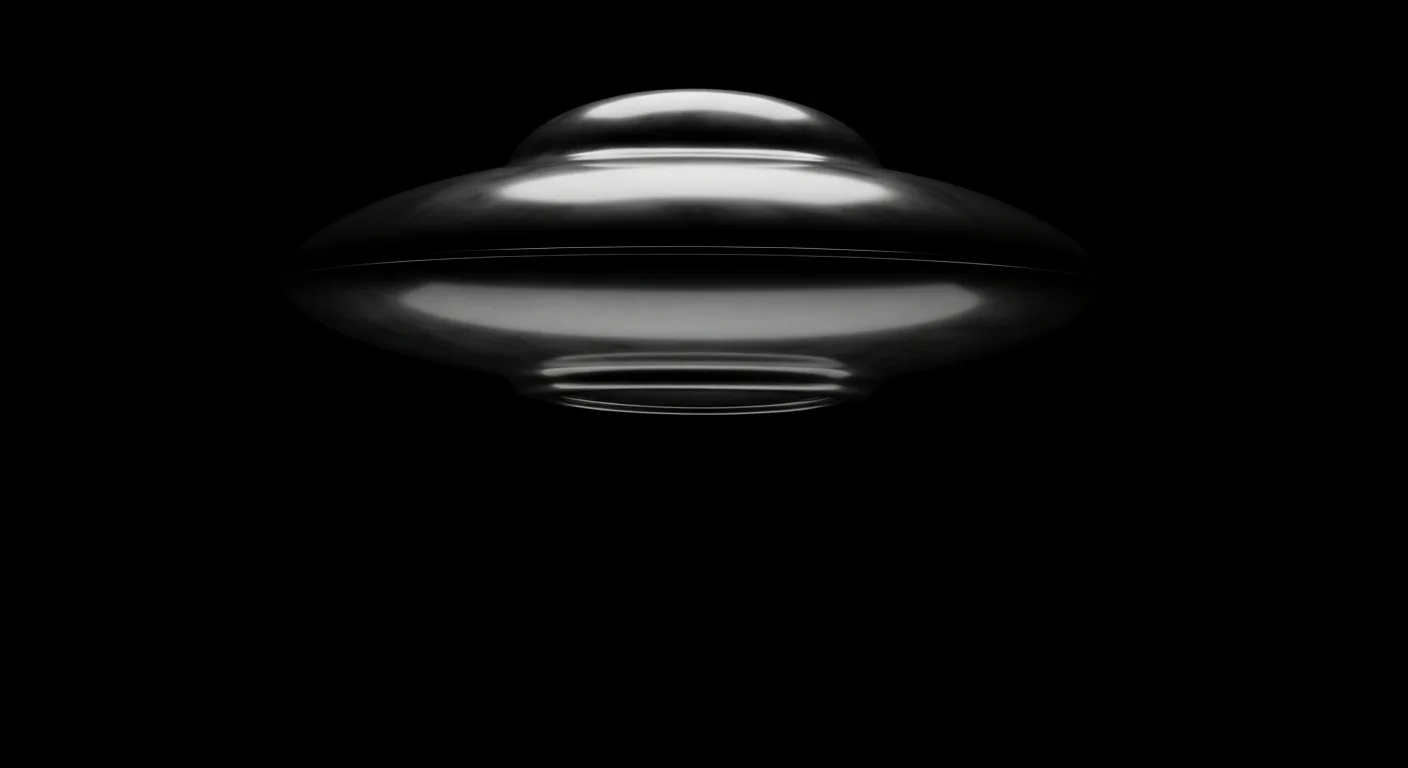
On the morning of November 9, 1979, a sixty-one-year-old forestry worker named Robert Taylor walked into a clearing on Dechmont Law, a wooded hill near the Scottish new town of Livingston, and encountered something that defied every frame of reference his six decades of ordinary life had provided. What he found was a large, spherical object hovering silently above the grass—a craft of unknown origin that appeared to be waiting for him. Before Taylor could fully comprehend what he was seeing, two smaller spherical objects detached from the main craft, rolled across the ground toward him on protruding spikes, and physically attached themselves to his trousers, dragging him forward with irresistible force. He smelled a choking, acrid odor, felt his consciousness failing, and collapsed. When he awoke some twenty minutes later, the craft was gone, his trousers were torn, his legs were grazed, and his dog was barking frantically at the empty clearing.
What happened next was unprecedented in the history of UFO encounters. The Lothian and Borders Police investigated the incident not as a UFO sighting but as a criminal assault on a member of the public. Forensic officers examined the scene, photographed ground markings, and seized Taylor’s trousers as evidence. The case was opened as a criminal investigation and, remarkably, was never closed. It remains on the books to this day as an unsolved assault—the only UFO encounter in British history to be treated as a crime.
The Man
Robert Taylor—Bob to everyone who knew him—was not the sort of person who appears in UFO reports. He was a forester, employed by the Livingston Development Corporation to manage the woodlands on and around Dechmont Law, a low, tree-covered hill on the outskirts of the new town. He had held the position for years and knew every path, clearing, and stand of trees on the hill with the intimate familiarity of a man whose working life was conducted entirely outdoors.
Taylor was a quiet, unassuming Scotsman of the old school—practical, reserved, uncomfortable with attention, and deeply skeptical of anything that could not be seen, measured, or explained through common sense. He had no interest whatsoever in UFOs, science fiction, or the paranormal. He did not read books about flying saucers, did not watch television programs about aliens, and had never previously reported anything unusual during his decades of working alone in the Scottish countryside.
His reputation in the community was sterling. Colleagues, neighbors, and police officers who knew him described a man of complete reliability—honest to a fault, steady in temperament, and utterly incapable of fabrication or exaggeration. When Bob Taylor said something had happened, people believed him, because Bob Taylor did not say things that had not happened. This bedrock credibility would prove crucial in the aftermath of the incident, transforming what might otherwise have been dismissed as the hallucination of a solitary elderly man into a case that demanded serious investigation.
The Morning Walk
The morning of November 9 was overcast but dry, a typical late autumn day in central Scotland. Taylor set out from his home in Livingston to check on some young trees he had planted on Dechmont Law, accompanied by his dog, a red setter named Lara. It was a routine task, the kind of work he performed regularly, and there was nothing about the morning that suggested anything out of the ordinary.
Taylor drove his pickup truck along a forest track that climbed the lower slopes of Dechmont Law, parking at a gate where the track became too narrow for the vehicle. From there, he continued on foot along a path that wound through the trees toward a clearing he knew well—a roughly circular open area in the woodland where the young trees were planted.
The path was familiar, the surroundings unremarkable. Pine trees lined the route, their branches forming a partial canopy overhead. The ground was soft with fallen needles, and the silence of the woodland was broken only by the sounds of the dog moving through the undergrowth and the distant noise of traffic from the town below.
Then Taylor rounded a bend in the path and entered the clearing, and his ordinary life ended.
The Object
Standing—or rather hovering—in the center of the clearing was an object unlike anything Taylor had ever seen. It was a large sphere, approximately twenty feet in diameter, positioned slightly above the ground. The surface was dark grey, with a texture Taylor would later compare to rough sandpaper or emery paper—not smooth and metallic but granular and somehow organic-looking. A rim or flange ran around the object’s equator, and the upper hemisphere featured several darker areas that might have been ports, panels, or openings of some kind.
The object appeared to be semi-transparent at times, as though it were flickering between full visibility and partial translucence. Taylor described a shimmering quality to the craft, as if it were struggling to maintain its physical presence in the clearing—or as if the air around it were being distorted by some field or force emanating from the object. Despite its enormous size, the object was completely silent. It produced no sound, no vibration, no wind, no heat—nothing that might indicate a conventional power source or propulsion system.
Taylor stood at the edge of the clearing, perhaps thirty meters from the object, and stared. He was not frightened—not yet. His initial reaction was one of profound bewilderment, the response of a practical man confronted with something his experience provided no category for. He later said that his first thought was that it might be some kind of military device or scientific instrument, though he immediately recognized that this explanation made no sense. Whatever this thing was, it did not belong in a Scottish forest clearing.
The Attack
While Taylor stood trying to process what he was seeing, two smaller objects detached from the main sphere. They were roughly the size of large footballs—perhaps eighteen inches in diameter—and they were covered with protruding spikes or legs that gave them the appearance of naval mines. The smaller objects dropped to the ground and began rolling toward Taylor with apparent purpose, crossing the distance between the craft and the forester with a speed and directness that left no room for doubt about their intent.
Before Taylor could react—before he could step back, turn, or run—the spiked objects reached him and attached themselves to his trousers, one on each side, gripping the fabric of his work pants just below the hips. Immediately, he felt himself being pulled forward, dragged toward the main craft by a force he was powerless to resist.
Simultaneously, a terrible smell engulfed him. Taylor described it as acrid, chemical, choking—an odor so intense and so overwhelming that it seemed to sear his throat and nostrils. Whether the smell was a byproduct of whatever mechanism the smaller objects used to grip and drag him, or whether it was a deliberate incapacitating agent, Taylor could not determine. What he could determine, in the final moments before consciousness left him, was that he was being pulled toward the sphere against his will and that he was completely unable to stop it.
Taylor collapsed. Lara, his dog, was barking wildly, running in circles around the clearing in a state of extreme agitation. Taylor’s last conscious impression was of the ground rushing up to meet him and the chemical smell filling his lungs.
The Aftermath
When Taylor regained consciousness, he was lying face down on the grass of the clearing. His first sensation was of his dog licking his face and whimpering. His head ached, his throat burned from the chemical smell, and his legs felt bruised and tender. The object was gone. The clearing was empty except for Taylor, his dog, and the evidence of what had occurred.
Taylor tried to stand and found that his legs were unsteady. He tried to speak and found that his voice would not come—his throat was raw, and he could produce only a hoarse whisper. He stumbled back along the path toward his truck, leaning on trees for support, moving with the uncoordinated gait of someone recovering from a severe shock.
When he reached his truck, Taylor attempted to drive home but found that his coordination was too impaired to manage the vehicle on the rough forest track. The truck became stuck in soft ground, and Taylor was forced to walk the remaining distance to his house—a journey of perhaps a mile that, in his diminished state, felt interminable.
His wife, Mary, was alarmed by his appearance when he arrived home. Taylor was disheveled, pale, unsteady on his feet, and unable to speak clearly. His trousers were torn—ripped at both sides, with the tears running from the waistband down toward the knees, consistent with something having gripped the fabric and pulled with great force. His legs bore grazes and bruises that corresponded to the torn areas of his trousers. He smelled strongly of the chemical odor he had described.
Mary Taylor called the police.
The Police Investigation
The response of the Lothian and Borders Police to the Taylor incident was extraordinary in the context of UFO cases and entirely appropriate in the context of what appeared to be an assault on a civilian. Officers arrived at the Taylor home, took Robert’s statement, and dispatched a team to examine the clearing on Dechmont Law.
What the forensic team found at the scene corroborated Taylor’s account in every detail that was capable of physical verification. The clearing showed two distinct types of ground markings. The first were what investigators described as “ladder marks”—a series of parallel indentations in the turf, arranged in a roughly circular pattern, as though something heavy had rested on the ground and compressed the soil beneath it. The marks were consistent with the size and position of the object Taylor described.
The second type of markings corresponded to the smaller, spiked objects. These were irregular tracks in the soft ground, showing indentations consistent with protruding spikes or legs—the marks that a mine-like sphere rolling across soft earth would be expected to leave. The tracks led from the area of the ladder marks to the position where Taylor said he had been standing when the objects attached to his trousers.
Taylor’s trousers were seized as evidence—an almost comically mundane piece of police work in the context of an encounter with an unknown craft, but entirely consistent with the investigation of an assault. The tears in the fabric were examined forensically. They were found to be consistent with the fabric having been gripped and pulled by a strong force, torn rather than cut, in a manner that supported Taylor’s account of being dragged by objects attached to his clothing.
A medical examination found Taylor to be in good physical and mental health, with no evidence of alcohol or drug intoxication and no psychiatric conditions that might explain a hallucinatory experience. The grazes on his legs were real, the chemical irritation to his throat was real, and his distressed condition was genuine. The examining physician could find no medical explanation for Taylor’s state other than the one Taylor himself provided.
The Investigation’s Conclusion
The police investigation was thorough, professional, and ultimately inconclusive—which is to say, the evidence supported Taylor’s account but did not permit identification of what had attacked him. The ground marks were real but could not be attributed to any known vehicle or device. The trouser tears were consistent with Taylor’s description but could not be matched to any known mechanism. The medical evidence confirmed that Taylor had experienced a genuine physical and psychological trauma but could not identify its cause.
The case was classified as an unsolved assault—criminal assault by person or persons unknown. It was not classified as a UFO report, because the police were not in the business of investigating UFOs. They were investigating an assault on a member of the public, and the fact that the apparent perpetrator was a hovering sphere in a forest clearing did not alter their procedural obligations.
The case has never been closed. It remains on the books of the Lothian and Borders Police (now Police Scotland) as an open, unsolved crime. No suspect has ever been identified, no arrest has ever been made, and no conventional explanation has ever been proposed that accounts for all the physical evidence. It is, in the driest possible terms of police administration, an ongoing investigation into an assault that happened to involve an unidentified flying object.
Taylor’s Later Years
Robert Taylor lived for another twenty-eight years after the Dechmont Law incident, dying in 2007 at the age of eighty-nine. Throughout those years, he maintained his account with the quiet consistency that characterized everything about the man. He did not embellish, did not dramatize, and did not seek to profit from his experience. He declined the vast majority of interview requests, refused offers of money for his story, and showed no interest in the UFO community or its debates.
When Taylor did discuss the incident, his accounts were notable for their matter-of-fact tone. He described what had happened to him in the same straightforward manner he might have used to describe a problem with a fence post or a disease in his trees—as an event that had occurred, that he had experienced, and that he could not explain. He made no claims about the origin or nature of the object, expressed no theories about aliens or advanced technology, and ventured no speculation about why it had appeared in his clearing or what the smaller objects had been trying to do when they dragged him forward.
This refusal to interpret was, paradoxically, one of the most compelling aspects of Taylor’s testimony. A hoaxer or fantasist would have constructed a narrative around the experience—would have identified the craft as alien, attributed motives to the encounter, and woven a story designed to captivate an audience. Taylor did none of these things. He reported what happened and declined to speculate about what it meant. His position, maintained for nearly three decades until his death, was simply that something extraordinary had occurred, that he had no explanation for it, and that the evidence spoke for itself.
The Physical Evidence
The Taylor incident occupies a rare position in UFO research as a case supported by physical evidence that was collected, documented, and preserved through proper forensic procedures. The ground marks, the trouser tears, the medical examination, and the police photographs constitute a body of evidence that meets the evidentiary standards of a criminal investigation—standards far more rigorous than those typically applied to UFO reports.
The trousers, in particular, have been subjected to repeated examination over the years. The tears are genuine, the fabric damage is consistent with gripping and pulling forces, and no conventional explanation for the damage has been proposed that is consistent with all the observed characteristics. The trousers were stored as police evidence and have been examined by textile experts, forensic scientists, and UFO researchers, all of whom have confirmed the unusual nature of the damage.
The ground marks at the clearing were photographed and measured by police forensic teams on the day of the incident. They showed clear, defined impressions in the turf that were not consistent with any known vehicle, animal, or natural process. The ladder-pattern marks suggested a heavy, structured object, while the spike marks suggested smaller objects moving across the ground surface. Both sets of marks were consistent with Taylor’s description of the craft and the smaller objects.
A memorial now stands in the clearing on Dechmont Law where the encounter occurred—a simple marker acknowledging the event and the man who experienced it. The clearing itself has changed little since 1979. The trees Taylor planted still grow around its edges, and the path he walked that November morning still winds through the woodland. It is a quiet, unremarkable place, the kind of spot that a forester might visit a hundred times without anything unusual occurring. On one of those visits, something occurred that has never been explained.
A Crime Without a Criminal
The Robert Taylor incident endures because it resists the easy dismissals that resolve most UFO cases. It cannot be attributed to misidentification—Taylor was meters from the object, in daylight, for an extended period. It cannot be attributed to hallucination—the physical evidence corroborates his account. It cannot be attributed to hoax—Taylor’s character, his consistent refusal to profit, and the forensic evidence all argue against fabrication. And it cannot be attributed to any known natural phenomenon—no weather condition, no geological event, no animal behavior produces spherical craft, mine-like drones, and torn trousers.
What remains is a mystery, clean and irreducible. A man walked into a clearing, encountered something he could not explain, was physically assaulted by unknown objects, and was left unconscious on the ground. The police investigated, found evidence supporting his account, and could not identify the perpetrator. The case remains open, the crime unsolved, the explanation as absent today as it was on that November morning when Bob Taylor, forester, walked around a bend in a familiar path and found the impossible waiting for him in the clearing beyond.
Sources
- Robert Taylor incident — Wikipedia
- CIA UFO/UAP Reading Room — Declassified CIA documents on UAP
- UK National Archives — UFO Files — MoD UFO investigation records
- British Newspaper Archive — UK press archive