Reverchon Park Encounter
Multiple families in a Dallas park watched a disc-shaped UFO hover low overhead before departing. Children and adults provided consistent descriptions of the close encounter.
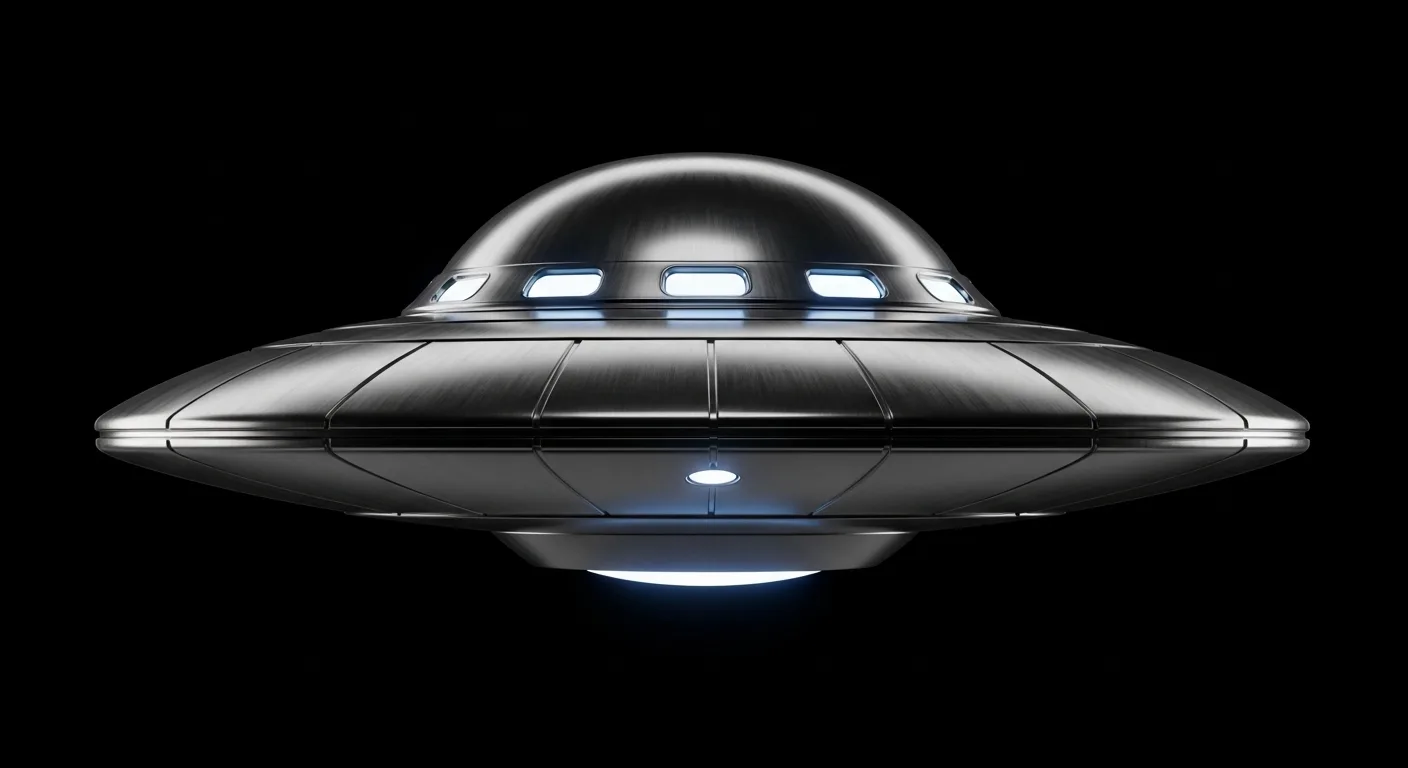
On the evening of September 12, 1959, in a public park in the heart of Dallas, Texas, approximately twenty people—men, women, and children from several unrelated families—watched a metallic, disc-shaped object hover silently above the treetops, hold position for several minutes as though observing the scene below, and then depart with a speed and silence that no known aircraft of the era could match. The Reverchon Park encounter is one of the most compelling urban UFO sightings of the late 1950s, notable not for exotic details or sensational claims but for its straightforward, almost mundane setting: ordinary families enjoying an ordinary evening in an ordinary city park, confronted by something that was anything but ordinary.
A September Evening in Dallas
Reverchon Park occupies roughly forty acres of green space just north of downtown Dallas, a neighborhood park that in 1959 served as a gathering place for the surrounding residential community. The park featured playgrounds, picnic areas, walking paths, and open grassy fields where children could run and families could spread blankets for informal evening outings. In September, with the worst of the Texas summer heat finally beginning to relent, the park would have been busy with families taking advantage of the cooler evenings, a scene replicated in thousands of parks across America on any given weekend.
The evening of September 12 was clear, with good visibility and no significant weather events that might later be cited as potential explanations for what was about to occur. The sun was setting, the sky transitioning from the deep blue of late afternoon to the warmer tones of early evening. Several families were present in the park, most of them engaged in the typical activities of an American evening out—children playing on equipment or chasing each other across the grass, adults conversing in small groups or watching their children from nearby benches.
It was into this scene of comfortable domesticity that the object appeared, its arrival so unexpected and so thoroughly inconsistent with the normal activity of a city park that witnesses initially struggled to process what they were seeing. The mundane setting is itself significant in evaluating the case. These were not people who had gone out looking for unusual aerial phenomena, not sky-watchers or amateur astronomers scanning the heavens for anomalies. They were families at a park, their attention directed toward children, conversations, and the simple pleasures of a pleasant evening. The object came to them, not the other way around.
The Object
The witnesses’ descriptions of the object were remarkably consistent, a fact that investigators would later highlight as one of the case’s strongest features. What they described was a disc-shaped craft, broadly circular when viewed from below, with a slight dome or raised section on its upper surface. The object appeared metallic, reflecting the ambient light of the evening sky with a dull, silvery sheen that several witnesses compared to brushed aluminum or stainless steel. It was large—estimates of its diameter ranged from thirty to fifty feet, though precise estimation of aerial objects is notoriously difficult—and it was close, hovering at an altitude that witnesses estimated at between one hundred and two hundred feet above the ground, well below the height at which conventional aircraft would normally operate over an urban area.
The object was either completely silent or produced only a faint humming sound, so quiet that witnesses disagreed on whether they heard anything at all or were simply filling in expected noise with their imaginations. This silence was, for many witnesses, one of the most disturbing aspects of the encounter. An object of that size, hovering at that altitude, should have produced some audible sound—the roar of jet engines, the thwap of helicopter rotors, the drone of a propeller. The absence of any significant sound created a surreal quality to the sighting, as though the normal rules governing the relationship between cause and effect had been temporarily suspended.
The object hovered motionless above the treetops for what witnesses estimated to be between three and five minutes, an extended period that allowed for detailed observation. During this time, the object remained perfectly stationary, displaying none of the drift or wobble that would be expected from a lighter-than-air craft such as a balloon or blimp. Its stability was absolute, its position fixed as though it were anchored to the sky rather than suspended in it.
Several witnesses reported seeing structural details on the underside of the object—seams, panels, or what appeared to be circular markings arranged in a pattern around the craft’s lower surface. These details varied somewhat between accounts, as would be expected given the different viewing angles and the fading light conditions, but their presence across multiple independent descriptions suggests that witnesses were observing a genuinely structured object rather than a natural phenomenon or optical illusion.
The Witnesses
The strength of the Reverchon Park case lies in the number and diversity of its witnesses. Approximately twenty people from at least four or five unrelated family groups observed the object during its hovering period. These witnesses included men and women of various ages, from young children to mature adults, representing a cross-section of the middle-class Dallas community that used the park.
The witnesses had no prior connection to each other beyond their shared use of the park. They did not know each other’s names, had not coordinated their stories, and in several cases did not speak to each other about what they had seen until investigators brought them together weeks or months later. When their accounts were compared, the consistency was striking. They agreed on the object’s shape, its approximate size, its color, its altitude, its silence, and the manner of its departure. Minor variations existed—one family placed the object slightly to the north of where another family remembered it, estimates of duration varied by a minute or two—but these discrepancies were within the range that eyewitness research would predict and actually strengthened the case by demonstrating that the accounts were independent rather than collaboratively constructed.
The children’s testimony was particularly valued by investigators. Children are generally considered less susceptible to the social pressures that can shape adult testimony—less likely to embellish, less concerned with how their account will be received, more inclined to report what they saw in simple, direct terms. The children at Reverchon Park described the same object as their parents, using age-appropriate language that conveyed the same essential details. Several children reported being frightened by the object, while others described excitement or curiosity. None described the kind of elaborately detailed encounter that might suggest coaching or confabulation.
One mother, interviewed several weeks after the event, described the moment her eight-year-old son noticed the object. “He was on the swings, and he just stopped and pointed up and said, ‘Mama, what’s that?’ I looked up and there it was. I didn’t know what to say. I’d never seen anything like it. He wasn’t scared—he was fascinated. He kept saying, ‘Is it a spaceship? Is it from outer space?’ I didn’t have an answer. I still don’t.”
The Departure
After its period of stationary hovering, the object departed in a manner that was, for many witnesses, even more remarkable than its appearance. Without any visible change in its configuration, without tilting or rotating, without producing any sound or visible exhaust, the object accelerated away from its hovering position and disappeared from view in what witnesses described as a matter of seconds. The speed of its departure was described as instantaneous or nearly so—one moment it was there, hanging motionless above the trees, and the next it was a point of light receding into the distance at a velocity that no witness could quantify but all agreed was far beyond anything they had ever seen an aircraft achieve.
The direction of departure varied in witness accounts, with some placing it toward the north and others toward the northeast, a discrepancy that may reflect different viewing positions within the park rather than genuine disagreement about the object’s trajectory. What all witnesses agreed upon was the extraordinary speed of the departure and its apparent effortlessness—the object did not struggle or strain to achieve its velocity but simply moved, as naturally and easily as though it were sliding along an invisible track.
This departure profile has remained one of the most difficult aspects of the case for conventional explanations to address. No known aircraft of 1959—or, for that matter, of the present day—can transition from a stationary hover to extreme velocity instantaneously, without visible thrust, without sonic boom, and without any of the aerodynamic effects that would accompany such a maneuver. Balloons, blimps, and other lighter-than-air craft cannot achieve the described departure speed. Helicopters, while capable of hovering, produce significant noise and cannot accelerate to the velocities described. Fixed-wing aircraft cannot hover at all. Whatever the object was, its performance characteristics exceeded those of any known technology.
The Aftermath
The immediate aftermath of the sighting followed a pattern common to UFO encounters of the era. Witnesses, shaken and excited by what they had seen, discussed the event among themselves, tried to make sense of it, and debated whether to report it to the authorities. Several families independently contacted the Dallas police, who took their reports but offered no explanation. The story reached the local media, which covered it with the mixture of curiosity and gentle skepticism typical of newspaper UFO coverage in the late 1950s.
The witnesses experienced the range of reactions that commonly follows a close UFO encounter. Some were fascinated, eager to talk about what they had seen and hopeful that it represented contact with an advanced civilization. Others were unsettled, disturbed by the implications of what they had witnessed and reluctant to discuss it for fear of ridicule. Several parents reported that their children talked about the sighting for weeks afterward, incorporating it into their play and asking questions about space and aliens that their parents were unable to answer.
None of the witnesses reported any adverse physical effects following the encounter. There were no reports of unusual markings on the ground beneath the object’s hovering position, no electromagnetic effects on nearby electronics, and no subsequent sightings in the immediate area. The event appeared to be a single, isolated occurrence, an intrusion of the inexplicable into the ordinary that lasted a few minutes and then withdrew, leaving nothing behind but the memories of those who witnessed it.
Investigation and Analysis
The Reverchon Park sighting attracted the attention of civilian UFO research organizations, which conducted interviews with witnesses in the weeks and months following the event. These investigators found the case compelling for several reasons that continue to make it noteworthy in the UFO literature.
First, the urban setting distinguished it from many contemporaneous sightings. Rural UFO encounters, while often dramatic, were sometimes dismissed on the grounds that isolated witnesses in remote locations might misidentify natural phenomena, aircraft, or astronomical objects. The Reverchon Park sighting occurred in the middle of a major American city, in a well-lit public space, with multiple witnesses at close range. The conditions for observation were, by any standard, excellent.
Second, the multiple-witness aspect of the case provided a degree of corroboration that single-witness sightings necessarily lack. With twenty independent observers describing the same object in the same location at the same time, the possibility that the sighting was a hallucination, a misidentification, or a fabrication was reduced to near zero. Whatever the witnesses saw, they saw something real—a physical object present in the sky above the park.
Third, the consistency of the witness descriptions, combined with the diversity of the witness pool, made the case resistant to debunking. Investigators could find no conventional explanation that accounted for all the reported features: the disc shape, the metallic appearance, the close proximity, the stationary hover, the silence, and the instantaneous departure. Weather balloons, aircraft, satellites, and astronomical phenomena were all considered and rejected as inadequate explanations.
The case was also notable for what it lacked. There were no reports of alien beings, no claims of abduction or communication, no accounts of beams of light or physical effects on witnesses. The encounter was purely observational—a group of people saw an unusual object in the sky, watched it for several minutes, and saw it depart. This restraint in the witness accounts, this absence of the sensational embellishments that often characterize unreliable UFO reports, actually strengthened the case’s credibility. The witnesses reported what they saw and nothing more, resisting the temptation to add details that would make their story more exciting but less believable.
The 1959 Context
The Reverchon Park sighting occurred during one of the most active periods in the history of American UFO sightings. The late 1950s saw a significant increase in UFO reports across the United States, part of a broader wave of sightings that had begun in 1947 with Kenneth Arnold’s famous observation of objects near Mount Rainier and the Roswell incident. By 1959, the American public was well aware of the UFO phenomenon, and the subject was being taken seriously enough to warrant investigation by the United States Air Force through its Project Blue Book program.
Texas, and the Dallas-Fort Worth area in particular, experienced a notable cluster of sightings during this period. Multiple reports from the region described objects similar to what was observed at Reverchon Park—metallic, disc-shaped, silent, and capable of extraordinary maneuvers. Whether these regional clusters represented a genuine concentration of activity, a heightened awareness that caused more people to report sightings, or a combination of both factors remains debated.
The cultural context of the late 1950s is also relevant to understanding how the Reverchon Park witnesses interpreted and reported their experience. The Space Age was dawning—Sputnik had been launched in 1957, and the United States was preparing for the Mercury program that would put Americans in orbit by 1961. The possibility of intelligent life beyond Earth was being discussed seriously in popular culture, and the idea that advanced civilizations might be visiting our planet was not the fringe belief it would later become. The Reverchon Park witnesses were, in a sense, primed by their cultural moment to interpret an unusual aerial object as a potential spacecraft, though this cultural priming does not explain the object itself, only the framework within which it was understood.
Significance and Legacy
The Reverchon Park encounter occupies a modest but secure place in the history of American UFO sightings. It lacks the drama of cases involving alleged alien contact, the controversy of cases involving military witnesses and classified information, and the cultural impact of cases that generated national media coverage. What it offers instead is something arguably more valuable: a clean, well-witnessed observation of an unidentified aerial object in conditions that minimize the possibility of misidentification and maximize the reliability of witness testimony.
The case demonstrates that UFO encounters were not confined to isolated rural areas or the imaginations of solitary witnesses but occurred in urban settings where multiple, unrelated observers could provide independent corroboration. It shows that ordinary people, engaged in ordinary activities, could be confronted by extraordinary phenomena and report them clearly, consistently, and without embellishment. And it reminds us that the UFO question, whatever its ultimate answer, is grounded in the testimony of real people who saw real things that they could not explain.
The families who were at Reverchon Park on the evening of September 12, 1959, went out for an evening in the park and came home with a mystery they would carry for the rest of their lives. The object they saw has never been identified. The technology that powered it has never been explained. And the question that one eight-year-old boy asked his mother—“Is it from outer space?”—remains, more than six decades later, unanswered.
Sources
- Project Blue Book — National Archives — USAF UFO investigation files, 1947–1969
- CIA UFO/UAP Reading Room — Declassified CIA documents on UAP
- Chronicling America — Historic US newspapers (1690–1963)