Reverchon Park UFO Landing
A group of children and adults witnessed a UFO land in a Dallas park. The craft left physical traces, and the children's consistent accounts impressed investigators.
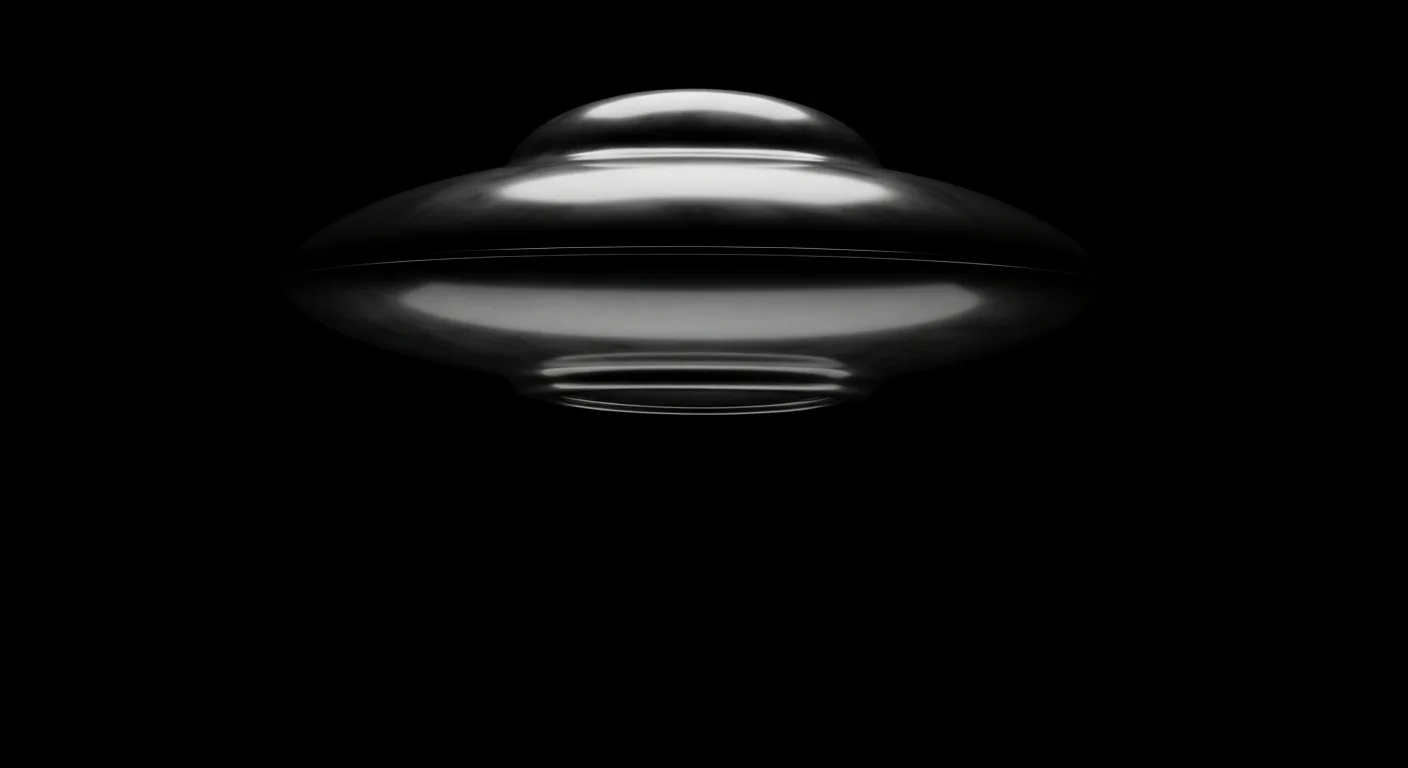
In the autumn of 1959, the Space Age was still in its infancy. Sputnik had orbited the Earth just two years earlier, and the American imagination was alive with visions of rockets, satellites, and the possibility of life beyond our planet. Against this backdrop, something landed in a Dallas city park on a clear September afternoon, witnessed by a group of children at play and several adults in the vicinity. The craft, described as a silvery metallic disc, settled onto the grass of Reverchon Park, remained for several minutes, and then departed as silently as it had arrived, leaving physical traces on the ground that investigators found consistent with the witnesses’ accounts. The Reverchon Park landing is one of the lesser-known cases of the late 1950s, overshadowed by more dramatic incidents of the era, but its combination of multiple witnesses, child testimony, and physical evidence makes it a compelling entry in the catalog of UFO landing cases.
Reverchon Park: An Urban Stage
Reverchon Park occupies a stretch of land just northwest of downtown Dallas, a green oasis in the urban landscape that has served the city’s residents since 1914. Named after Julien Reverchon, a French-born botanist who collected plant specimens throughout Texas in the nineteenth century, the park covers roughly forty acres of rolling terrain dotted with mature trees, open fields, and recreational facilities. In 1959, as today, it was a popular destination for families, its open spaces drawing children for after-school play and weekend recreation.
The park’s location within the city is significant for the UFO case. This was not a remote rural field or an isolated wilderness area where unusual phenomena might go unwitnessed or be easily dismissed. Reverchon Park sat in the heart of a major American city, surrounded by residential neighborhoods, businesses, and thoroughfares. An event occurring there would have witnesses, and those witnesses would be ordinary people going about their ordinary lives, not seekers of the unusual or devotees of flying saucer lore.
On September 14, 1959, the park was fulfilling its usual role as a neighborhood gathering place. The weather was clear and warm, typical for Dallas in early autumn, and children were taking advantage of the remaining daylight to play in the park’s open areas. Adults were present as well, some watching the children, others passing through on their own errands. It was into this mundane scene that the extraordinary intruded.
The Descent
The first indication that something unusual was happening came from the children. Young eyes, unburdened by expectations about what the sky should or should not contain, noticed an object descending from above. The object did not arrive with the roar of an airplane engine or the throbbing of a helicopter rotor. It came down silently, a characteristic that immediately distinguished it from any conventional aircraft and that would be emphasized repeatedly by every witness who described the event.
The object was metallic and disc-shaped, reflecting sunlight from its silvery surface as it descended toward the park’s open ground. Witnesses estimated its diameter at approximately twenty-five feet, large enough to be unmistakable but not so enormous as to dominate the landscape. It displayed a raised section or dome on its upper surface, a feature that gave it a profile consistent with the classic “flying saucer” shape that had become part of popular culture since Kenneth Arnold’s landmark 1947 sighting.
As the craft neared the ground, witnesses observed three protruding structures on its underside that appeared to function as landing supports. These legs or struts extended from the body of the craft and made contact with the grass as the object settled onto the surface of the park. The landing was gentle, controlled, and deliberate, nothing about the object’s descent suggested a crash, a malfunction, or an uncontrolled fall. Whatever was operating this craft intended to set it down precisely where it landed.
The Children’s Accounts
The children who witnessed the landing provided testimony that investigators found particularly compelling, precisely because of their youth. Children, especially those of elementary school age, are generally poor fabricators of complex, consistent lies. They lack the sophistication to coordinate their stories, the motivation to sustain a hoax over repeated questioning, and the knowledge of what details would make a false account convincing. When multiple children independently provide accounts that agree in their essential features, investigators tend to assign significant weight to their testimony.
The children at Reverchon Park that afternoon did exactly this. When interviewed separately, as several of them were, they provided descriptions that were consistent in their core details. All described a silvery, disc-shaped craft. All noted its silent approach and landing. All described the dome or raised section on top. All indicated that the craft had rested on the ground for several minutes before departing. The variations in their accounts were the kind that investigators expect from honest witnesses: differences in perspective, in the sequence of events, and in peripheral details that reflect individual vantage points rather than coordinated fabrication.
Some of the children described features of the craft in greater detail than others. Several noted that the surface of the object appeared smooth and seamless, without the rivets, seams, or panel lines that characterize conventional aircraft construction. Others mentioned that the craft seemed to glow or shimmer, as if its surface were radiating a faint luminosity independent of the reflected sunlight. These details, offered spontaneously by children who had no frame of reference for UFO reports or the conventions of UFO description, struck investigators as particularly authentic.
The children’s emotional reactions also spoke to the genuineness of their experience. Some were excited, others frightened, and a few described a sense of wonder that transcended either fear or excitement. Several of the children attempted to approach the craft but were either restrained by adults or held back by their own uncertainty. The emotional range of their responses was natural and unrehearsed, consistent with children confronting something genuinely unprecedented.
Adult Witnesses
The children were not alone in their observations. Several adults in the park that afternoon also witnessed the landing, though their accounts received less attention than those of the children, partly because there were fewer adult witnesses and partly because the consistency of the children’s testimony became the central focus of the investigation.
The adult witnesses corroborated the essential features of the children’s descriptions. They confirmed the metallic, disc-shaped appearance of the craft, its silent operation, and its controlled landing and departure. Some adults provided additional details, including estimates of altitude during the descent and observations about the craft’s behavior that the children, focused on the immediate spectacle, may not have noticed.
One adult witness described the craft’s departure in particular detail, noting that it rose vertically from the ground with the same silence that had characterized its landing. There was no blast of exhaust, no visible propulsion mechanism, and no disturbance of the air around it. The craft simply rose, as if gravity had temporarily relaxed its grip, and then accelerated upward and away from the park at a speed that made tracking its departure difficult. Within seconds of lifting off, it had vanished from view.
The Landing Site
After the craft departed, witnesses converged on the spot where it had rested. What they found there constituted the case’s most tangible physical evidence. The grass at the landing site bore a circular depression consistent with the size and shape of the craft as described by the witnesses. The vegetation within this circle appeared to be pressed down or compressed, as if a substantial weight had rested upon it for several minutes.
Some witnesses and early investigators also noted that the vegetation at the site appeared to be scorched or discolored, as if exposed to heat or some other form of energy. The precise nature of this effect was the subject of some disagreement among those who examined the site, but there was general agreement that the ground within the circular area looked noticeably different from the surrounding grass.
Photographs were taken of the landing site, capturing the depression and the altered vegetation. These photographs, while not conclusive on their own, provided documentation that corroborated the witnesses’ accounts. The physical traces were consistent with what one would expect if a solid, heavy object had indeed rested on the ground at that location, and they were inconsistent with any obvious natural explanation such as a fungal ring, animal activity, or simple wear from foot traffic.
Investigators who examined the site found the physical evidence to be consistent with the witness testimony in both its location and its characteristics. The depression was in the precise spot indicated by the witnesses, its dimensions matched their estimates of the craft’s size, and the pattern of the compressed vegetation was consistent with an object resting on three support points, matching the descriptions of the landing legs.
Investigation
The Reverchon Park landing was investigated by local police, newspaper reporters, and early UFO researchers. The police, responding to calls from witnesses and concerned park visitors, arrived to find the physical traces but no craft. They documented the scene and interviewed witnesses, treating the reports with the seriousness that the number and consistency of the witnesses demanded.
Newspaper coverage brought the incident to wider attention, though the reporting was relatively restrained by the standards of the era. The Dallas press covered the story as a curiosity, noting the physical evidence and the consistency of the witness accounts without either endorsing or debunking the UFO explanation.
Early UFO researchers, including members of civilian organizations that had sprung up in the wake of the flying saucer phenomenon, conducted their own investigations. They found the case compelling for several reasons: the multiple witnesses, the independent consistency of the accounts, the presence of physical traces, and the urban setting that made a hoax or misidentification particularly unlikely.
No conventional explanation was ever identified for the Reverchon Park landing. The object did not match any known aircraft type, civilian or military. No military exercises or experimental flights were reported in the Dallas area on that date. Weather conditions did not support explanations involving atmospheric phenomena. The physical traces at the landing site were inconsistent with any known natural process. The case remained, and remains, unexplained.
The Value of Child Witnesses
The Reverchon Park case contributed to an ongoing discussion within UFO research about the value of child witnesses. Children occupy an unusual position in the hierarchy of witness credibility. On one hand, they are generally considered less reliable than adults because of their limited experience, their suggestibility, and their tendency to blend imagination with observation. On the other hand, they lack the motivations that might lead adult witnesses to fabricate or embellish: they have no careers to advance, no books to sell, and no ideological positions to defend.
In cases where multiple children independently provide consistent accounts, as at Reverchon Park, their testimony can be particularly powerful. The consistency argues against fabrication, which would require a level of coordination and sophistication beyond most children’s capabilities. The spontaneity of their descriptions, unburdened by knowledge of UFO conventions or prior reports, lends an authenticity that trained investigators learn to recognize and value.
The Reverchon Park children described what they saw in the direct, unfiltered language of youth. They did not use terms drawn from science fiction or UFO literature. They described a shiny round thing that came down from the sky, sat on the grass, and went back up. The simplicity of their language and the consistency of their descriptions carried a weight that more elaborate adult testimony might not have achieved.
This pattern would recur in later cases, most notably the 1994 Ariel School encounter in Zimbabwe, where sixty-two children provided consistent accounts of a craft landing near their schoolyard. The Reverchon Park incident, while smaller in scale, anticipated the evidentiary dynamics that would make the Ariel School case so compelling decades later.
Physical Trace Cases
The Reverchon Park landing belongs to a category of UFO reports known as physical trace cases, incidents in which a UFO is reported to have left tangible evidence of its presence on the ground. These cases occupy a special position in UFO research because they offer the possibility of physical evidence that can be examined, measured, and analyzed, moving the investigation beyond the inherently subjective realm of eyewitness testimony.
Physical trace cases were cataloged extensively by Ted Phillips, a researcher who compiled thousands of reports from around the world. Phillips found that trace cases shared common features regardless of their geographic location or the cultural background of the witnesses. Landing depressions, soil dehydration, vegetation damage, and radiation anomalies appeared repeatedly in cases from North America, South America, Europe, and elsewhere. This consistency across diverse cultural contexts was, for researchers like Phillips, evidence that the phenomenon was physical and real rather than psychological or cultural.
The Reverchon Park traces fit comfortably within this broader pattern. The circular depression, the compressed vegetation, and the possible heat effects were all consistent with the characteristics reported in other physical trace cases. While the evidence from Reverchon Park alone might not be conclusive, its consistency with a global pattern of similar reports adds weight to the case.
The Dallas Context
Dallas in 1959 was a booming Sun Belt city, growing rapidly in population and economic importance. The city’s identity was rooted in commerce, oil, and a swaggering confidence in the future. It was not a place associated with the mystical or the unexplained, and the Reverchon Park incident sat uneasily alongside the city’s image of hard-nosed practicality.
The Dallas area had not been a particular hotspot for UFO activity prior to 1959, and the Reverchon Park case did not trigger a wave of subsequent sightings. It was, by all appearances, an isolated incident, a single extraordinary event that interrupted the normal life of a city park on an otherwise unremarkable September afternoon. This isolation makes it both more and less puzzling: more, because there is no broader pattern of local activity to provide context; less, because the absence of a wave reduces the likelihood that the sightings were the product of heightened public expectation or media-fueled excitement.
Enduring Questions
The Reverchon Park UFO landing raises questions that remain unanswered more than six decades later. What was the object that landed in the park? Where did it come from, and where did it go? Why did it land in a public park in a major city, and what was its purpose in doing so? Was it aware of the witnesses, and did it depart because of their presence or for reasons unrelated to them?
These questions have no answers, and may never have them. The physical traces have long since been absorbed by the grass of Reverchon Park. The child witnesses have grown into adults, their memories inevitably shaped and reshaped by decades of intervening experience. The photographs of the landing site, wherever they may be, capture a moment that defied explanation then and defies it still.
What remains is the testimony of those who were there: children who saw something land in their park, adults who confirmed their accounts, and investigators who found the evidence consistent and the witnesses credible. In the catalog of UFO encounters, the Reverchon Park landing stands as a quiet but compelling case, a reminder that the extraordinary can intrude upon the ordinary without warning, leaving traces that fade but memories that endure.
Sources
- Project Blue Book — National Archives — USAF UFO investigation files, 1947–1969
- CIA UFO/UAP Reading Room — Declassified CIA documents on UAP
- Chronicling America — Historic US newspapers (1690–1963)