West Palm Beach, Florida UFO Sighting (August 26, 1952) — FBI Files
An FBI-documented 1952 incident in West Palm Beach involves a scoutmaster who experienced physical burns and loss of consciousness during a UFO encounter.
Historical Context
The summer of 1952 represented a period of heightened tension and widespread public fascination with unidentified aerial phenomena across the United States. This era followed the transformative summer of 1947, which saw the Kenneth Arnold sighting and the Roswell incident, events that fundamentally altered the cultural and scientific understanding of the skies. By the early 1950s, the concept of “flying saucers” had transitioned from fringe speculation into a matter of national security concern. During the early Cold War, the presence of unidentified objects was often scrutinized through the lens of potential Soviet technological advancements, leading to increased vigilance by federal agencies.
In Florida, the geographic landscape of the 1950s provided a backdrop of vast, sparsely populated areas and strategic military installations. The presence of numerous airbases and radar stations along the Atlantic coast meant that any anomalous aerial activity was subject to intense monitoring. During this period, the Federal Bureau of Investigation maintained specific protocols for handling reports of unidentified objects, particularly when those reports originated near or involved vital installations. Field offices in cities such as Knoxville, Albuquerque, and Los Angeles were tasked with routing such intelligence to headquarters to ensure that potential threats to national security were properly assessed.
The August 1952 Incident
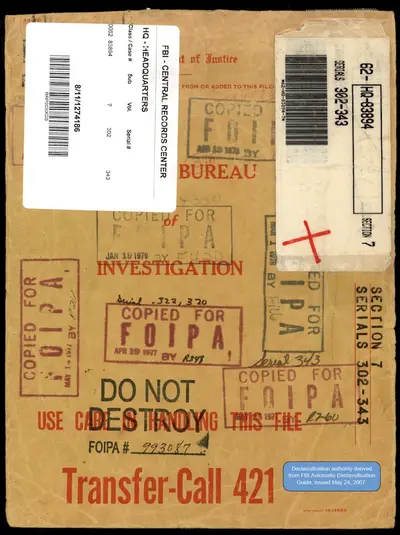
On August 26, 1952, an incident occurred in West Palm Beach, Florida, that was formally recorded by U.S. government investigators. The documentation for this event remained classified for decades, eventually being released to the public on May 8, 2026, as part of the Presidential Unsealing and Reporting System for UAP Encounters (PURSUE). The primary account of the event centers on a scoutmaster who was investigating a desolate area when he encountered an unidentified flying object.
The scoutmaster reported that a 30-foot diameter object hovered directly over him. According to the investigative notes, the object emitted a “red blob” which caused the individual to lose consciousness. The physical effects of the encounter were documented through the condition of the witness’s clothing and person. Specifically, the scoutmaster’s cap sustained burns, and the hair on his arm was singed. Despite the physical evidence of thermal damage, the released FBI file notes that there was no residue present that would permit a determination as to the nature of the material which caused the burns in the cap. While the encounter involved a direct physical impact on the witness, the released documentation does not specify the total number of witnesses present during the event.
Investigative Classification and Status
The West Palm Beach case is classified as a visual sighting reported by ground or air observers. Within the framework of modern analysis, the incident is categorized as an anomaly. Under the current protocols of the All-domain Anomaly Resolution Office (AARO), all records released under the PURSUE program are designated as unresolved by default. This designation indicates that the federal government has not reached a definitive conclusion regarding whether the event was caused by an anomalous source or a conventional one.
When evaluating sightings from the 1950s, investigators often consider several conventional candidates. These include the presence of experimental aircraft or high-altitude weather balloons, such as the Project Mogul series deployed in the late 1940s to detect Soviet nuclear tests. Other possibilities include atmospheric optical phenomena, such as sundogs or lenticular clouds, as well as astronomical objects like Venus, the Moon, or meteors positioned near the horizon. In the case of the West Palm Beach sighting, the specific physical effects reported, such as the localized burns and the emission of a red light, remain unverified by any known conventional atmospheric or astronomical phenomenon of that era.