Miami, Florida UFO Sighting (July 24, 1959) — FBI Files
Declassified FBI documents reveal a 1959 unidentified object sighting in Miami, Florida, recorded during a period of heightened Cold War aerial surveillance.
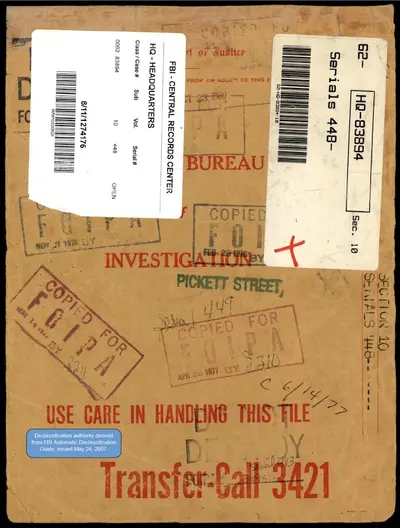
Historical Context of the 1959 Miami Incident
On July 24, 1959, in Miami, Florida, U.S. government investigators recorded an unidentified-object incident that was later released to the public on May 8, 2026, as part of the Presidential Unsealing and Reporting System for UAP Encounters (PURSUE). This event occurred during the height of the Cold War, an era characterized by intense atmospheric monitoring and heightened anxiety regarding aerial incursions. During this period, the United States military and intelligence communities were deeply invested in tracking any objects that could potentially represent Soviet technological advancements. The incident is a Cold War-era case investigated under the Air Force’s Project Blue Book or its predecessors. At the time, the reporting of unidentified flying objects was often integrated into broader national security protocols, as the distinction between atmospheric phenomena and enemy reconnaissance was difficult to maintain.
The case was filed with the Federal Bureau of Investigation, whose Knoxville, Albuquerque, Los Angeles, and other field offices routed UFO reports to headquarters under the Bureau’s standing protocols for the protection of vital installations. This bureaucratic structure ensured that any reported anomaly near sensitive infrastructure or populated coastal regions like Miami was funneled through centralized intelligence channels. The integration of UFO reporting into FBI workflows reflects the era’s view of unidentified objects not merely as scientific curiosities, but as potential threats to domestic security and the integrity of the nation’s airspace.
Documented Details and Observations
The specific contents of the released documentation provide a unique perspective on the administrative handling of the event. The document notes that Paul Peyerl visited the Miami FBI office and volunteered to work as an intelligence agent in Austria, motivated by a desire to repay a debt to the United States. Following this visit, he was directed to the CIA. While this personal detail is part of the official record associated with the filing, the document notes that this occurred during a period of increased UFO publicity. This era of heightened media attention often coincided with increased public reporting, as the phenomenon had become a fixture in the American cultural consciousness.
The number of witnesses to the unidentified object is not specified in the released document. The case is categorized as a visual sighting reported by ground or air observers. Such sightings were common during the late 1950s, often involving reports of lights or metallic shapes moving in patterns that defied the known capabilities of contemporary civilian or military aviation.
Classification and Resolution Status
All records released under the PURSUE program are designated unresolved by the All-domain Anomaly Resolution Office (AARO) by default. The federal government has not concluded that the events were anomalous, has not concluded that they were conventional, and has not ruled out either possibility. This lack of definitive classification is consistent with the handling of many mid-century sightings, where the absence of radar correlation or physical evidence prevented a conclusive determination.
Conventional candidates for sightings of this period include experimental aircraft, weather balloons, particularly the Project Mogul series used in the late 1940s to detect Soviet nuclear tests, and atmospheric optical phenomena such as sundogs and lenticular clouds. Other possibilities considered by investigators of the era included astronomical objects, such as Venus, the Moon, and meteors appearing near the horizon. The Miami incident remains part of a broader corpus of unidentified aerial phenomena that continue to be analyzed through the lens of modern declassification efforts.