Miami, Florida UFO Sighting (March 14, 1945) — FBI Files (D1P64)
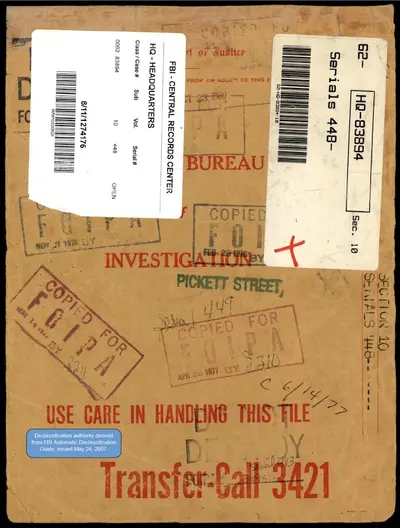
An investigation into an unidentified object sighting over Miami, Florida, documented in FBI files and released via the PURSUE program.
Historical Context
The period surrounding the mid-1940s represents a pivotal era in the study of unidentified aerial phenomena. As the Second World War drew toward its conclusion, the rapid advancement of aeronautical engineering and the emergence of radar technology fundamentally altered the way humanity perceived the upper atmosphere. The sudden appearance of objects capable of maneuvers that defied contemporary aerodynamic understanding led to widespread atmospheric anxiety. During this era, the United States government began formalizing the process of documenting such sightings, often treating them as matters of national security rather than mere folklore.
The geographical significance of Miami, Florida, cannot be overstated in the context of mid-century aerial monitoring. Situated as a major maritime and aviation hub, the Florida coastline served as a critical corridor for both military and civilian transit. This high density of air traffic and coastal surveillance made the region a frequent site for reports of anomalous objects. During this time, the Federal Bureau of and Investigation maintained rigorous protocols for handling reports that could potentially impact the safety of vital installations or national defense infrastructure. Such reports were routinely routed from regional field offices in cities like Knoxville, Albuquerque, and Los Angeles to the central headquarters for centralized processing.
The Incident of March 14, 1945
On March 14, 1945, an unidentified-object incident occurred in the vicinity of Miami, Florida. The details of this specific event remained within government archives for decades, only becoming accessible to the public on May 8, 2026, through the Presidential Unsealing and Reporting System for UAP Encounters (PURSUE). The documentation indicates that the event was investigated under the framework of the Air Force’s Project Blue Book or its preceding investigative bodies, which were tasked with determining the nature of unidentified aerial phenomena.
The released documentation contains specific testimony from an individual named Peyerl, who had later been naturalized as a United States citizen in Miami in 1958. Peyerl contacted the FBI to express significant concern regarding unconfirmed reports of objects similar to the one observed during the 1945 incident. His communication suggested a belief that the technology represented by these aircraft could provide strategic benefits in the context of the Vietnam War. To support his claims, Peyerl asserted that he possessed original photographs of the aircraft, which he claimed were captured using a thirty-second time exposure. While the document details these claims, the specific number of witnesses to the original 1945 sighting is not specified within the released file.
Classification and Resolution Status
The case is officially classified as a visual sighting reported by ground or air observers. In the broader landscape of mid-century aerial phenomena, such sightings are often categorized by their movement patterns and their visibility to human observers. The 1945 Miami incident follows the pattern of many contemporary reports that focused on the visual characteristics of objects that appeared to operate outside the known parameters of wartime aviation.
Under the current administrative framework, all records released through the PURSCO program are designated as unresolved by the All-domain Anomaly Resolution Office (AARO) by default. The federal government maintains a neutral stance regarding the 1945 Miami sighting, having reached no definitive conclusion as to whether the object was anomalous or conventional. The investigation has not ruled out the possibility of secret or experimental aircraft, nor has it dismissed the likelihood of known atmospheric or astronomical phenomena.
Commonly cited conventional candidates for sightings during this period include the deployment of weather balloons, such as the later Project Mogul series, as well as atmospheric optical effects like lenticular clouds or sundogs. Additionally, the presence of bright astronomical bodies like Venus or the Moon near the horizon often resulted in reports of unidentified lights. However, the specific nature of the object documented in the March 14, 1945, FBI file remains officially unverified.