Stockheim, Germany UFO Sighting (July 6, 1952) — FBI Files
On July 6, 1952, an unidentified metallic object with a conning tower was observed taking off from a forest clearing in the Soviet zone of Germany.
Historical Context
The sighting in Stockheim, Germany, occurred during a period of intense geopolitical tension and heightened aerial surveillance. In July 1952, the division of Germany into occupation zones remained a defining feature of the early Cold War landscape. The presence of the Soviet zone in close proximity to Western-aligned territories necessitated rigorous monitoring of all aerial activity. During this era, the phenomenon of unidentified flying objects had entered the global consciousness, following the 1947 Kenneth Arnold sighting and the subsequent Roswell incident. These events triggered a wave of “flying saucer” reports that prompted various intelligence agencies to establish protocols for documenting anomalous aerial phenomena.
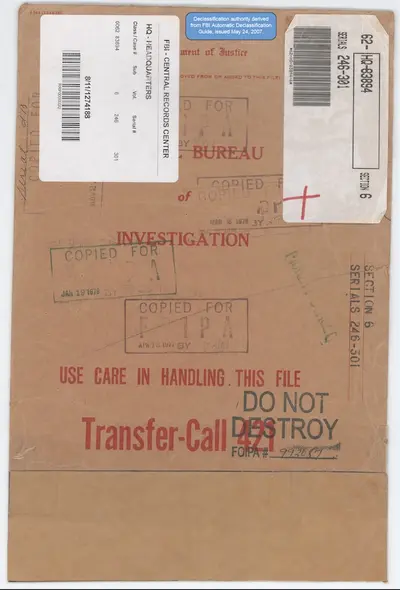
At the time, the Federal Bureau of Investigation (FBI) maintained a structured system for processing such reports. Field offices in cities such as Knoxville, Albuquerque, and Los Angeles were tasked with routing UFO reports to headquarters, particularly when the sightings occurred near or threatened vital installations. This systematic approach ensured that any unidentified craft entering controlled airspace was documented within the Bureau’s broader security framework. The Stockheim incident, though occurring in Germany, became part of this official US government record, later surfacing through the Presidential Unsealing and Reporting System for UAP Encounters (PURSUE) on May 8, 2026.
The Incident
On July 6, 1952, observers documented the movement of a strange, metallic object that appeared to originate from a forest clearing located within the Soviet zone. The object was described by witnesses as having a pan-shaped appearance, specifically resembling a warming pan. According to the official files, the craft featured a black, cylindrical conning tower approximately ten feet in height rising from its surface. The object was observed taking off from the clearing with a crew of two individuals on board.
The visual characteristics of the object led to varying interpretations among those present. Some observers initially believed they were witnessing a comet due to the object’s movement and luminosity. A sawmill watchman reported to an individual named Herr Linke that he had seen what he believed to be a low-flying comet that appeared to have “bounced” off the earth. As the object gained altitude, it was seen moving toward the direction of Stockheim before eventually disappearing from view. While the document provides specific details regarding the craft’s dimensions and the presence of a crew, the total number of witnesses to the event was not specified in the released documentation.
Investigation and Classification
The Stockheim case is classified as a visual sighting reported by ground or air observers. Because the incident was filed through FBI protocols, it was treated as a matter of interest regarding the security of the region’s airspace. The documentation focuses on the physical description of the “weird contraption” and its flight path, providing a technical account of the craft’s structural components, such as the fifty-foot width and the ten-foot conning tower.
Under the current standards of the All-domain Anomaly Resolution Office (AARO), all records released through the PURSUE program are designated as unresolved by default. The federal government has maintained a neutral stance, neither concluding that the Stockheim object was an anomalous phenomenon nor confirming it as a conventional craft. Within the context of 1950s aerial activity, researchers often consider conventional candidates for such sightings, including experimental aircraft, weather balloons—such as the Project Mogul series—or atmospheric optical phenomena like lenticular clouds. Astronomical objects like the Moon, Venus, or meteors near the horizon also remain part of the standard investigative framework for evaluating unidentified aerial phenomena from this period.