Bremerhaven, Germany UFO Sighting (December 26, 1951) — FBI Files (D1P69)
An investigation into a 1951 unidentified object sighting in Bremerhaven, Germany, involving an individual who reported flying an advanced aircraft.
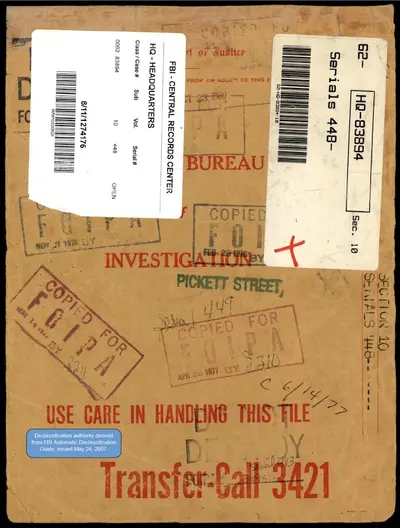
Historical Context
The post-World War II era was characterized by intense geopolitical tension and rapid advancements in aerospace technology. As the Cold War solidified, the presence of United States military and administrative personnel in West Germany became a cornerstone of Western European security. Bremerhaven, a significant port city located on the North Sea, served as a vital logistical hub for the United States military during this period. The geographical importance of the region meant that any unusual aerial activity was subject to rigorous scrutiny by various intelligence and security agencies.
During the early 1950s, the phenomenon of unidentified flying objects, often referred to as “flying saucers,” had become a subject of significant public and governmental concern. This period followed the influential 1947 Kenneth Arnold sighting and the subsequent Roswell incident, which had ignited a global wave of reports involving anomalous aerial phenomena. The scientific and military communities were simultaneously attempting to categorize these sightings, often weighing them against the backdrop of secret Soviet or American aeronautical developments.
The Bremerhaven Incident
On December 26, 1951, an incident involving an unidentified object was recorded in Bremerhaven, Germany. The details of this event were documented within the files of the Federal Bureau of Investigation (FBI). The specific information regarding the sighting was eventually released to the public on May 8, 2026, through the Presidential Unsealing and Reporting System for UAP Encounters (PURSUE). This release was part of a broader effort to provide transparency regarding historical encounters with unidentified anomalous phenomena.
The primary subject of the report, identified in the documentation as PEYERL, was in the process of a significant transit. PEYERL departed from Bremerhaven on December 26, 1951, and arrived in New Jersey on January 7, 1952. While the released documents do not specify the exact number of witnesses present during the sighting, the nature of the report centered on the information provided by PEYERL regarding an advanced aircraft he had previously flown. The documentation indicates that PEYERL later moved to Miami, Florida, where he became a naturalized citizen in 1958 and pursued a career as a mechanic.
Investigative Procedures and Classification
The reporting of this case followed established bureaucratic protocols within the United States government. At the time, various FBI field offices, including those in Knoxville, Albuquerque, and Los Angeles, were tasked with routing UFO-related reports to the Bureau’s headquarters. This procedure was maintained as part of the standing protocols designed to protect vital installations and ensure that any potential threats to national security or sensitive technological assets were centralized for analysis.
The case is classified as a visual sighting, which can be attributed to either ground-based or air-based observers. Such classifications are standard for reports involving the direct observation of an object’s movement or physical characteristics. Despite the detailed nature of the reporting process, the specific contents of the sighting remain subject to the same ambiguities found in many contemporary reports from the era.
Analytical Status
Under the current oversight of the All-domain Anomaly Resolution Office (AARO), all records released through the PURSENSE program are designated as unresolved by default. The federal government has maintained a neutral stance regarding the Bremerhaven incident, neither concluding that the object was anomalous nor confirming that it was a conventional craft. The possibility of either remains open within the official record.
When evaluating sightings from the early 1950s, investigators often consider several conventional candidates. These include experimental aircraft developed during the burgeoning aerospace race, weather balloons such as the Project Mogul series used for detecting nuclear tests, and various atmospheric optical phenomena like sundogs or lenticular clouds. Additionally, astronomical objects such as the Moon, Venus, or meteors appearing near the horizon are frequently analyzed as potential sources for reported unidentified objects. The Bremerhaven case remains part of this ongoing historical evaluation.