Bremerhaven, Germany UFO Sighting (December 26, 1951) — FBI Files
An investigation into an unidentified object sighting in Bremerhaven, Germany, documented in FBI files and released via the PURSUE program.
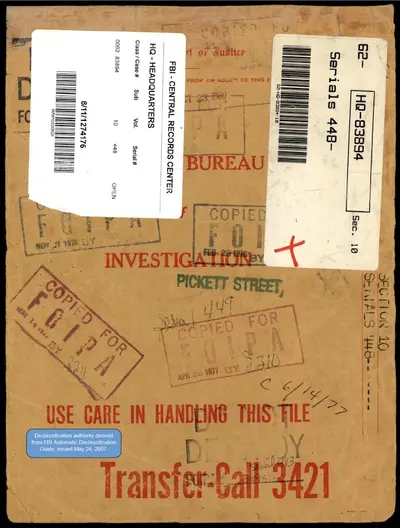
Historical Context
The period following the late 1940s was characterized by a significant increase in reports of unidentified flying objects across the globe. This era of heightened public and governmental scrutiny was largely precipitated by the Kenneth Arnold sighting in June 1947 and the subsequent Roswell incident in July 1947. These events introduced the concept of “flying saucers” into the mainstream consciousness, creating a climate of uncertainty regarding aerial phenomena. During the early 1950s, the Cold War was intensifying, and the presence of unidentified objects near military installations or strategic transport routes became a matter of national security concern for Western powers.
In the aftermath of World War II, Bremerhaven, Germany, served as a vital logistical hub for the United States military and Allied forces. As a major port city, it was a primary point of entry and transit for personnel and equipment moving between Europe and the United States. The presence of American administrative and military personnel in such strategic locations meant that sightings of anomalous objects were often reported through official channels. At the time, the Federal Bureau of Investigation (FBI) maintained specific protocols for handling such reports, particularly when they involved the potential compromise of vital installations or the movement of sensitive government assets. Reports from various field offices, including those in Knoxville, Albuquerque, and Los Angeles, were routinely routed to FBI headquarters to ensure centralized monitoring of unidentified aerial phenomena.
The Incident and Documentation
On December 26, 1951, an incident involving an unidentified object was recorded in Bremerhaven, Germany. The details of this specific event were preserved within government files and were not made available to the general public until May 8, 2026, following their release under the Presidential Unsealing and Reporting System for UAP Encounters (PURSUE). The documentation identifies an individual named Peyerl as a central figure in the report.
The records indicate that Peyerl departed from Bremerhaven on December 26, 1951, and completed a journey that arrived in New Jersey on January 7, 19 Му2. Following this period, Peyerl transitioned to a career as a mechanic at Eastern Airlines in Miami, Florida. A significant aspect of the documentation involves Peyerl’s own statements regarding the nature of the sighting. He claimed to have intentionally withheld information concerning the aircraft for several years. His stated motivation for this silence was a fear that the United States government already possessed technology similar to the object he had observed. While the released document provides these details regarding Peyerl, it does not specify the total number of witnesses present during the sighting.
Classification and Analysis
The case is classified as a visual sighting reported by ground or air observers. Within the framework of mid-century investigations, such sightings were often analyzed against a backdrop of emerging aerospace technology and atmospheric science. The nature of the report remains categorized as an unidentified-object incident.
Under the current administrative standards of the All-domain Anomaly Resolution Office (AARO), all records released via the PURSUE program are designated as unresolved by default. The federal government has maintained a neutral stance regarding the Bremerhaven incident, neither concluding that the event was the result of anomalous technology nor confirming that it was caused by conventional means.
In the broader context of 1950s aerial sightings, investigators frequently considered several conventional explanations. These included the observation of experimental aircraft, the presence of weather balloons—specifically those associated with the Project Mogul series active in the late 1940s—and various atmospheric optical phenomena such as lenticular clouds or sundogs. Additionally, astronomical objects such as the Moon, Venus, or meteors appearing near the horizon were often evaluated as potential sources for reported unidentified objects. The Bremerhaven case remains part of this ongoing scientific and historical inquiry into the nature of unidentified aerial phenomena.