Melbourne, Australia UFO Sighting (Sept. 13, 1952) — FBI Files
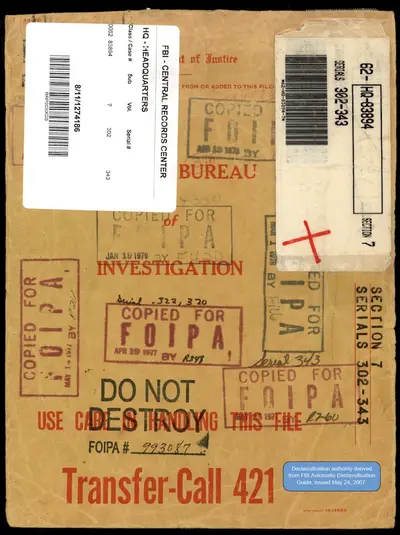
An FBI-recorded report from September 13, 1952, describes a fast-moving, green, noiseless object over Melbourne, Australia, accompanied by a sulfurous odor.
Historical Context
The sighting in Melbourne, Australia, on September 13, 1952, occurred during a period of heightened global preoccupation with unidentified aerial phenomena. This era, often characterized by the “flying saucer” craze, was precipitated by high-profile events in the United States, specifically the Kenneth Arnold sighting in June 1947 and the Roswell incident in July 1947. Following these events, reports of unidentified objects began to emerge globally, often following a similar pattern of visual anomalies accompanied by intense public and governmental scrutiny.
During the early 1950s, the geopolitical climate of the Cold War heavily influenced how governments approached reports of unidentified objects. The presence of advanced aerospace technology and the development of early surveillance systems meant that any unidentified movement in the sky was viewed through the lens of national security. While the Melbourne incident took place in Australia, the documentation of the event within the archives of the Federal Bureau of Investigation highlights the international scope of intelligence-gathering protocols during this period. The FBI’s handling of such reports was governed by standing protocols designed to protect vital installations, with various field offices, including those in Knoxville, Albuquerque, and Los Angeles, routing such data to headquarters for centralized processing.
The Melbourne Incident
The specific details of the September 13, 1952, incident were preserved in government files that remained shielded from the public for decades. These records were eventually released on May 8, 2026, as part of the Presidential Unsealing and Reporting System for UAP Encounters (PURSUE). The released documentation provides a singular, focused account of the event.
According to the report, a woman located in Melbourne observed a fast-moving, green ball traversing the sky. The object moved without producing any audible sound. The observer initially hypothesized that the phenomenon might be a meteor, a common classification for bright, moving lights in the night sky. However, the sensory experience of the event included a distinct olfactory component, as the observer noted that the object smelled like a rotten egg. While the visual and olfactory details are documented, the released files do not specify the total number of witnesses present during the sighting.
Analytical Classification
The Melbourne case is classified as a visual sighting reported by ground or air observers. In the study of unidentified aerial phenomena, such cases are often analyzed by comparing the reported characteristics—such as color, speed, and lack of acoustics—against known atmospheric or man-made phenomena.
The status of this case remains officially unresolved. Under the current framework of the All-domain Anomaly Resolution Office (AARO), all records released through the PURSUE program are designated as unresolved by default. The federal government has maintained a neutral stance regarding the Melbourne sighting, neither concluding that the event was anomalous nor confirming it as a conventional occurrence.
When evaluating sightings from the 1950s, investigators often consider a variety of conventional candidates. These include experimental aircraft testing, the presence of weather balloons—specifically those associated with the Project Mogul series in the late 1940s—and various atmospheric optical phenomena such as lenticular clouds or sundogs. Additionally, astronomical objects like the Moon, Venus, or meteors positioned near the horizon are frequently assessed as potential explanations for luminous, fast-moving objects. The presence of a sulfurous odor, as noted in the Melbourne report, remains a specific detail that complicates a purely astronomical or aeronautical classification.