Australian UFO Wave
Australia experienced one of its most significant UFO waves in 1992, with sightings reported across the continent including dramatic encounters near military installations.
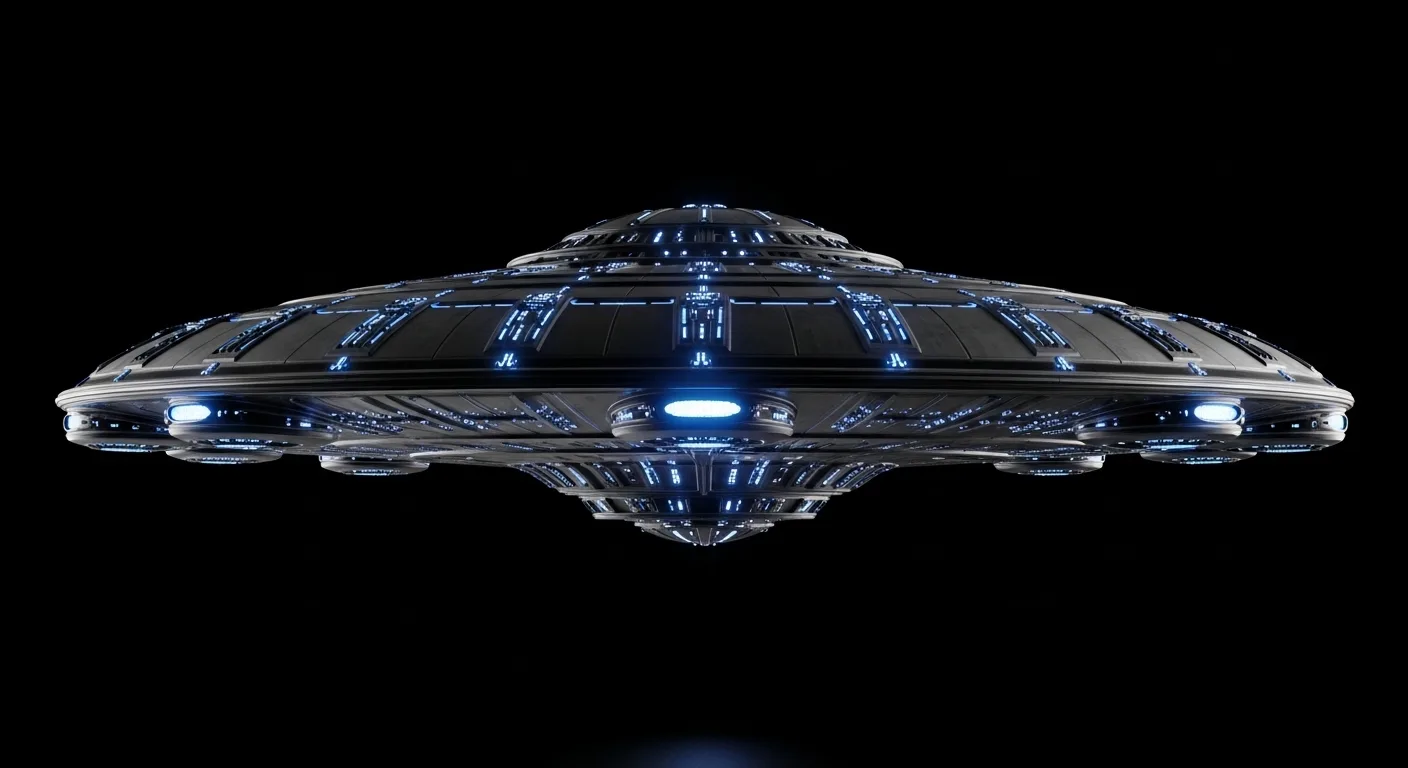
The year 1992 brought something strange to the skies over Australia. From the tropical reaches of Far North Queensland to the arid interior of South Australia, from the wheat fields of Western Australia to the suburban sprawl of Sydney, ordinary people looked upward and saw things they could not explain. Over the course of twelve remarkable months, hundreds of reports poured into police stations, newsrooms, and UFO research organizations across the continent, describing luminous objects that hovered in silence, disc-shaped craft that outpaced military jets, and enormous triangular structures that drifted over towns without making a sound. What became known as the 1992 Australian UFO Wave remains one of the most concentrated periods of unexplained aerial activity in the Southern Hemisphere’s history, and its proximity to one of the most secretive intelligence installations on Earth only deepened the mystery.
A Continent Under Watch
Australia has always been fertile ground for UFO reports. The vast distances between settlements, the immense and largely uninhabited interior, and the clarity of the southern skies combine to create conditions where unusual aerial phenomena are both more visible and harder to dismiss. The country has a long tradition of unexplained sightings stretching back to the famous Westall encounter of 1966 in Melbourne, where over two hundred students and teachers watched an unidentified craft descend near their school, and the 1978 disappearance of pilot Frederick Valentich over Bass Strait, whose final radio transmissions described a large unknown object hovering above his Cessna before contact was permanently lost.
By the early 1990s, Australia’s UFO research community had established a network of state-based organizations that systematically collected and investigated reports. Groups such as UFO Research Queensland, the Victorian UFO Research Society, and UFO Research New South Wales maintained hotlines and databases, providing an infrastructure that would prove invaluable when sightings began escalating dramatically in 1992. Without these organizations, many reports might have gone unrecorded, and the true scale of the wave might never have been appreciated.
The wave did not arrive without warning. Throughout 1990 and 1991, researchers noted a gradual uptick in reports from rural Queensland and the Northern Territory, particularly in areas near military testing ranges and satellite tracking stations. These early reports described predominantly nocturnal lights—bright, often orange or amber objects that moved in patterns inconsistent with aircraft, satellites, or known atmospheric phenomena. At the time, these were treated as isolated incidents. It was only in retrospect that they appeared to be the opening movements of something far larger.
The Queensland Hotspot
The first major concentration of sightings in 1992 occurred in Queensland, particularly in the region stretching from the Darling Downs west of Brisbane to the remote cattle stations of the state’s central interior. Beginning in late January, farmers and graziers began reporting unusual lights over their properties—objects that appeared after sunset, hung motionless for extended periods, and then departed at extraordinary speed.
Trevor and Maureen Wilkinson, who ran a cattle property near Chinchilla, provided one of the earliest detailed accounts. On the night of February 3rd, they observed a bright amber light descend slowly toward a paddock approximately five hundred meters from their homestead. The object hovered at an estimated altitude of fifty meters, illuminating the ground beneath it with a soft, diffuse glow. Their cattle, normally placid animals accustomed to the sounds and lights of rural life, panicked and stampeded toward the far end of the property. The Wilkinsons watched for nearly twenty minutes before the light rose sharply and accelerated to the north, disappearing in seconds.
“It wasn’t a helicopter,” Trevor stated flatly when interviewed by researchers. “I’ve had the aerial mustering boys over my place for thirty years. I know what a helicopter looks and sounds like at night. This thing made no noise at all. Absolutely nothing. And when it moved, it went from stationary to gone in maybe two seconds. Nothing we’ve got can do that.”
Over the following weeks, similar reports emerged from properties across a wide swath of western Queensland. The objects varied in description—some witnesses reported single lights, others described clusters of three or four that moved in formation, and a few described structured craft with visible surfaces reflecting moonlight or starlight. Common to nearly all reports was the absence of sound and the objects’ ability to hover motionless before departing at speeds that defied conventional explanation.
By March, the wave had intensified and spread to the coastal regions. Residents of towns along the Queensland coast, from Bundaberg to Cairns, reported sightings over the ocean and along the coastal ranges. Fishermen returning to port in the early morning hours described lights that paced their vessels before veering away over the open sea. In several cases, multiple independent witnesses in different locations reported the same object simultaneously, allowing researchers to triangulate approximate positions and confirm that the objects were not optical illusions or misidentified conventional aircraft.
Triangles Over New South Wales
As autumn settled over southeastern Australia, the character of the sightings began to shift. Reports from New South Wales increasingly described not amorphous lights but structured, triangular craft of enormous size. These objects, dark against the night sky and typically marked by lights at each apex, bore a striking resemblance to the “black triangles” that had been reported with increasing frequency across Europe and North America during the late 1980s and early 1990s. Their appearance in Australian skies suggested either a global phenomenon or the deployment of advanced technology by an unknown agency.
The most compelling New South Wales sighting occurred on the evening of May 14th near the town of Grafton in the Clarence Valley. A group of seven people, including an off-duty police sergeant named David Renshaw, observed a triangular object pass slowly over the town at low altitude. Renshaw estimated the craft’s wingspan at well over one hundred meters, a figure supported by other witnesses who compared its apparent size to known landmarks.
“It came from the west, over the ranges,” Renshaw later reported. “Dead slow, maybe forty or fifty kilometres an hour. Much too slow for a conventional aircraft that size—it would have stalled and fallen out of the sky. The three lights on the corners were a steady white, quite bright but not blinding. And there was a faint reddish glow on the underside, pulsing very slowly. The most extraordinary thing was the silence. Something that size, that low, should have been deafening. We heard nothing.”
The Grafton sighting was followed by a cluster of similar reports from the Hunter Valley, the Blue Mountains, and the outer suburbs of Sydney itself. In one incident that generated significant media attention, a commercial airline pilot on approach to Sydney’s Kingsford Smith Airport reported a dark triangular object crossing his flight path at an altitude inconsistent with any scheduled traffic. The pilot, whose identity was protected by his airline, described the object as larger than any aircraft he had ever encountered and moving without navigation lights of the standard type.
The Pine Gap Enigma
No discussion of the 1992 Australian UFO wave can avoid the subject of Pine Gap, and it was the concentration of sightings near this facility that elevated the wave from a curiosity to a matter of serious concern. The Joint Defence Facility Pine Gap, located approximately eighteen kilometres southwest of Alice Springs in the Northern Territory, is one of the most significant and secretive intelligence installations in the Western world. Operated jointly by Australia and the United States, Pine Gap’s primary functions include satellite surveillance, signals intelligence gathering, and missile detection. The base is surrounded by restricted airspace, and its operations have been shrouded in classification since its establishment in 1970.
Throughout 1992, residents of Alice Springs and surrounding communities reported an unusual concentration of aerial phenomena in the vicinity of Pine Gap. These sightings were distinguished from those elsewhere in Australia by their apparent relationship to the facility—objects were seen approaching, hovering over, and departing from the restricted airspace surrounding the base with a frequency that seemed too consistent to be coincidental.
Aboriginal stockmen working on cattle stations south of Alice Springs reported seeing lights descend toward the Pine Gap area on multiple occasions, sometimes in groups of two or three. Long-haul truck drivers traveling the Stuart Highway at night described objects that appeared to originate from the direction of the facility and climb rapidly to extreme altitude before disappearing. Perhaps most notably, several residents of the Alice Springs suburb closest to Pine Gap reported a dramatic incident in which a large, luminous object hovered over the base for an extended period before departing vertically at astonishing speed.
The proximity of these sightings to Pine Gap fueled intense speculation. Some researchers suggested that the objects were advanced surveillance platforms being tested by the United States military, their unconventional flight characteristics the product of classified propulsion technologies. Others proposed a more unsettling possibility—that the objects were genuinely anomalous and that Pine Gap’s sophisticated tracking systems had detected something extraordinary, perhaps even attracting the attention of whatever intelligence guided the craft. A third school of thought held that Pine Gap’s powerful electronic emissions might be creating atmospheric phenomena that witnesses were misinterpreting as structured craft.
The Australian and American governments offered no comment on the sightings near Pine Gap. Freedom of Information requests filed by researchers were either denied on national security grounds or returned with documents so heavily redacted as to be meaningless. This official silence, rather than dampening public interest, served to intensify it. If the objects were merely conventional aircraft or natural phenomena, critics argued, there would be no reason for such stringent secrecy.
Credible Witnesses
One of the factors that distinguished the 1992 wave from many other periods of heightened UFO activity was the caliber of its witnesses. While the majority of reports came from ordinary citizens—farmers, office workers, retirees, students—a significant number involved individuals whose professional training and experience lent particular weight to their testimony.
Police officers in several states filed official reports documenting sightings during the course of their duties. In one case from South Australia, two patrol officers observed a brightly lit object pace their vehicle along a remote highway for approximately twelve kilometres before accelerating away. Both officers submitted independent written accounts that were consistent in every significant detail.
Commercial and private pilots reported encounters at altitude that could not easily be attributed to other aircraft, weather phenomena, or satellites. A charter pilot flying between Broken Hill and Adelaide described an object that appeared on his starboard side, matched his speed and altitude for several minutes, then climbed away at a rate of ascent that exceeded the capabilities of any known aircraft. His passenger, a mining executive, independently confirmed the sighting.
Military personnel, though generally reluctant to speak publicly, contributed several reports through unofficial channels. Researchers who maintained contacts within the Australian Defence Force received accounts of radar tracks that corresponded with visual sightings, of intercept missions launched in response to incursions into restricted airspace, and of official briefings at which the phenomena were discussed with a seriousness that contradicted the public position of indifference.
Media Frenzy and Public Response
The Australian media’s response to the wave evolved as the year progressed. Early reports were treated with the customary mixture of amusement and skepticism that typically greeted UFO stories. But as sightings accumulated and the credibility of witnesses made dismissal increasingly difficult, editorial attitudes shifted. By mid-year, several major newspapers and television current affairs programs were covering the wave as a serious news story, interviewing witnesses, consulting experts, and pressing government officials for comment.
Channel Nine’s “A Current Affair” broadcast a segment in June that featured multiple witnesses, including the police sergeant from Grafton, and questioned whether the Australian government was withholding information from the public. The segment generated a flood of phone calls to the program’s switchboard, many from people who had experienced their own sightings but had been reluctant to report them for fear of ridicule. This response highlighted a phenomenon familiar to UFO researchers worldwide—for every sighting that was reported, many more went unrecorded because witnesses feared the social consequences of speaking publicly.
Radio talkback programs, which occupied a central place in Australian media culture during the early 1990s, became forums for extended discussion of the wave. Callers from across the country shared their experiences, debated possible explanations, and expressed frustration with official indifference. The conversations revealed a public that was genuinely unsettled by the sightings and unwilling to accept the dismissive platitudes offered by government spokespeople.
The wave also revived interest in earlier Australian UFO incidents. The Valentich case, the Westall sighting, and the Nullarbor Plain encounters of the 1980s were revisited in newspaper features and television documentaries, placing the 1992 wave in a broader historical context that suggested Australia had been experiencing unexplained aerial phenomena for decades without adequate investigation or explanation.
Official Silence
The Australian government’s response to the 1992 wave was characterized by studied disinterest. The Royal Australian Air Force, which had previously maintained an official program for investigating UFO reports, had discontinued its involvement in such matters in 1984, declaring that no report submitted to that date had indicated a threat to national security or suggested the existence of unusual aerial vehicles. This position was maintained throughout 1992 despite the unprecedented volume and quality of reports.
Individual members of parliament raised questions about the sightings, particularly regarding their proximity to military installations, but received formulaic responses that neither acknowledged nor denied the phenomena. The standard government position was that reported sightings could be attributed to misidentification of conventional aircraft, atmospheric phenomena, satellites, or celestial objects, and that no further investigation was warranted.
This stance frustrated not only UFO researchers but also some within the defence establishment itself. Retired military officers publicly questioned whether the government was fulfilling its responsibility to investigate potential incursions into Australian airspace, regardless of the nature of the objects involved. If unknown craft were operating near sensitive installations like Pine Gap, they argued, the failure to investigate represented a dereliction of duty irrespective of whether the craft proved to be extraterrestrial, foreign, or something else entirely.
A Wave Recedes
As 1992 drew to a close, the frequency of sightings gradually diminished. By early 1993, reports had returned to levels roughly consistent with pre-wave norms, though they remained somewhat elevated, particularly in Queensland and the Northern Territory. The wave had lasted approximately eleven months at significant intensity, producing hundreds of documented reports and an unknown number of undocumented ones.
Researchers who analyzed the wave’s characteristics noted several patterns. Sightings tended to cluster in geographic areas for periods of days or weeks before shifting to new locations, as if the phenomena were systematically surveying the continent. Activity was most intense in rural areas, though urban sightings occurred with sufficient frequency to establish that the objects, whatever they were, did not confine themselves to remote regions. The most active periods coincided with clear sky conditions, which could indicate either that the objects were more active during good weather or simply that they were more visible when cloud cover did not obscure them.
The physical descriptions provided by witnesses showed enough consistency to suggest that a limited number of distinct object types were involved. The orange-amber nocturnal lights reported from Queensland were qualitatively different from the black triangles of New South Wales, which in turn differed from the luminous objects seen near Pine Gap. Whether these represented different craft, different aspects of the same craft, or entirely unrelated phenomena remains a subject of debate within the research community.
Legacy of the Wave
The 1992 Australian UFO wave left an enduring mark on the country’s relationship with the unexplained. It demonstrated that Australia was not peripheral to global UFO phenomena but was, if anything, a focal point of activity, its strategic military installations and vast uninhabited spaces making it a place where whatever was happening in the skies could manifest with particular intensity and clarity.
The wave also galvanized Australian UFO research, providing a wealth of data that continues to be analyzed and debated. The quality of witness testimony, the geographic breadth of the sightings, and the apparent connection to military installations gave researchers material that transcended the anecdotal nature of many UFO cases. For the first time, the Australian public was confronted with a body of evidence too large and too credible to be easily dismissed.
Perhaps most significantly, the 1992 wave challenged the comfortable assumption that UFO phenomena were primarily an American preoccupation—a product of Cold War anxieties, Hollywood science fiction, and cultural expectations peculiar to the United States. The witnesses who came forward in Australia during that extraordinary year had no such cultural framework to draw upon. They were farmers who knew their skies, pilots who understood aircraft, police officers trained to observe and report accurately, and ordinary people who simply looked up one night and saw something that defied everything they thought they knew about what was possible.
The skies over Australia eventually returned to normal, or at least to what passed for normal. The objects, whatever they were, moved on or ceased their activity. The government maintained its silence, the files remained classified, and the questions remained unanswered. But for those who witnessed the 1992 wave—who stood in darkened paddocks or leaned against their vehicles on remote highways and watched impossible things move through the southern stars—the world was never quite the same again. They had seen something that existed beyond the boundaries of official explanation, something that the vast and ancient Australian landscape seemed to accept with a calm indifference that the human observers could never quite manage.
Sources
- CIA UFO/UAP Reading Room — Declassified CIA documents on UAP