Mayaguez, Puerto Rico UFO Sighting (Oct. 3, 1952) — FBI Files
On October 3, 1952, two individuals in Mayaguez, Puerto Rico, observed unusual red objects moving eastward, an incident documented in FBI files.
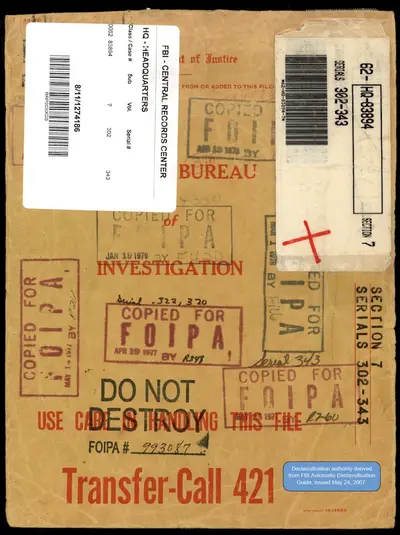
Background
On October 3, 1952, in Mayaguez, Puerto Rico, U.S. government investigators recorded an unidentified-object incident later released to the public on May 8, 2026, as part of the Presidential Unsealing and Reporting System for UAP Encounters (PURSUE). This event occurred during a period of heightened public and governmental interest in aerial phenomena. The incident is part of the first wave of “flying saucer” reports that swept the United States following the Kenneth Arnold sighting of June 1947 and the Roswell incident of July 1947. During this era, the phenomenon of unidentified flying objects was often interpreted through the lens of emerging Cold War anxieties, as the rapid advancement of aerospace technology led to frequent sightings of objects that defied immediate classification.
The geographic location of Mayaguez, a major port city on the western coast of Puerto Rico, placed it within a strategic maritime and aerial corridor. Because of the island’s significance to United States interests in the Caribbean, aerial anomalies were subject to rigorous monitoring. The case was filed with the Federal Bureau of Investigation, whose Knoxville, Albuquerque, Los Angeles, and other field offices routed UFO reports to headquarters under the Bureau’s standing protocols for the protection of vital installations. This systematic routing suggests that the federal government viewed unidentified aerial phenomena as a potential matter of national security, particularly regarding the integrity of sensitive installations and airspace.
What the document records
The released documentation provides specific details regarding the visual characteristics of the sighting. Two individuals in Mayaguez observed strange, red objects cruising eastward around 10:30 p.m. The objects were described as being of an unusual nature. While the visual descriptions of the objects’ movement and color are preserved, the number of witnesses is not specified in the released document.
Beyond the physical description of the objects themselves, the case includes reports of figures or beings associated with the object. Such reports of biological or humanoid entities are a recurring element in mid-century aerial phenomena documentation, though they often lack the corroborating physical evidence required for definitive classification.
Type of case
The Mayaguez incident is classified as a UFO case involving anomalous aerial objects and potential associated figures. Within the broader context of 1950s sightings, the presence of unusual light or color, such as the red hue noted in this report, often prompted investigations into whether the objects were man-made or natural in origin.
Status
All records released under the PURSUE program are designated unresolved by the All-domain Anomaly Resolution Office (AARO) by default. The federal government has not concluded that the events were anomalous, has not concluded that they were conventional, and has not ruled out either possibility. The lack of a definitive conclusion reflects the difficulty inherent in investigating transient aerial events that lack radar confirmation or physical debris.
Conventional candidates for sightings of this period include experimental aircraft, weather balloons, especially the Project Mogul series in the late 1940s, and atmospheric optical phenomena such as sundogs and lenticular clouds. Additionally, astronomical objects including Venus, the Moon, and meteors near the horizon were frequently cited as potential sources of misidentification. In the case of the Mayaguez sighting, the specific timing and eastward trajectory of the red objects remain subject to the same investigative ambiguity as other unclassified reports from the early 1950s.