Charleston, West Virginia UFO Sighting (October 13, 1952) — FBI Files
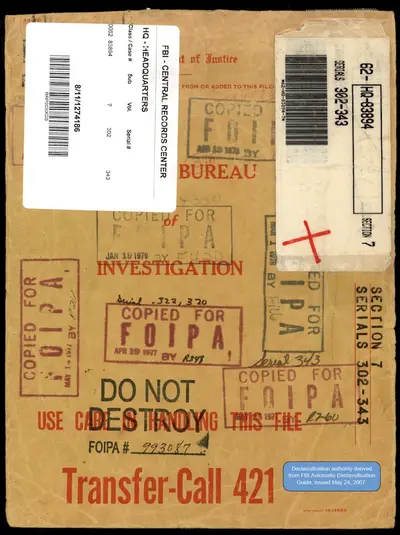
FBI records detail a 1952 incident in Charleston, West Virginia, involving a metallic object and two small figures in red.
Historical Context
The early 1950s represented a period of heightened atmospheric anxiety within the United States, characterized by the onset of the Cold War and the rapid advancement of aerospace technology. Following the Kenneth Arnold sighting in June 1947 and the subsequent Roswell incident in July 1947, the American public became increasingly sensitized to reports of unidentified flying objects. This era, often referred to as the first wave of “flying saucer” phenomena, saw a surge in sightings that prompted official government scrutiny. During this time, the presence of experimental high-altitude reconnaissance aircraft and sophisticated weather balloon programs, such as the Project Mogul series, created a landscape where unidentified aerial phenomena could easily be mistaken for extraterrestrial craft.
The geographic location of the sighting, Charleston, West Virginia, placed the event within the Appalachian region, an area of significant industrial and logistical importance. During the mid-twentieth century, the federal government maintained a heightened state of vigilance regarding the security of vital installations and infrastructure across the Eastern United States. This necessity for surveillance led to the establishment of formal reporting protocols within various federal agencies, ensuring that any anomalous activity near sensitive sites was documented and investigated.
The Incident of October 13, 1952
On October 13, 1952, U.S. government investigators recorded an unidentified-object incident in Charleston, West Virginia. The details of this event remained classified for decades until the documentation was released to the public on May 8, 2026, as part of the Presidential Unsealing and Reporting System for UAP Encounters (PURSUE). The records indicate that an object described as a large metal ball landed within the Charleston area. Upon the object’s arrival, two small men dressed in red emerged from the craft. These figures reportedly climbed a tree to survey their surroundings before the object departed.
The documentation includes claims from a witness who asserted they had photographed flying saucers on six separate occasions. This witness also reported an attempt to capture photographic evidence of an object positioned over Melessa Pass. While the released files contain specific descriptions of the craft and the occupants, the total number of witnesses to the landing was not specified in the official record. The files also include the assertive statement, “We can prove what this was,” suggesting a high degree of certainty from the reporting party regarding the nature of the encounter.
Investigative Procedures and Classification
The case was formally filed with the Federal Bureau of Investigation (FBI). Under the Bureau’s standing protocols for the protection of vital installations, various field offices, including those in Knoxville, Albuquerque, and Los Angeles, were responsible for routing UFO reports to headquarters. This centralized reporting structure ensured that anomalous sightings near critical infrastructure were analyzed by federal authorities. The inclusion of photographic or video evidence within the case file marks it as a significant entry in the Bureau’s archives of unidentified aerial phenomena.
The status of the Charleston incident remains officially unverified. All records released under the PURSUE program are designated as unresolved by the All-domain Anomaly Resolution Office (AARO) by default. The federal government has maintained a neutral stance, neither concluding that the events were anomalous nor confirming that they were the result of conventional technology. Potential conventional explanations for sightings of this nature during the 1950s include atmospheric optical phenomena like sundogs or lenticular clouds, astronomical objects such as the Moon or Venus, or the presence of experimental military hardware. Because the government has not ruled out either the anomalous or the conventional possibility, the 1952 Charleston sighting remains a subject of archival study.