Fairmont, West Virginia UFO Sighting (August 14, 1952) — FBI Files
FBI records document an unidentified aerial phenomenon reported by Mrs. Haufe in Fairmont, West Virginia, during the height of the 1950s UFO era.
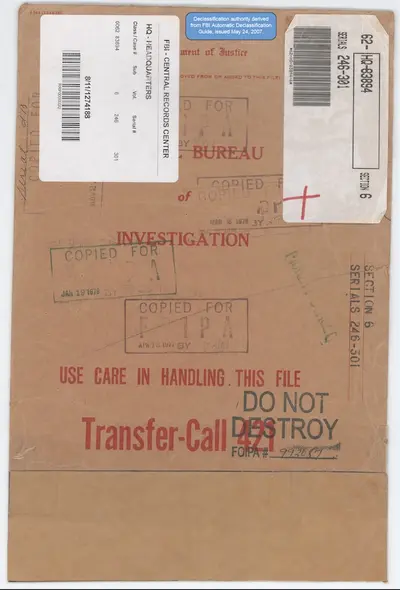
Historical Context
The early 1950s represented a period of heightened atmospheric anxiety within the United States, characterized by the onset of the Cold War and the rapid advancement of aerospace technology. Following the 1947 Kenneth Arnold sighting and the subsequent Roswell incident, the American public became increasingly sensitized to unidentified aerial phenomena. This era saw a proliferation of “flying saucer” reports, often fueled by the technological uncertainties of the burgeoning jet age. During this time, the phenomenon was frequently analyzed through the lens of national security, as the possibility of Soviet incursions via high-altitude reconnaissance was a primary concern for federal agencies.
Geographically, the Appalachian region, including Fairmont, West Virginia, sat within a landscape of significant industrial and strategic importance. The mid-century United States utilized various bureaucratic channels to monitor unusual aerial activity, particularly near vital installations or transportation hubs. The Federal Bureau of Investigation maintained a standardized protocol for handling such reports, ensuring that sightings that could potentially impact national stability were documented. Field offices in cities such as Knoxville, Albuquerque, and Los Angeles were tasked with receiving these reports and routing them to headquarters, particularly when the sightings suggested a threat to protected infrastructure.
The August 1952 Incident
On August 14, 1952, an unidentified-object incident occurred in Fairmont, West Virginia. The details of this specific event were preserved within official government files and were not made available to the general public until May 8, 2026, through the Presidential Unsealing and Reporting System for UAP Encounters (PURSUE). The documentation regarding this event originated from a letter written by a Mrs. Haufe on August 1, 1952, which contained information regarding an unidentified aerial phenomenon.
Upon reviewing the correspondence, the FBI determined that the subject matter fell outside of their specific investigative jurisdiction. Consequently, the Bureau forwarded the letter to the United States Air Force for further investigation. The released Bureau files contain no additional information or subsequent findings related to the report submitted by Mrs. Haufe. While the document confirms the existence of the report, the total number of witnesses involved in the Fairmont sighting is not specified in the released text.
Classification and Analysis
The case is classified as a visual sighting reported by ground or air observers. In the broader context of mid-century UAP studies, such sightings are categorized by the nature of the observation rather than the confirmed identity of the object. The ambiguity of the Fairmont report is consistent with many other cases from the 1950s, where the lack of corroborating radar data or secondary sensor data often left the nature of the phenomena in doubt.
Under the current oversight of the All-domain Anomaly Resolution Office (AARO), all records released under the PURSUE program are designated as unresolved by default. The federal government has maintained a neutral stance regarding the Fairmont incident, neither concluding that the event was anomalous nor confirming it as a conventional occurrence. Within the scientific and historical study of this era, several conventional candidates are typically considered for such sightings. These include experimental aircraft testing, the presence of weather balloons—specifically those associated with the Project Mogul series of the late 1940s—and various atmospheric optical phenomena such as lenticular clouds or sundogs. Additionally, astronomical objects like the Moon, Venus, or meteors near the horizon are frequently evaluated as potential sources for unidentified aerial sightings.