Louisville, Kentucky UFO Sighting (approximately two years ago) — FBI Files
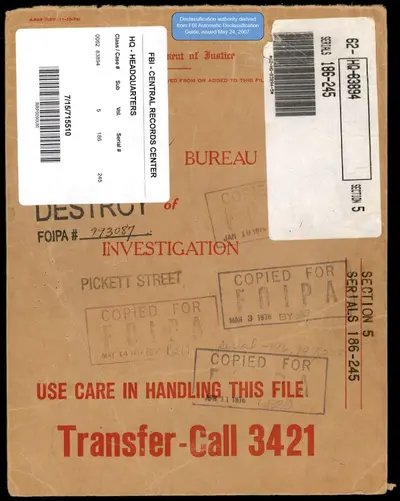
FBI records released via the PURSUE program detail a Louisville, Kentucky, incident involving a disputed photograph of a supposed flying disk.
Historical Context
The Louisville, Kentucky, unidentified object incident occurred approximately two years ago, appearing within a historical framework defined by the mid-century phenomenon of mass aerial sightings. This era of reporting was heavily influenced by the Kenneth Arnold sighting of June 1947 and the subsequent Roswell incident of July 1947, both of which catalyzed a national preoccupation with “flying saucer” reports across the United States. During this period, the sudden appearance of unidentified aerial phenomena (UAP) prompted a standardized bureaucratic response from federal agencies.
The Federal Bureau of Investigation maintained specific protocols for handling such reports, particularly when they involved potential threats to vital installations or national security. Field offices in cities such as Knoxville, Albuquerque, and Los Angeles were tasked with routing UFO reports to FBI headquarters. This structured approach ensured that anomalous sightings were documented within the broader context of Cold War-era surveillance and the monitoring of unauthorized aerial incursions.
The Louisville Incident
The specific details of the Louisville event emerged into the public domain on May 8, 2026, following the release of documents through the Presidential Unsealing and Reporting System for UAP Encounters (PURSUE). The documentation focuses on a photographic claim made by an individual identified as HIXENBAUGH. According to the files, HIXENBAUGH captured what he claimed was a night photograph of a “flying disk,” an image that was subsequently published in the Louisville Times.
The integrity of this photographic evidence was challenged by contemporary accounts recorded within the FBI files. Two other photographers, identified as STEINAU and DAVIS, were informed by a mutual acquaintance that the photograph was a hoax. The mechanism of the alleged deception involved HIXENBAUGH lying on his back on the ground with his camera pointed toward the sky. While the camera was positioned for the shot, the friend allegedly flipped one or more lighted matches across the camera’s focal plane to simulate the appearance of a moving aerial object. While the released documents do not specify the total number of witnesses to the original sighting or the alleged hoax, the investigation centered on this specific photographic discrepancy.
Classification and Resolution Status
The Louisville case is classified as an incident involving photographic or video evidence of an unidentified object. Under the current regulatory framework, all records released under the PURSUE program are designated as unresolved by default by the All-domain Anomaly Resolution Office (AARO). This designation reflects a standard of scientific and investigative caution, as the federal government has not reached a definitive conclusion regarding the nature of the object. The authorities have neither confirmed that the event was anomalous nor concluded that it was the result of conventional means.
In the broader study of mid-century aerial phenomena, investigators often consider several conventional candidates for such sightings. These include the presence of experimental aircraft or weather balloons, such as the Project Mogul series utilized during the late 1940s for detecting nuclear tests. Other possibilities include atmospheric optical phenomena, such as lenticular clouds or sundogs, as well as astronomical objects like the Moon, Venus, or meteors positioned near the horizon. The Louisville file remains part of the ongoing effort to differentiate between such terrestrial and atmospheric occurrences and truly unidentified phenomena.