Scandinavian Ghost Rockets
Over 2,000 unidentified rocket-like objects were reported over Scandinavia in 1946. Swedish military investigated extensively but never identified the source, initially suspecting Soviet missile tests.
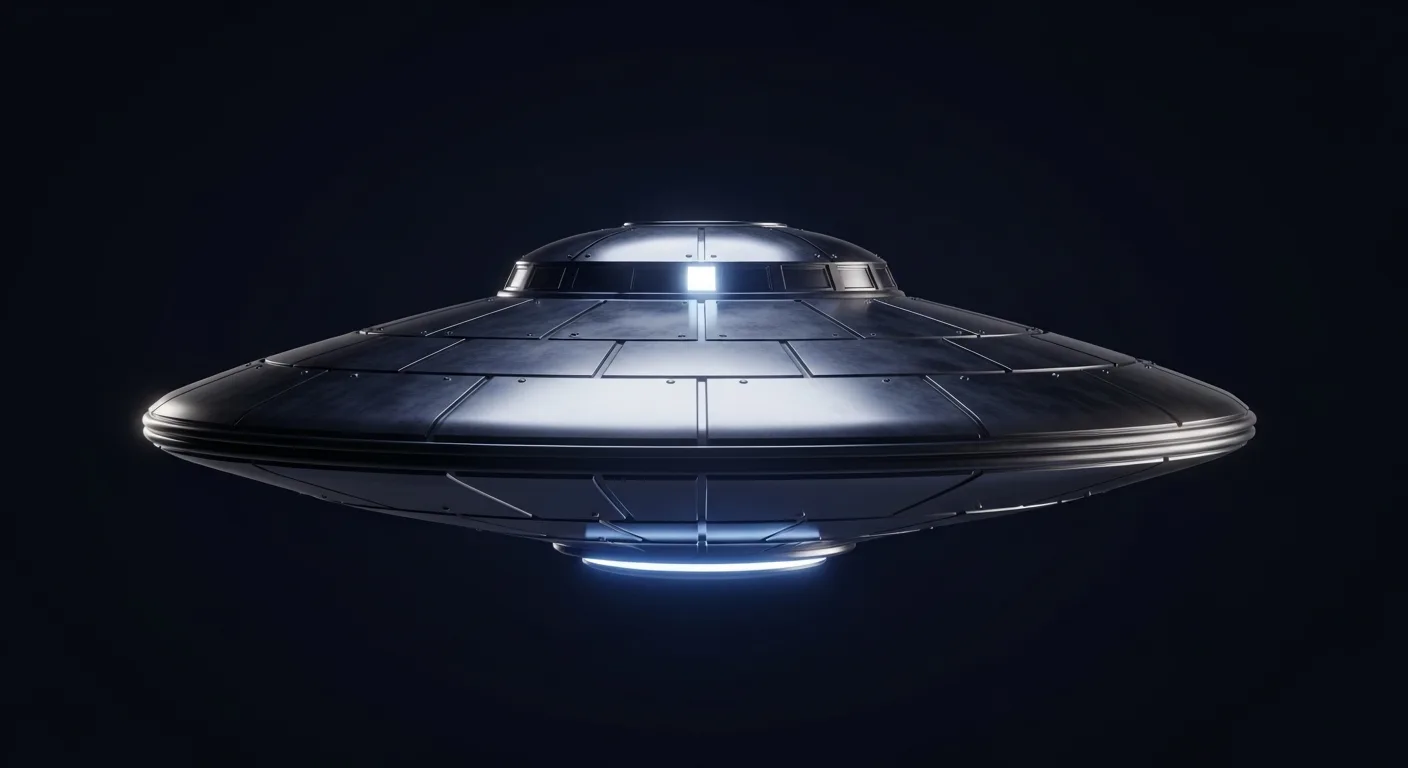
In the summer of 1946, as Europe struggled to rebuild from the devastation of World War II and the first tensions of the Cold War began to crystallize, the skies over Scandinavia filled with mystery. Thousands of witnesses, from farmers and fishermen to military observers and government officials, reported seeing rocket-like objects streaking across the northern sky. Over 2,000 sightings were officially recorded, approximately 200 were tracked on radar, and the Swedish military launched an extensive investigation that would ultimately conclude with the admission that roughly one-fifth of the cases could not be explained. The Ghost Rockets of 1946 represent one of the first great UFO waves of the modern era, a prelude to the flying saucer sightings that would begin the following year.
The World in 1946
The context of the Ghost Rocket wave matters profoundly for understanding how observers interpreted what they saw. World War II had ended less than a year earlier, but its technologies of destruction remained vivid in public consciousness. Germany’s V-2 rockets had terrorized London and Antwerp, demonstrating that guided missiles could deliver death from above with terrifying effectiveness. The Soviet Union had captured both German rocket facilities and German rocket scientists, and Western intelligence agencies watched nervously for signs that Moscow was developing its own missile capability.
Scandinavia occupied a precarious position in the emerging Cold War geography. Sweden had maintained neutrality during the war but now found itself positioned between the Western powers and an expanding Soviet sphere of influence. The Baltic Sea, visible from Swedish shores, had become a frontier between worlds. If the Soviets were testing captured V-2 technology or developing new rockets, Scandinavia would be within range and perhaps within the flight path of test vehicles.
The Sightings Begin
Reports of unusual aerial objects over Scandinavia began appearing in May 1946 and accelerated rapidly through the summer months. By July and August, the phenomenon had become a matter of intense public interest and military concern. The objects were typically described as rocket-shaped, elongated cylinders that moved across the sky at high speed, sometimes leaving trails of flame or smoke behind them.
Witnesses came from all walks of life and all regions of the Scandinavian countries. Swedish citizens produced the majority of reports, but Norway, Denmark, and Finland all contributed significant numbers of sightings. The witnesses included farmers who observed objects while working their fields, fishermen who spotted them over the sea, and military personnel whose training made them particularly credible observers. The sheer volume and geographical spread of the reports made it impossible to dismiss the phenomenon as localized imagination or hoax.
Characteristics of the Objects
The objects reported during the Ghost Rocket wave displayed certain consistent characteristics while also showing puzzling variation. Most commonly, witnesses described elongated, cigar-shaped or torpedo-shaped objects, reminiscent of the German V-weapons with which the public had become familiar during the war. The objects typically moved at high speed, often estimated at several hundred kilometers per hour, following trajectories that suggested purposeful flight rather than the ballistic arc of conventional missiles.
Some objects were reported to leave trails of fire or smoke, consistent with rocket propulsion, while others moved silently and without visible exhaust. Some traveled in straight lines at consistent altitude; others performed maneuvers that seemed inconsistent with any known rocket technology, including sudden changes of direction and variations in speed. The inconsistency of descriptions complicated analysis and suggested that either witnesses were observing different phenomena or that the objects themselves displayed variable characteristics.
Most puzzling were the objects reported to crash. Multiple witnesses described seeing Ghost Rockets plunge into lakes and other bodies of water, yet despite extensive searches, no debris was ever recovered.
The Lake Kolmjarv Incident
The most famous of the crash reports occurred on July 19, 1946, when multiple witnesses near Lake Kolmjarv in northern Sweden reported seeing an object descend and strike the water. The witnesses were confident in what they had seen: a rocket-like object had entered the lake, and surely physical evidence of its presence would be found.
The Swedish military responded with a thorough investigation. Divers descended into the lake, searching the bottom for debris or impact signatures. Boats dragged the waters. Investigators examined the shoreline for any fragments that might have been scattered by the impact. The search continued for days, conducted by military personnel who took the reports seriously and expected to find physical evidence of a Soviet test vehicle.
They found nothing. No debris, no crater on the lake bottom, no chemical traces, no physical evidence of any kind that an object had entered the water. The Lake Kolmjarv incident epitomized the frustrating pattern of the Ghost Rocket wave: credible witnesses reported real observations, yet the expected physical confirmation simply did not materialize.
Military Investigation
The Swedish military established a formal committee to investigate the Ghost Rocket phenomenon, collecting reports, conducting interviews, and attempting to correlate observations with radar data. The investigation represented one of the most thorough official examinations of unidentified aerial phenomena up to that time, conducted by a neutral nation with no obvious motive to either confirm or deny the reality of the objects.
Approximately 200 of the reported objects were tracked on military radar, providing instrument confirmation that something physical was present in the sky. Radar operators described targets that moved at speeds and on trajectories inconsistent with conventional aircraft, adding to the puzzle that investigators were attempting to solve.
The Swedish government consulted with British and American intelligence agencies, sharing information about the sightings and seeking any intelligence that might explain what was appearing over Scandinavian territory. These consultations took place against the backdrop of emerging Cold War tensions, with all parties aware that Soviet missile tests represented the most likely conventional explanation.
Official Conclusions
The Swedish investigation concluded in a classified report that would remain secret for decades. The report’s findings were remarkable for what they acknowledged. Approximately 80% of the sightings could be attributed to conventional explanations: meteors, aircraft, weather phenomena, and misidentifications of various kinds. These cases, while interesting, did not represent genuine anomalies.
However, the remaining 20% of cases could not be explained. These were reports from credible observers, sometimes supported by radar data, that described objects whose characteristics did not match any known aircraft, missile, or natural phenomenon. The Swedish military’s own investigation acknowledged that something genuinely unidentified had been observed over Scandinavian territory.
The report concluded that there was no evidence the objects were Soviet missiles. The characteristics reported by witnesses did not match the performance capabilities of captured V-2 technology or any logical evolution of that technology. Whatever the Ghost Rockets were, they were not test vehicles from Soviet bases in the Baltic states.
Intelligence Interest
American and British intelligence monitored the Ghost Rocket phenomenon with intense interest. A now-declassified memorandum from the U.S. Air Attache in Stockholm acknowledged the seriousness of the reports and the caliber of the witnesses involved. While not endorsing any particular explanation, the memorandum noted that the frequency and consistency of reports suggested something genuinely unusual was occurring.
One of those American assessments is now public. On August 7, 2026 the Department of War released a January 1947 General Staff intelligence review of the ghost rocket incidents, built from observational reports, statements by the Swedish government, and the reporting of the U.S. military attaché in Stockholm described above. It is a cool document. It records that nearly a thousand reports had arrived by the end of July, that the two commonest descriptions were “a ball of fire with a tail” and a “shiny cigar shaped object,” and that claimed altitudes ran from treetop height to 160,000 feet, with the extreme figures coming almost entirely from Finland. It is unimpressed by the Swedish handling of the investigation, noting that it proceeded in a peculiar manner with key personnel left on summer leave rather than recalled, and it observes a gap between the Defense Staff’s public position and its private one. On the central question it commits to nothing: the evidence available in January 1947 substantiated neither the Soviet explanation nor any other.
The Western intelligence interest had both practical and strategic dimensions. If the Soviets were testing advanced missiles over Scandinavia, that represented a direct security concern. If something else was responsible for the sightings, understanding what it was might have implications for military operations and air defense. Either way, the Ghost Rockets demanded attention.
The Wave Subsides
By the autumn of 1946, Ghost Rocket sightings had begun to decline. The wave did not end abruptly but faded gradually, with occasional reports continuing into 1947 and beyond. No definitive conclusion was ever reached about what had caused the phenomenon. The Swedish investigation files were classified, and the mystery was left officially unresolved.
The timing of the Ghost Rocket wave is significant in the broader history of unidentified aerial phenomena. The sightings occurred exactly one year before Kenneth Arnold’s famous 1947 observation near Mount Rainier, Washington, that launched the modern flying saucer era. Some researchers view the Ghost Rockets as an early phase of the same phenomenon that would explode into public consciousness in 1947, while others consider them a separate mystery with different characteristics.
A Precedent for Investigation
The Scandinavian Ghost Rockets established important precedents for how governments would investigate unidentified aerial phenomena. The Swedish military took the reports seriously, collected data systematically, and acknowledged when their investigation could not provide explanations. This approach, combining scientific methodology with honest acknowledgment of unexplained residual cases, would be echoed in later official investigations.
The case files remained classified for decades before being partially released in the 1980s and later. Some documents remain restricted, fueling speculation about what additional information might be contained in the unreleased portions. The secrecy itself has become part of the mystery, leaving researchers to wonder what the full story might be.
An Unresolved Mystery
More than seven decades after the Ghost Rockets appeared over Scandinavia, they remain unexplained. The Swedish military’s own investigation acknowledged that a significant percentage of cases defied conventional explanation. No debris was ever recovered from the reported crashes. No definitive identification was ever made of what thousands of witnesses observed.
The Ghost Rockets represent one of the earliest well-documented UFO waves of the modern era. They demonstrate that unidentified aerial phenomena were being observed, reported, and officially investigated before the flying saucer became a cultural icon. Whatever appeared over Scandinavia in 1946, it left behind questions that have never been answered and a mystery that has never been solved.
Sources
- Ghost rockets — Wikipedia
- Europeana — Digitised European cultural heritage