Santa Fe, New Mexico UFO Sighting (July 15, 1947) — FBI Files
An FBI report details a 1947 sighting of unidentified objects and explosions near Canjilon, New Mexico, reported by Gwynne M. Merchant.
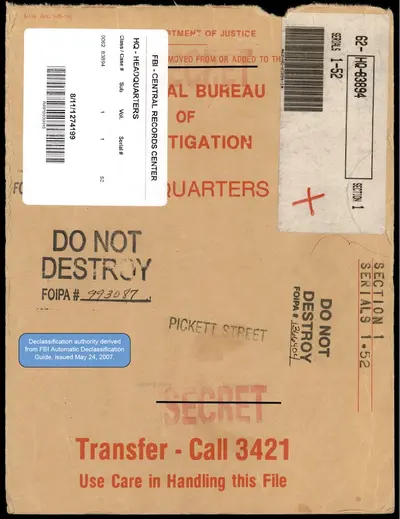
Historical Context
The summer of 1947 represents a pivotal moment in the history of unidentified aerial phenomena in the United States. During this period, the American public and various government agencies were grappling with a sudden influx of reports involving unidentified flying objects. This wave of sightings was preceded by the Kenneth Arnold encounter in June 194
7, which popularized the term “flying saucer,” and coincided with the events surrounding the Roswell incident in July 1947. The geopolitical landscape of the early Cold War era added a layer of tension to these reports, as the United States was deeply invested in monitoring the skies for potential technological advancements from foreign adversaries. At the time, the scientific and intelligence communities lacked a standardized framework for analyzing such phenomena, often attempting to categorize these sightings within the context of emerging aerospace technology or atmospheric anomalies.
The geography of Northern New Mexico, characterized by its vast, open landscapes and significant military and research installations, made it a frequent site for aerial observations. The region’s proximity to sensitive sites meant that any unusual activity in the sky was often met with immediate scrutiny by federal authorities.
The July 15 Incident
On July 15, 1947, in Santa Fe, New Mexico, U.S. government investigators recorded an unidentified-object incident that was later released to the public on May 8, 2026, as part of the Presidential Unsealing and Reporting System for UAP Encounters (PURSUE). The documentation for this specific event was filed within the records of the Federal Bureau of Investigation. Under the Bureau’s standing protocols for the protection of vital installations, various field offices, including those in Knoxville, Albuquerque, and Los Angeles, were responsible for routing UFO reports to headquarters for centralized processing.
The primary documentation for this case involves the report of Gwynne M. Merchant. According to the records, Merchant reported receiving information regarding the presence of flying objects in the vicinity of Canjilon, Park View, and Tierra Amarolog, New Mexico. The report specifically noted the observation of lights followed by explosions. In her assessment of the situation, Merchant expressed a belief that these objects might be missiles, drawing a comparison to similar phenomena that had been observed over Sweden. In an effort to bring attention to the matter, Merchant also contacted the prominent journalist Walter Winchell with a story regarding the “flying discs.”
While the report contains specific details regarding the nature of the lights and the locations of the sightings, the released document does not specify the total number of witnesses involved in the event. The sighting is categorized as a visual report made by ground or air observers.
Analytical Status and Classifications
As of the release of these documents, the status of the Santa Fe sighting remains officially unverified. All records released under the PURSUE program are designated as unresolved by the All-domain Anomaly Resolution Office (AARO) by default. The federal government has maintained a neutral stance regarding this specific case, having neither concluded that the events were anomalous nor confirmed that they were the result of conventional means.
In the broader context of 1947 aerial sightings, investigators often considered several conventional candidates. These included the presence of experimental aircraft, the deployment of weather balloons—specifically those associated with the Project Mogul series in the late 1940s—and various atmospheric optical phenomena such as sundogs or lenticular clouds. Additionally, astronomical objects such as Venus, the Moon, or meteors appearing near the horizon were frequently analyzed as potential sources for reported lights. The Santa Fe report, with its mention of explosions and missile-like behavior, remains part of this complex historical dataset of unconfirmed aerial phenomena.