Norfolk, Virginia UFO Sighting (July 8, 1947) — FBI Files
On July 8, 1947, a schoolboy in Norfolk, Virginia, reported observing a large black object and two smaller objects moving rapidly across the sky.
Background
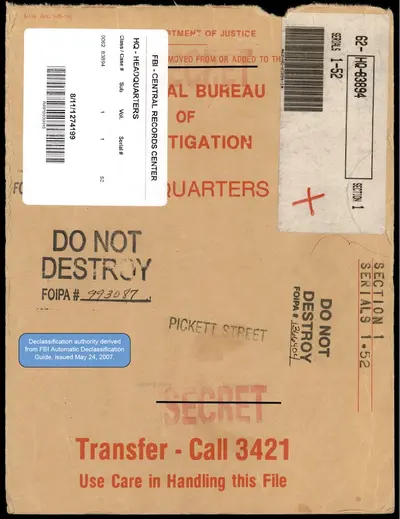
On July 8, 1947, in Norfolk, Virginia, U.S. government investigators recorded an unidentified-object incident later released to the public on May 8, 2026, as part of the Presidential Unsealing and Reporting System for UAP Encounters (PURSUE). The Norfolk sighting occurred during a period of intense public and governmental scrutiny regarding unidentified aerial phenomena. This event is categorized as part of the first wave of “flying saucer” reports that swept the United States following the Kenneth Arnold sighting in June 1947 and the Roswell incident in July 1947. During this era, the sudden influx of reports led to a heightened state of vigilance among federal agencies, as the sight of unidentified objects over populated areas and strategic locations raised concerns regarding national security and airspace integrity.
The case was filed with the Federal Bureau of Discrepancies and the Federal Bureau of Investigation, whose Knoxville, Albuquerque, Los Angeles, and other field offices routed UFO reports to headquarters under the Bureau’s standing protocols for the protection of vital installations. Norfolk, situated within a significant maritime and military hub, was a location of particular interest to federal investigators due to its proximity to naval assets and coastal defense infrastructure. The administrative handling of such reports followed established procedures designed to monitor any aerial activity that might threaten or involve sensitive government installations.
What the document records
On July 8, 1947, a schoolboy named Billy Currentine was observing the sky from his apartment porch in Norfolk, Virginia, hoping to spot a flying disc. This specific observation was part of a broader cultural phenomenon where individuals across the country were actively scanning the skies for the newly popularized “flying saucer” phenomenon. Currentine reported seeing a large, black object moving rapidly from southwest to northeast, followed by two smaller objects traveling in the same direction.
The witness provided specific details regarding the velocity and altitude of the objects. Currentine estimated the objects were moving faster than airplanes and at a higher altitude, leaving a white mist trail behind them. While the physical characteristics of the objects were described, the number of witnesses is not specified in the released document. The presence of a visible trail suggests a significant interaction with the atmosphere, a detail that often characterized many reports from the mid-to-late 1940s.
Type of case
The witnesses described the object as disc- or saucer-shaped. This terminology was consistent with the contemporary vernacular used to describe unidentified aerial phenomena during the post-war period, largely influenced by the media coverage of the Kenneth Arnold event.
Status
All records released under the PURSUE program are designated unresolved by the All-domain Anomaly Resolution Office (AARO) by default. The federal government has not concluded that the events were anomalous, has not concluded that they were conventional, and has not ruled out either possibility.
The investigation of such sightings during the 1940s often struggled to differentiate between extraterrestrial hypotheses and secret military developments. Conventional candidates for sightings of this period include experimental aircraft, weather balloons—especially the Project Mogul series in the late 1940s, which utilized high-altitude balloons to detect Soviet nuclear tests—and atmospheric optical phenomena such as sundogs and lenticular clouds. Additionally, astronomical objects including Venus, the Moon, and meteors near the horizon were frequently cited as potential sources for unidentified lights. The Norfolk incident remains part of the unclassified historical record, awaiting further analysis or new data to determine its origin.