The RB-47 Electronic Intelligence Encounter
An intelligence-gathering aircraft was paced by a UFO that appeared on radar and electronic sensors.
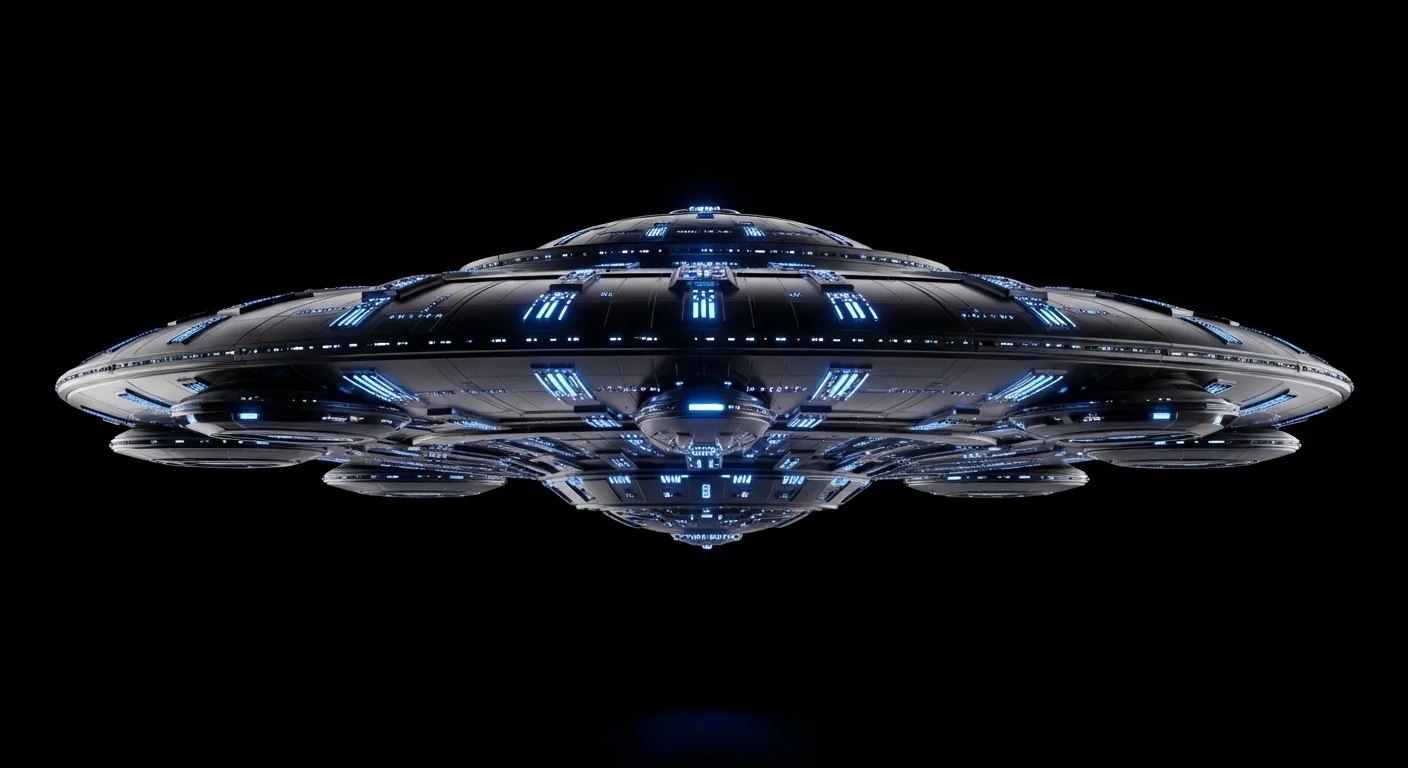
In the predawn darkness of July 17, 1957, six highly trained United States Air Force officers aboard a reconnaissance aircraft experienced something that none of them could explain, something that would challenge the assumptions of military investigators for decades to come. Over the course of approximately ninety minutes, as their RB-47 Stratojet flew across four states from Mississippi to Oklahoma, an unidentified object paced them through the skies of the American South. What made this encounter extraordinary was not merely that the crew saw something strange. It was that the object was simultaneously detected by three independent and fundamentally different sensor systems: the aircraft’s own sophisticated electronic warfare equipment, ground-based radar stations below, and the trained eyes of the flight crew themselves. The convergence of these three lines of evidence, each confirming the others in real time, elevated the RB-47 case into one of the most compelling and scientifically significant UFO encounters ever documented.
The Aircraft and Its Mission
To appreciate the weight of this encounter, one must first understand the aircraft and the men who flew it. The RB-47 was a reconnaissance variant of the Boeing B-47 Stratojet, a swept-wing strategic bomber that formed the backbone of the United States Air Force’s nuclear deterrent throughout the 1950s. While the standard B-47 carried bombs, the RB-47 carried something arguably more important in the Cold War context: electronic intelligence-gathering equipment. The aircraft was bristling with receivers, analyzers, and recording devices designed to detect, identify, and catalog enemy radar emissions. Its mission was to fly along or near the borders of the Soviet Union and its allies, mapping their air defense networks so that, in the event of war, American bombers would know where the radars were and how to evade or jam them.
The crew that night had departed Forbes Air Force Base in Topeka, Kansas, on a composite training mission. The flight plan called for gunnery exercises over the Gulf of Mexico, navigation practice over open water, and electronic countermeasures drills on the return leg across the south-central United States. It was this final phase, the ECM training run, that would bring them into contact with something far stranger than any Soviet radar signal.
The six men aboard were all officers, each with specialized training. Lieutenant Colonel Lewis D. Chase sat in the pilot’s seat, with Captain James H. McCoid beside him as copilot. Captain Thomas H. Hanley served as navigator. In the rear compartment, three electronic warfare officers monitored the banks of ECM equipment: Captain John J. Provenzano on the number one monitor, Captain Frank B. McClure on number two, and Captain Walter A. Tuchscherer on number three. These were not casual observers or untrained civilians prone to misidentifying common phenomena. They were career military professionals whose daily work involved the precise identification and analysis of electromagnetic signals. If anyone was equipped to distinguish between ordinary radar returns and something genuinely anomalous, it was this crew.
First Contact Over the Gulf
The encounter began subtly, almost dismissively. As the RB-47 completed its over-water exercises and crossed the coastline near Gulfport, Mississippi, heading northwest on its return leg, McClure noticed something on his number two monitor. A signal had appeared at roughly their five o’clock position, bearing the characteristics of a radar emission at a frequency near 2,800 megacycles. At first, McClure assumed he was picking up a ground-based radar station somewhere to the northwest, its signal distorted by the 180-degree ambiguity inherent in certain types of direction-finding equipment. It was the kind of routine anomaly that an experienced operator might note and then disregard.
But the signal refused to behave like a ground radar. As McClure watched, the source moved up the scope on the right-hand side of the aircraft, crossed their flight path ahead of them, and proceeded to track down the left-hand side of the scope. In other words, whatever was emitting this signal had just flown a complete circle around the RB-47. The aircraft was traveling at approximately 500 miles per hour. Even accounting for the possibility that his equipment was 180 degrees out of alignment, the signal source had still circumnavigated the aircraft at tremendous speed. No ground-based radar installation could do that. McClure found himself staring at his scope with a growing sense that something was profoundly wrong with the tidy explanations his training had prepared him to offer.
The Blue-White Light
At approximately 4:10 in the morning, the encounter escalated from the electronic to the visual. Chase and McCoid, watching the darkness ahead from the cockpit, were startled by the sudden appearance of an intensely luminous light bearing down on their aircraft from the left. The light was brilliant, blue-white in color, and it was closing on them with extraordinary speed. Chase’s first instinct was that it was another aircraft on a collision course. He began to call for evasive maneuvers, but before he could complete the order, the light executed an abrupt change of direction that no conventional aircraft could have managed. In the span of a heartbeat, it swept across their flight path from left to right and vanished at their two o’clock position. The speed and the sharpness of the turn were, in Chase’s later estimation, far beyond the capabilities of any known aircraft of that era.
The cockpit crew exchanged uncertain glances. Whatever they had just seen had moved with a velocity and agility that suggested either a technology vastly superior to their own or a phenomenon entirely outside their frame of reference. But the encounter was far from over. In fact, it had barely begun.
The Chase Across Texas
As the RB-47 continued northwest across Louisiana and into Texas, the situation developed into something resembling a prolonged aerial cat-and-mouse game. McClure continued to track the anomalous signal on his number two monitor, and now Provenzano, working the number one monitor, independently confirmed the detection. When Provenzano tuned his equipment to 3,000 megacycles, he found the same signal source that McClure had been tracking, and the bearing matched precisely. Both operators placed the source at the same location relative to the aircraft, and both noted that it was maintaining pace with the RB-47. This was a critical detail. A ground-based radar would have fallen behind as the aircraft moved; this signal source was keeping station, flying alongside them at 500 miles per hour.
At approximately 4:39, Chase spotted a large and brilliant red light ahead and below the aircraft, at roughly their one o’clock position and perhaps five thousand feet below their altitude of 34,500 feet. McCoid saw it too. At 4:40, McClure reported that he was now tracking two signals, one at their 40-degree bearing and another at 70 degrees. Chase and McCoid confirmed that they could see red lights at both positions. The encounter had multiplied.
It was around this time that Chase made a decision that would significantly strengthen the evidentiary value of the case. Overcoming his initial reluctance to report something so bizarre through official channels, he contacted the ground radar station of the 745th Aircraft Control and Warning Squadron at Duncanville, Texas, operating under the call sign “Utah.” Chase described what the crew was experiencing and requested that Utah attempt to acquire the targets on their ground-based radar.
The response from Utah was immediate and electrifying. The ground controllers confirmed that they were painting a target on their scopes at the precise location where McClure’s airborne equipment was detecting the signal and where the flight crew was observing the luminous object. Three independent detection systems, operating on entirely different principles, were now in agreement. The electronic warfare monitors aboard the RB-47 were detecting an anomalous electromagnetic emission. The ground radar at Duncanville was returning a solid echo from a physical object. And the trained eyes of the flight crew were observing a brilliant light source. All three placed the object at the same location, and all three tracked its movements in concert.
Disappearance and Reappearance
What followed pushed the encounter deeper into the realm of the inexplicable. Chase, now fully engaged, decided to turn the RB-47 toward the object in an attempt to close the distance. He banked the aircraft and accelerated, pointing the nose of the Stratojet directly at the luminous target. The object responded by accelerating away, maintaining or increasing the gap between itself and the pursuing aircraft. When Chase turned away, the object followed. It seemed to react to the RB-47’s maneuvers with an intelligence and awareness that ruled out any natural phenomenon.
Then, at approximately 4:52, the object simply vanished. It did not fly away or fade gradually from view. It blinked out. And in the same instant, McClure reported that the signal had disappeared from his scope, and Utah confirmed that their radar return had simultaneously dropped off their screens. Three systems lost the target at the same moment. The object had not moved out of range or descended below the radar horizon. It had simply ceased to exist as a detectable presence.
The crew barely had time to absorb this development before the object reappeared. McClure picked up the signal again, Utah reacquired the radar target, and the cockpit crew once more observed the luminous light. It had returned to roughly the same relative position, as though it had never left. This pattern of disappearance and reappearance would repeat itself during the encounter, each time occurring simultaneously across all three detection systems.
In the vicinity of Mineral Wells, Texas, Chase put the RB-47 into a port turn and attempted to close on the object once more. Again it demonstrated apparent awareness of his intentions, maintaining its distance when he approached and matching his movements when he changed course. Then Chase attempted a dive, pushing the Stratojet down from 35,000 feet to approximately 20,000 feet. As he descended, the object blinked out again, simultaneously vanishing from McClure’s monitor and from Utah’s ground radar. The triple disappearance was too precisely synchronized to be coincidental. Whatever was out there, it was either a single phenomenon manifesting across electromagnetic, radar, and visual spectrums, or it was something capable of selectively controlling its detectability across all three.
Into Oklahoma and Final Contact
As the RB-47 continued northward, climbing back to altitude and resuming its course toward Forbes Air Force Base, the object maintained its presence intermittently. The crew tracked it as they crossed from Texas into Oklahoma, the signal appearing and disappearing on McClure’s monitor while the cockpit crew caught glimpses of the light against the slowly brightening predawn sky.
The accounts of the crew members diverge slightly on the question of exactly where the encounter ended. Chase recalled that the object was with them only into the southern portion of Oklahoma, while Hanley’s recollection was that it accompanied them as far as the Oklahoma City area. This minor discrepancy is itself a marker of credibility. When witnesses to an extraordinary event agree on every detail, it can suggest rehearsal or collaboration. The small differences in recollection between Chase and Hanley are precisely what one would expect from honest observers recounting a confusing and unprecedented experience from slightly different vantage points within the aircraft.
By the time the RB-47 landed at Forbes, the crew had been shadowed by an unidentified object for well over an hour across more than 600 miles. They had detected it on multiple electronic warfare receivers, observed it visually from the cockpit, and had its presence independently confirmed by ground-based military radar. The object had demonstrated the ability to pace a jet aircraft traveling at 500 miles per hour, to execute radical changes in direction at speeds far beyond any known technology, to appear and disappear instantaneously and simultaneously across multiple detection systems, and to react to the movements of the RB-47 with what appeared to be conscious intent.
Investigations and Explanations
The case was initially investigated by Project Blue Book, the Air Force’s official UFO study program. Blue Book’s conclusion was breathtaking in its inadequacy: the crew, Blue Book determined, had been tracking a commercial airliner. This explanation was, as physicist Gordon David Thayer would later characterize it, “literally ridiculous.” No commercial airliner of 1957 could match the speeds, maneuvers, or electromagnetic characteristics displayed by the object. No airliner could appear and disappear simultaneously from three independent sensor systems. The Blue Book explanation was not merely insufficient; it was dismissive in a way that suggested the investigators had not seriously engaged with the evidence.
The case resurfaced during the University of Colorado UFO study, commonly known as the Condon Report, which was conducted in the late 1960s under the direction of physicist Edward Condon. Thayer, who served as the radar expert on the committee, investigated the RB-47 case and found himself unable to provide a conventional explanation. The Condon Report concluded that if the report was accurate, it described “an unusual, intriguing, and puzzling phenomenon” and classified the case as unknown from a propagation standpoint. This was a significant admission from a study that was generally skeptical of UFO reports and that ultimately recommended the discontinuation of official government investigation into the phenomenon.
The most thorough investigation of the case was conducted by Dr. James E. McDonald, an atmospheric physicist at the University of Arizona who devoted considerable effort to the scientific study of UFO reports. McDonald personally interviewed all six crew members, a step that neither Blue Book nor the Condon Committee had fully undertaken. He also uncovered official records that had not been available to the Colorado study, including documents that corrected errors in Thayer’s version of events, most notably the date of the encounter, which Thayer had initially recorded incorrectly. McDonald’s meticulous reconstruction of the case, drawing on both the crew’s testimony and the documentary record, remains the definitive account and has never been satisfactorily challenged by skeptics.
The Weight of Triple Confirmation
The enduring significance of the RB-47 case lies in the convergence of evidence. Many UFO reports rely on visual observation alone, and visual observation, however sincere the witness, is subject to misidentification, misperception, and the well-documented fallibilities of human memory. The RB-47 encounter transcends these limitations. The electronic warfare equipment aboard the aircraft operated on physical principles entirely independent of human perception. The ground radar at Duncanville operated on yet another set of principles, detecting the reflection of radio waves from solid objects. And the visual observations of the flight crew provided a third, wholly separate channel of information. That all three channels agreed on the location, movements, and behavior of the object, and that all three registered its appearances and disappearances simultaneously, creates a body of evidence that cannot be casually dismissed.
Moreover, the witnesses were not ordinary civilians but military officers trained specifically in the identification and analysis of airborne phenomena and electromagnetic signals. The electronic warfare officers aboard the RB-47 spent their careers distinguishing between genuine signals and false returns, between enemy radar and atmospheric noise. If they reported that a signal source circumnavigated their aircraft and then paced it for over an hour, that assessment carries weight. Similarly, the ground radar operators at Duncanville were experienced military professionals whose livelihood depended on the accurate identification of targets in their airspace.
Skeptics have proposed various explanations over the decades. Some have suggested that the electronic signals were reflections or refractions of ground-based radar installations, but this fails to account for the fact that the signal source moved relative to both the aircraft and the ground. Others have proposed that the visual sightings were misidentified stars or planets, but this explanation collapses in the face of the object’s observed movements and its correlation with the electronic and radar detections. The commercial airliner theory advanced by Blue Book has been universally rejected as inadequate by serious analysts of the case.
A Case That Endures
Nearly seven decades after it occurred, the RB-47 encounter remains stubbornly resistant to conventional explanation. It occupies a particular position in the history of UFO investigations because it satisfies so many of the criteria that skeptics rightly demand of extraordinary claims. The witnesses were credible, trained, and had no apparent motive for fabrication. The detection was achieved through multiple independent systems operating on different physical principles. The event was of sufficient duration, over an hour, to rule out momentary misperception. And the documentation, while incomplete, is sufficient to establish the basic facts of the encounter beyond reasonable dispute.
The case also illustrates a recurring pattern in the history of UFO investigations: the gap between the quality of the evidence and the adequacy of the official response. Blue Book’s airliner explanation was not merely wrong but insultingly so, reflecting an institutional posture that prioritized dismissal over analysis. The Condon Report came closer to intellectual honesty by classifying the case as unknown, but the study’s overall recommendation to end government investigation of UFOs ensured that no follow-up was conducted. McDonald’s careful and scientifically rigorous investigation demonstrated what was possible when a qualified researcher took the evidence seriously, but McDonald worked largely outside institutional support, and his findings were never incorporated into official policy.
For the six men who lived through it, the encounter was both unforgettable and, in important ways, unspeakable. Military culture in the 1950s did not encourage the reporting of anomalous experiences, and the crew’s initial reluctance to contact ground radar reflected a well-founded concern that reporting a UFO could damage careers. That Chase eventually overcame this reluctance and called Utah, and that Utah’s ground radar confirmed what the crew was experiencing, speaks to the unmistakable reality of what they were witnessing. These were not men inclined toward fantasy or self-dramatization. They were professionals confronted with something that their training had not prepared them for, and they responded with the methodical precision that their service demanded.
The RB-47 electronic intelligence encounter stands as a reminder that the phenomenon popularly known as UFOs has, on occasion, left traces far more substantial than anecdote and memory. On a summer night in 1957, something accompanied an American military aircraft across the breadth of the southern United States, something that radiated electromagnetic energy, reflected radar waves, and shone with a light visible to the human eye. It responded to the aircraft’s movements with apparent intelligence, and it demonstrated capabilities that exceeded anything in the known inventory of human technology. Whatever it was, it was real. The instruments confirmed it. And after all these years, no one has been able to explain it.
Sources
- Project Blue Book — National Archives — USAF UFO investigation files, 1947–1969
- CIA UFO/UAP Reading Room — Declassified CIA documents on UAP
- Chronicling America — Historic US newspapers (1690–1963)