Antônio Villas-Boas Abduction
A Brazilian farmer claimed aliens abducted him and forced him to mate with a humanoid female. His detailed account predates most abduction narratives and contains elements that would become standard.
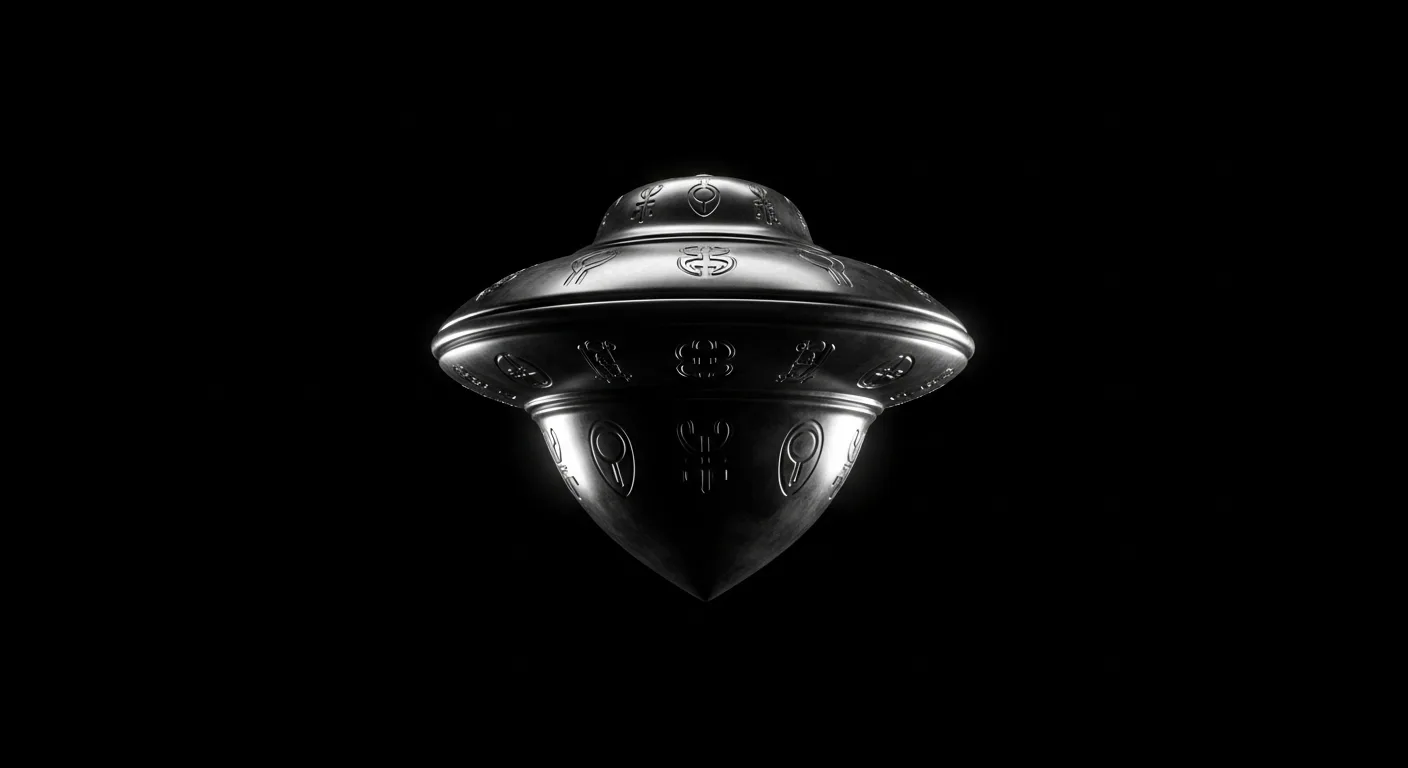
On the night of October 16, 1957, a twenty-three-year-old Brazilian farmer named Antônio Villas-Boas was plowing a field alone on his family’s property near São Francisco de Sales, in the western reaches of Minas Gerais state. He worked at night to avoid the punishing heat of the Brazilian interior, guiding his tractor through the dark soil under a clear sky. What happened next, according to his own detailed and unwavering testimony, would make him the subject of one of the most extraordinary and controversial claims in the history of UFO research. Villas-Boas reported that he was forcibly taken aboard an egg-shaped craft by small humanoid beings, subjected to a series of procedures, and compelled to have sexual intercourse with a female creature who was not entirely human. He would maintain this account, without significant alteration, for the remaining thirty-four years of his life.
What makes the Villas-Boas case so significant is not merely the sensational nature of his claims but their timing. His encounter took place years before Betty and Barney Hill reported their abduction in New Hampshire, before the modern alien abduction narrative had crystallized in popular culture, and before the recurring motifs of the genre—medical examination, reproductive experimentation, physical aftereffects—had become familiar to the general public. Villas-Boas described elements that would later appear in hundreds of abduction accounts worldwide, yet he described them at a time when no template existed for such a story. Either he experienced something genuinely anomalous, or he independently invented a narrative framework that countless others would subsequently replicate in remarkable detail.
Rural Brazil in the 1950s
To appreciate the context of the Villas-Boas encounter, one must understand something of the world in which it occurred. The Triângulo Mineiro region of Minas Gerais in the late 1950s was agricultural country, sparsely populated and far removed from the cultural currents of São Paulo and Rio de Janeiro. Families like the Villas-Boas clan worked the red earth, growing coffee and raising cattle, their lives shaped by the rhythms of planting and harvest rather than by newspapers or radio broadcasts. While the Sputnik satellite had launched just twelve days before Antônio’s reported encounter—an event that electrified the developed world—news of the space race would have reached rural Minas Gerais slowly and with limited impact on daily life.
Antônio Villas-Boas was by all accounts an unremarkable young man of his time and place. The son of a prosperous farming family, he was literate and reasonably well-educated for his circumstances, though he had no particular interest in science fiction, aviation, or the nascent UFO phenomenon. He was known among neighbors and family as steady, hardworking, and honest—not given to flights of fancy or attention-seeking behavior. He would later study law and become a practicing attorney, a trajectory that suggests a fundamentally rational and disciplined mind. Those who knew him consistently described a man who seemed an unlikely candidate for fabricating an elaborate hoax.
The family farm sat in flat, open terrain typical of the Brazilian cerrado, with broad fields stretching to distant horizons. At night, the sky above this landscape was vast and unobstructed, and the isolation was profound. Working alone in the fields after dark, with only the rumble of his tractor for company, Villas-Boas would have been acutely aware of anything unusual in his surroundings. It was in this setting—mundane, agricultural, and far from any influence that might have primed him for a UFO narrative—that his story begins.
Precursors: Lights in the Field
The events of October 16 did not occur without preamble. Villas-Boas later reported that strange things had been happening for several nights before the main encounter, building in intensity in a way that suggested deliberate approach.
On the night of October 5, roughly eleven days earlier, Antônio and his brother had been in their bedroom when they noticed an intensely bright light outside the window. It illuminated the yard with a silvery glow far too powerful to be any conventional source. When one of them moved toward the window to investigate, the light shifted position, as if responding to their attention. They watched it for some time before it eventually withdrew and disappeared. The brothers discussed the incident but could offer no explanation.
Then, on October 14, Antônio was again working alone in the fields at night when he observed a blindingly bright light hovering above the northern end of the field. It was round, intensely luminous, and appeared to be roughly the size of a cartwheel. Curious but also unnerved, he drove his tractor toward it. The light moved away, maintaining a consistent distance as he approached, as though it were observing him while avoiding close contact. He chased it back and forth across the field several times before giving up. The light then simply vanished, as if switched off.
These preliminary sightings established a pattern that would become familiar in later abduction research: a period of surveillance or approach by the phenomenon before the main event, as though the subject were being observed and perhaps assessed. Whether these lights were genuinely connected to what followed, or whether Villas-Boas retrospectively linked unrelated observations into a coherent narrative, remains an open question. But their presence in his account adds a layer of gradual escalation that lends the story an internal logic.
The Night of October 16
Two nights later, Antônio was alone in the field once more, plowing by the light of his tractor’s headlamps. The time was approximately one o’clock in the morning. The night was clear and cold by Brazilian standards, with good visibility in all directions. He was focused on his work when he noticed a large, reddish light in the sky, approaching rapidly from the north. Unlike the previous sightings, this light did not hover at a distance or retreat when observed. It descended directly toward him.
As it drew closer, Villas-Boas could see that the light was attached to a craft—an egg-shaped or elongated object that he estimated to be roughly thirty-five feet long. It moved with purpose and precision, slowing as it approached the field and extending three metallic legs before settling onto the plowed earth perhaps fifty feet from his tractor. The craft’s exterior glowed with a reddish or purplish luminescence that hurt his eyes, and a rotating dome or cupola on its upper surface spun rapidly, emitting a sound like a vacuum cleaner as it decelerated.
Villas-Boas panicked. He attempted to drive his tractor away, but the engine died after traveling only a short distance—though he was never certain whether this was caused by the craft or by his own frantic mishandling of the controls. He leaped from the tractor and tried to flee on foot across the soft, freshly plowed soil. He had covered only a few steps when a small figure seized his arm.
He struggled violently, managing to throw off his first assailant, but three more beings quickly converged on him. Despite his considerable strength—he was a young man accustomed to hard physical labor—they overpowered him. He was lifted bodily from the ground and carried, struggling and shouting, toward the craft. As they dragged him up a flexible ladder or ramp into the vehicle, he later recalled screaming for help into the empty night, knowing there was no one within earshot to hear him.
Inside the Craft
Once inside, Villas-Boas found himself in a small, brightly lit room with metallic walls. The light seemed to emanate from the ceiling itself rather than from any visible fixture. The beings who had captured him were roughly five feet tall, clad in tight-fitting gray coveralls and rounded helmets connected to their suits by what appeared to be tubes or hoses. Their eyes were small and blue, and they communicated with each other in a series of barking, yelping sounds that bore no resemblance to any language Villas-Boas had ever heard. They did not speak to him, nor did they seem to expect him to understand them.
What followed was a sequence of events that Villas-Boas would describe with consistent, almost clinical precision in every retelling. The beings forcibly undressed him, stripping away his clothing with methodical efficiency. Using a sponge-like device, they spread a thick, clear liquid over his entire body. He was then led through a doorway into another room, where one of the beings approached with a device resembling a chalice or cup connected to a tube. This instrument was pressed against his chin, and a blood sample was drawn, leaving a mark that would remain visible for some time afterward.
Left alone in this second room, Villas-Boas noticed that a grayish, slightly suffocating gas or smoke began to seep from small nozzles in the walls. The substance made him violently nauseous, and he vomited in a corner of the room. This detail—unglamorous, embarrassing, and entirely unromantic—is one that researchers have often noted as lending credibility to the account. A hoaxer constructing a dramatic narrative would be unlikely to include his own vomiting as a plot point.
After some time, a door opened and a woman entered the room.
The Female Being
Villas-Boas described this figure in extensive detail, and his description has become one of the most debated elements of the case. She was shorter than him but taller than the suited beings, with a slender body and wide hips. Her face was striking but not quite human—she had large, elongated blue eyes that slanted outward, high cheekbones, a sharply pointed chin, and a nearly flat nose. Her hair was long, smooth, and very light in color, almost white. Her skin was pale, and she had prominent freckles on her arms. She was entirely naked.
The woman approached him without hesitation. She did not speak—indeed, Villas-Boas reported that she seemed incapable of speech, producing only occasional grunting or growling sounds. But her intentions were unmistakable. She pressed herself against him, and despite his fear and disorientation, Villas-Boas found himself physically aroused. They had sexual intercourse twice. Villas-Boas later described the experience with a mixture of bewilderment and frank admission, noting that during the act itself, his fear temporarily receded and he responded to her as he would to any attractive woman, though he was disturbed by her animal-like vocalizations and the coldness of her demeanor.
Afterward, the woman pulled away from him. Before leaving the room, she turned and performed a gesture that Villas-Boas never forgot: she pointed to her own abdomen, then raised her hand and pointed upward, toward the sky. He interpreted this as a clear communication that she intended to bear his child and raise it wherever she had come from. This gesture horrified him more than anything else that had occurred. “That is what made me angry,” he later told investigators. “I felt like a stallion being used for breeding.”
Release and Aftermath
After the woman departed, the suited beings returned Villas-Boas’s clothing. Before being escorted out of the craft, he was given what appeared to be a tour of the vehicle, led through several rooms containing equipment he could not identify. He attempted to take a small device from one of the rooms as proof of his experience, but the beings quickly noticed and took it from him. He was then guided back down the ramp or ladder. Standing in his field, he watched as the craft retracted its landing gear, the dome resumed its rapid spinning, and the vehicle rose into the night sky with increasing speed until it disappeared.
The entire episode, by his estimation, had lasted approximately four hours. It was now close to five-thirty in the morning. His tractor, he discovered, was functioning normally again.
In the days following the encounter, Villas-Boas became ill. He suffered from nausea, headaches, loss of appetite, and a burning sensation in his eyes. Most notably, he developed a series of small, round lesions on his body, primarily on his arms and legs, that resembled burns or radiation injuries. These lesions were accompanied by excessive sleepiness and a general malaise that persisted for weeks.
The Medical Examination
Villas-Boas did not immediately publicize his experience. He initially confided only in his family and a local journalist named João Martins, who recognized the potential significance of the account and arranged for Villas-Boas to be examined by Dr. Olavo Fontes, a physician associated with the National School of Medicine in Rio de Janeiro and a serious investigator of UFO phenomena.
Dr. Fontes examined Villas-Boas in February 1958, roughly four months after the reported encounter. His findings were suggestive, if not conclusive. The lesions on Villas-Boas’s body, though healing, were still visible and consistent with exposure to ionizing radiation. Fontes noted scarring patterns that he considered inconsistent with any common dermatological condition or self-inflicted injury. Villas-Boas also displayed symptoms that Fontes associated with mild radiation sickness, including residual fatigue and skin sensitivity.
Dr. Fontes conducted extensive interviews with Villas-Boas, testing his account for internal consistency and attempting to catch him in contradictions. He found none. Villas-Boas told the same story in the same way regardless of how questions were phrased or in what order details were requested. Fontes was impressed not only by the consistency of the narrative but by the demeanor of the witness. Villas-Boas was calm, articulate, and apparently embarrassed by certain elements of his story—particularly the sexual encounter—rather than eager to sensationalize them. He showed none of the grandiosity or attention-seeking behavior that typically characterizes hoaxers.
The physical evidence, while not proving the extraterrestrial origin of the experience, did establish that something had happened to Villas-Boas that left measurable traces on his body. The radiation-consistent lesions were particularly difficult to explain through mundane means. A farmer in rural Minas Gerais in 1957 would have had essentially no access to radioactive materials, and no plausible reason to deliberately expose himself to radiation even if such materials had been available.
A Story Before Its Time
The Villas-Boas case was not widely published until the 1960s, partly because investigators like Fontes and Martins recognized how extraordinary the claims were and wanted to document them carefully before releasing them to the public. When the account did reach a wider audience, it was initially overshadowed by the Betty and Barney Hill case of 1961, which received far more media attention in the English-speaking world.
Yet from a research perspective, the Villas-Boas encounter is arguably more significant than the Hill case precisely because it came first. When Betty and Barney Hill described being taken aboard a craft, subjected to medical examination, and studied by non-human beings, skeptics could point to the emerging cultural narrative of alien abduction as a possible source of their story. No such argument applies to Villas-Boas. In 1957, the alien abduction narrative simply did not exist. The “contactee” movement of the early 1950s, led by figures like George Adamski, featured benevolent Space Brothers delivering spiritual messages—nothing remotely resembling the clinical, reproductive-focused scenario described by Villas-Boas.
The specific elements of his account that would later become standard in abduction reports are striking in their anticipation of the genre. The forced medical examination, the collection of biological samples, the apparent interest in human reproduction, the physical aftereffects consistent with radiation exposure, the inability of the witness to retain physical proof—all of these motifs would recur in case after case over the following decades. If Villas-Boas fabricated his story, he did so with an almost prophetic understanding of what alien abduction narratives would look like long after his own account was given.
This temporal precedence has made the case a touchstone for both believers and skeptics. For those who take abduction accounts seriously, Villas-Boas represents the first documented case in the modern pattern and evidence that the phenomenon has a reality independent of cultural influence. For skeptics, the case demonstrates that the abduction narrative had to originate somewhere, and Villas-Boas may simply have been its first author—a creative storyteller whose invention was subsequently adopted and elaborated by others.
The Man Behind the Story
Antônio Villas-Boas did not become a professional UFO personality. After the initial investigation and publication of his account, he returned to his life in Brazil, eventually leaving farming to pursue a career in law. He became a respected attorney, married, and raised a family. He did not seek out media attention, did not write books about his experience, and did not profit financially from his claims. When researchers sought him out—as they periodically did throughout the following decades—he cooperated with interviews but did not embellish or dramatize his account.
This quiet consistency is perhaps the most compelling aspect of the case from a human standpoint. Villas-Boas had every opportunity to monetize his story, particularly as public interest in UFOs grew during the 1960s and 1970s. He chose not to. He had every opportunity to retract or modify his account as the abduction phenomenon developed and his original story could have been updated to match newer, more elaborate narratives. He did not. He told the same story in 1991 that he had told in 1957, with the same details, the same emotional tenor, and the same mixture of bewilderment, anger, and residual embarrassment.
When Antônio Villas-Boas died in 1991, at the age of fifty-six, he had lived more than half his life in the shadow of a single night’s events. He never claimed to understand what had happened to him. He never offered theories about who his captors were or where they had come from. He simply reported what he experienced and left others to make of it what they would.
Legacy and Significance
The Villas-Boas case occupies a unique position in the history of UFO research. It is simultaneously one of the most detailed early abduction accounts and one of the most difficult to evaluate. The physical evidence documented by Dr. Fontes suggests that something happened to Villas-Boas, but it does not confirm the extraterrestrial hypothesis. The witness’s credibility is unusually strong, but no amount of personal integrity can transform an anecdote into proof. The temporal precedence of the account argues against cultural contamination, but it cannot rule out individual invention.
What remains, stripped of interpretation and theory, is the testimony of a man who described an experience so far outside the boundaries of normal life that he had no framework for understanding it. In 1957, before the world had developed a vocabulary for alien abduction, before the tropes and expectations of the genre had calcified into formula, a Brazilian farmer told a story that contained, in embryonic form, everything that the abduction phenomenon would become. He told it plainly, without embellishment, and he never took it back.
Whether Antônio Villas-Boas encountered beings from another world, experienced a profound psychological episode triggered by unknown causes, or simply told a lie so consistent and so prescient that it fooled investigators for decades, his account remains one of the foundational documents of a phenomenon that continues to defy easy explanation. The night of October 16, 1957, left its mark on the young farmer’s body and on the history of the unexplained. The questions it raised have never been satisfactorily answered.
In a plowed field in Minas Gerais, something happened that changed one man’s life and helped shape the way millions of people would think about the possibility that we are not alone. The red earth of that field has long since been turned over and replanted, the tractor replaced, the farmhouse perhaps rebuilt. But the story endures, as stubborn and unyielding as the man who first told it, waiting—like so much in the study of the unknown—for an explanation that may never come.
Sources
- Project Blue Book — National Archives — USAF UFO investigation files, 1947–1969
- CIA UFO/UAP Reading Room — Declassified CIA documents on UAP