The Great Los Angeles Air Raid
The military fired thousands of anti-aircraft rounds at unidentified objects over Los Angeles.
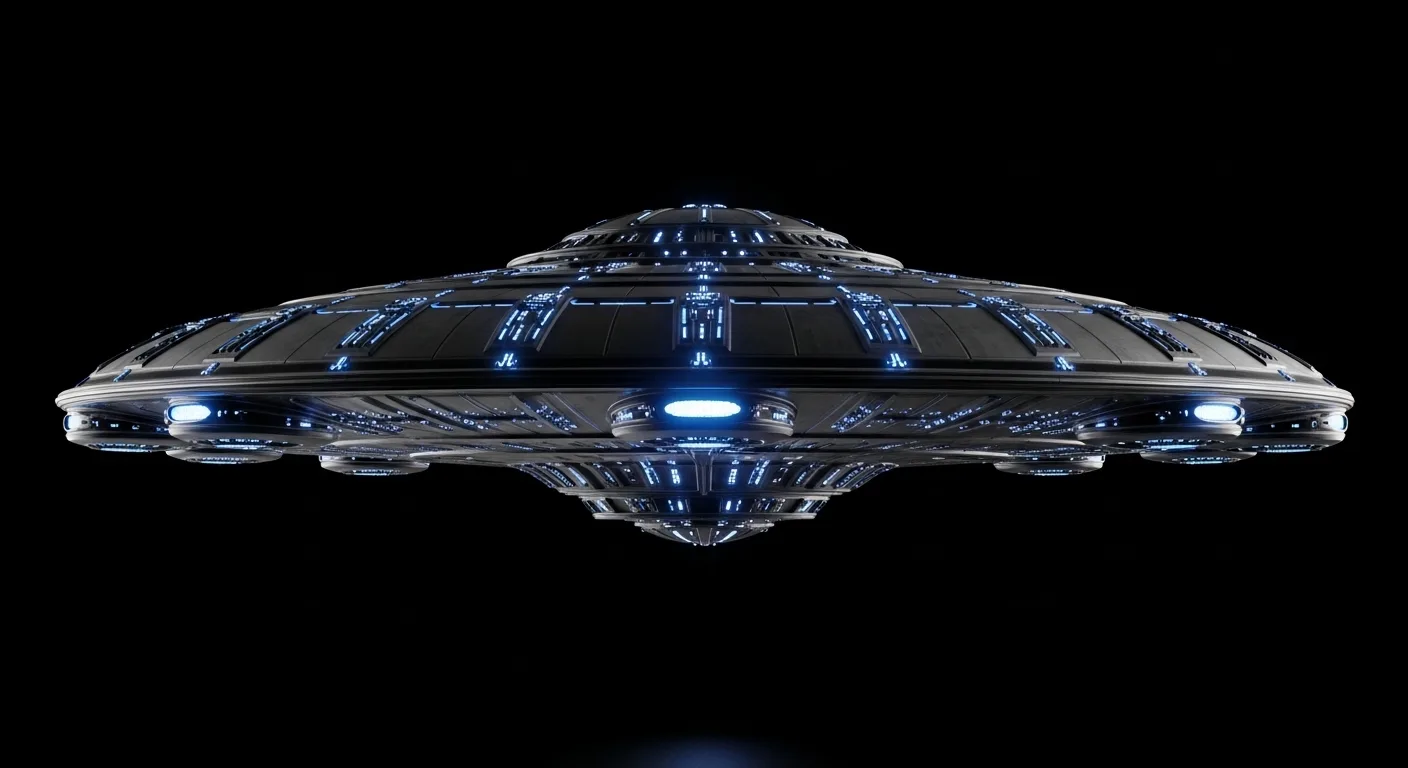
In the early morning hours of February 25, 1942, the city of Los Angeles erupted into chaos. Anti-aircraft batteries across the sprawling metropolis opened fire on unidentified objects drifting through the night sky, sending over 1,400 rounds of ammunition streaking upward in brilliant arcs of light and fury. Air raid sirens screamed across neighborhoods still raw with fear from the attack on Pearl Harbor less than three months earlier. A total blackout plunged millions of residents into darkness as searchlight beams swept back and forth, converging on targets that seemed impervious to the barrage. By dawn, five civilians lay dead, buildings and cars were pockmarked with shrapnel damage, and the United States military had no explanation for what had just happened. To this day, whatever appeared over Los Angeles that night has never been conclusively identified, making the Battle of Los Angeles one of the most dramatic and enduring UFO incidents in American history.
A City on Edge
To understand the events of that night, one must first appreciate the atmosphere of near-hysteria that gripped the West Coast in the weeks following the Japanese attack on Pearl Harbor on December 7, 1941. The devastating surprise assault on the naval base in Hawaii had shattered the American sense of invulnerability, and nowhere was the resulting anxiety more keenly felt than in the coastal cities of California. Los Angeles, with its aircraft factories, military installations, and sprawling population, seemed a natural target for the next attack.
These fears were not entirely unfounded. On February 23, 1942, just two days before the air raid, a Japanese submarine surfaced near Santa Barbara and shelled the Ellwood oil field. While the attack caused minimal damage, its psychological impact was enormous. Here was proof that the enemy could reach American shores, could strike at the homeland itself. Panic swept through the region. Rumors of imminent invasion proliferated wildly. Citizens reported suspicious aircraft, mysterious lights at sea, and saboteurs lurking in the shadows. The military placed the entire Pacific Coast on high alert, and anti-aircraft batteries were positioned throughout the Los Angeles basin, their crews trained and waiting for an attack that military planners considered not merely possible but probable.
Into this atmosphere of dread and hypervigilance came the events of February 25. The stage was set for a confrontation between the full might of American coastal defenses and an enemy that, as it turned out, no one could identify then or since.
The Night Sky Ignites
The first indications that something unusual was happening came shortly after 2:00 AM on February 25, when radar stations detected an unidentified target approximately 120 miles west of Los Angeles, approaching from the Pacific. The information was relayed to the anti-aircraft batteries, which were placed on alert. At 2:15 AM, the order came to impose a complete blackout across the greater Los Angeles area. Street lights were extinguished, neon signs went dark, and air raid wardens fanned out through neighborhoods ordering residents to douse all lights and take cover. The great city, normally ablaze with the glow of a million lights, fell into an eerie, absolute darkness.
At 2:25 AM, the air raid sirens began their banshee wail, the rising and falling tones piercing the silence of the blacked-out city. Searchlight batteries activated, their powerful beams lancing upward through the coastal haze and sweeping methodically across the sky. For several tense minutes, the beams probed the darkness, finding nothing. Then, at approximately 3:06 AM, the 37th Coast Artillery Brigade reported that objects had been sighted over the city, and batteries in the Santa Monica and Inglewood areas opened fire.
What followed was an extraordinary spectacle unlike anything the residents of Los Angeles had ever witnessed. The anti-aircraft guns roared to life across a front stretching from Santa Monica to Long Beach, their muzzle flashes illuminating neighborhoods in staccato bursts of orange light. Tracer rounds carved luminous streaks across the sky, and the detonation of anti-aircraft shells created a constellation of white and red bursts at altitude. The noise was thunderous, a sustained bombardment that rattled windows, set off car alarms, and sent terrified residents diving under beds and into closets. Fragments of spent shells and shrapnel rained down across the city, clattering on rooftops, punching through windshields, and embedding themselves in sidewalks and lawns.
The firing continued in sporadic waves for over an hour, with brief lulls followed by renewed barrages as new targets were reported or existing ones seemed to shift position. By the time the last guns fell silent at approximately 4:14 AM, an estimated 1,433 rounds of anti-aircraft ammunition had been expended. The all-clear was not sounded until 7:21 AM, nearly five hours after the initial alert, as military commanders struggled to confirm whether the threat had actually passed.
What Did They See?
The question of what the anti-aircraft batteries were firing at has never received a satisfactory answer, and it is here that the Battle of Los Angeles enters the realm of the genuinely mysterious. Witnesses across the city reported seeing objects in the sky, but their descriptions varied enormously, creating a puzzle that has resisted resolution for more than eight decades.
Many witnesses described slow-moving objects that drifted across the sky at a leisurely pace entirely inconsistent with any known military aircraft of the era. These objects appeared to be large, though estimates of their size varied wildly depending on the observer’s location and the conditions of visibility. Some described a single enormous craft; others reported multiple smaller objects moving in formation or independently. The objects seemed to change course unpredictably, moving in directions and at angles that struck observers as unusual.
Perhaps the most striking aspect of the witness accounts was the apparent invulnerability of whatever was in the sky. Despite the withering barrage of anti-aircraft fire, not a single object was observed to be hit, damaged, or brought down. Shells burst around and apparently among the targets without any visible effect. This was particularly remarkable given the intensity and duration of the bombardment. Experienced artillerymen, trained to track and destroy fast-moving aircraft, were firing at slow-moving targets at relatively close range and hitting nothing.
The most famous piece of evidence from the incident is a photograph published the following morning by the Los Angeles Times. The image shows multiple searchlight beams converging on a bright object in the sky, surrounded by the white puffs of exploding anti-aircraft shells. This photograph has become iconic, reproduced in countless books, documentaries, and websites devoted to the incident. Analysis of the image has produced wildly different conclusions. Some researchers believe it shows a structured craft of enormous size, caught in the searchlights like an insect pinned to a display board. Others argue that the bright central area is simply the convergence point of the searchlight beams themselves, with no solid object present at all. The original negative has been analyzed, enhanced, and debated for decades without definitive resolution.
Numerous ground-level witnesses contributed their own observations. Katie Porter, a resident of Santa Monica, later recalled being roused from sleep by the guns and watching from her window as searchlight beams crisscrossed the sky. “You could see the shells bursting up there,” she told reporters, “and every now and then the searchlights would all come together on something. It looked big, whatever it was, and it just hung there. The shells were going off all around it, but it didn’t seem to care.” Other witnesses in Long Beach, Culver City, and downtown Los Angeles reported similar observations, though the specific details of what they saw varied considerably.
The Human Cost
While the objects in the sky escaped the bombardment unscathed, the people below were not so fortunate. The barrage claimed five civilian lives, a grim toll that underscored the real-world consequences of the night’s events. Three people were killed in automobile accidents caused by the blackout conditions, their vehicles colliding in the absolute darkness of streets stripped of all illumination. Two others died of heart attacks attributed to the stress of the bombardment, the sustained terror of the guns and sirens proving more than their hearts could withstand.
Property damage was extensive across the affected areas. Thousands of pounds of shrapnel from spent anti-aircraft shells fell across the city, a deadly rain of jagged metal that damaged homes, automobiles, and commercial buildings. Rooftops were holed, windows shattered, and several small fires were ignited by incendiary fragments. Sidewalks and streets bore the pockmarks of fallen shell casings for years afterward. The irony was not lost on residents that all of the damage inflicted that night was caused not by any enemy attack but by the city’s own defenses.
The blackout itself caused widespread disruption beyond the fatal traffic accidents. Hospitals operated by flashlight and emergency power. Businesses stood dark and unprotected, inviting opportunistic looting in some areas. The elderly and infirm, left alone in darkened homes, suffered falls and injuries. The air raid wardens who patrolled the streets during the bombardment risked their own lives from falling shrapnel, and several sustained injuries from the debris raining down from above.
Confusion and Contradiction
The aftermath of the Battle of Los Angeles was marked by extraordinary confusion at the highest levels of the United States government and military. In the days following the incident, official statements contradicted each other so thoroughly that the public was left with no coherent explanation for what had happened.
Secretary of the Navy Frank Knox held a press conference on February 25, the same day as the incident, in which he dismissed the entire episode as a false alarm triggered by war nerves and overactive imaginations. There had been no enemy aircraft over Los Angeles, Knox stated flatly. The batteries had been firing at nothing. The whole affair was an embarrassment best forgotten. This explanation did little to reassure the public, who had spent the night watching shells explode around visible targets in the sky, and it provoked outrage among those who had lost loved ones or suffered property damage in what was apparently an exercise in military incompetence.
Secretary of War Henry Stimson offered a dramatically different account the following day. Far from dismissing the incident as a false alarm, Stimson stated that between one and five unidentified aircraft had indeed been present over Los Angeles. He suggested they might have been commercial aircraft operated by enemy agents attempting to gauge the city’s defenses, or perhaps Japanese aircraft launched from submarines offshore. Stimson’s explanation acknowledged that something real had been in the sky but raised as many questions as it answered. If enemy aircraft had been present, why was no wreckage recovered? If they were conventional planes, how had they survived over an hour of concentrated anti-aircraft fire?
A formal investigation conducted by the Army’s Western Defense Command produced yet another set of conclusions. The investigating officers suggested that the initial radar contacts might have been caused by weather balloons that had been released earlier in the evening and drifted over the city. The subsequent visual sightings and firing were attributed to a combination of war nerves, the psychological effects of the blackout, and a cascade of false reports feeding on themselves. Once the first batteries opened fire, their muzzle flashes and the bursting shells created visual phenomena that other batteries interpreted as targets, leading to a self-reinforcing cycle of firing at the effects of their own previous fire.
This explanation had a certain logical elegance, but it failed to account for the many witnesses who described seeing distinct objects before the firing began, or for the searchlight operators who reported tracking solid targets across the sky. Weather balloons, moreover, would have been easily destroyed by anti-aircraft fire rather than passing through it unscathed.
Theories and Speculation
In the decades since the event, the Battle of Los Angeles has attracted a wide range of explanatory theories, from the mundane to the extraordinary. Each attempts to account for the known facts of the case, but none has achieved universal acceptance.
The weather balloon hypothesis remains the most conservative explanation and the one most favored by conventional military historians. Proponents note that meteorological balloons were regularly launched from several locations in the Los Angeles area and that a balloon caught in searchlight beams at altitude could appear much larger and more substantial than it actually was. The slow movement of the objects, their apparent resistance to anti-aircraft fire, and their eventual disappearance without wreckage are all consistent with a balloon scenario. Critics counter that trained military observers should have been able to distinguish a balloon from an aircraft, and that the number and variety of witness descriptions suggest something more complex than a single drifting balloon.
The Japanese aircraft theory, while initially supported by Secretary Stimson, has been largely discredited. Post-war examination of Japanese military records revealed no missions against Los Angeles on the night in question. The Japanese submarine that shelled Ellwood two days earlier had departed the area by the time of the air raid, and no Japanese aircraft carriers were within operational range of the California coast. While the possibility of submarine-launched reconnaissance aircraft was raised, no evidence of such a mission has ever been found in Japanese archives.
The extraterrestrial hypothesis emerged in the years following the incident, particularly after the 1947 Roswell incident and the subsequent explosion of public interest in flying saucers. Proponents of this theory point to the objects’ apparent imperviousness to anti-aircraft fire, their unconventional flight characteristics, and the inability of the military to identify them as evidence consistent with craft of non-terrestrial origin. The famous Los Angeles Times photograph, when enhanced, has been interpreted by some researchers as showing a classic disc or shield-shaped craft. The military’s confused and contradictory response is cited as evidence of either genuine bewilderment or deliberate concealment.
In 1983, the United States Office of Air Force History reviewed the incident and concluded that the most likely explanation was that the initial alarm was triggered by meteorological balloons, with the subsequent firing caused by a combination of war nerves and the self-reinforcing effects of the barrage itself. This assessment satisfied few outside the military establishment and did nothing to dampen the enduring public fascination with the case.
The Photograph That Won’t Die
No discussion of the Battle of Los Angeles is complete without returning to the photograph that has come to define the incident. Published on the front page of the Los Angeles Times on the morning of February 26, 1942, the image captures a moment of extraordinary drama. Searchlight beams knife upward through the darkness, converging on a bright area of sky surrounded by the distinctive white bursts of anti-aircraft shells. The photograph was taken from the Westwood area by a Times staff photographer and became one of the most widely reproduced images of the early war period.
The photograph has been subjected to repeated analysis over the decades, with each new generation of image enhancement technology applied to its study. In 2011, the Los Angeles Times itself acknowledged that the original published image had been retouched, a common practice in newspaper photography of the era. The retouching enhanced the searchlight beams and the bursting shells for greater visual impact, making it difficult to determine exactly what the unaltered image shows.
Believers in the extraterrestrial hypothesis have argued that even the retouched image reveals the outline of a structured craft, its shape discernible as a lenticular or disc-shaped object partially obscured by the glare of the searchlights. Skeptics respond that the bright area is simply the optical effect of multiple searchlight beams intersecting at a single point, creating a pool of intense light that appears solid in a long-exposure photograph but corresponds to no physical object.
The debate over the photograph mirrors the larger debate over the incident itself. The evidence is ambiguous, the official explanations are contradictory, and the truth remains elusive. The photograph continues to appear in documentaries, books, and online discussions, its meaning no more settled today than it was when the ink was still wet on the morning edition.
Legacy of an Unexplained Night
The Battle of Los Angeles holds a unique place in the history of unexplained aerial phenomena. Unlike many UFO incidents, which rest on the testimony of a handful of witnesses and can be easily dismissed as misidentification or fabrication, this event was witnessed by millions of people, involved the active engagement of military forces, and was documented in real time by the press. The physical evidence of the barrage, the contradictory official statements, and the enduring mystery of what was actually in the sky combine to create a case that resists easy dismissal.
The incident also illustrates the complex relationship between war, fear, and perception. Los Angeles in February 1942 was a city primed for an attack that everyone believed was coming. The question of whether the objects in the sky were real or imagined, enemy or unknown, cannot be separated from the psychological context in which they appeared. The residents and military personnel who reported seeing objects were not neutral observers conducting a scientific experiment; they were frightened people in a blacked-out city, straining their eyes against the darkness for signs of an enemy they fully expected to appear.
Yet this psychological explanation, while important, does not fully account for the evidence. The radar contacts that triggered the initial alert, the convergence of searchlight beams on apparently solid targets, the consistent witness descriptions of slow-moving objects that survived the barrage, and the famous photograph all suggest that something was present in the sky over Los Angeles that night. What that something was remains one of the great unanswered questions of both wartime history and ufology.
More than eighty years after the guns fell silent, the Battle of Los Angeles continues to fascinate and perplex. The night sky over the city has long since returned to its normal state, the anti-aircraft batteries have been dismantled and forgotten, and the generation that lived through the event has largely passed from the scene. But the questions they asked that night, peering upward into the searchlight-streaked darkness as shells burst around shapes they could not name, remain as unanswered as ever. Whatever visited Los Angeles in the early morning hours of February 25, 1942, arrived without explanation and departed without resolution, leaving behind only shrapnel, contradictions, and a mystery that time has done nothing to diminish.
Sources
- Chronicling America (Library of Congress) — Historic US newspaper coverage (1690–1963)
- Chronicling America — Historic US newspapers (1690–1963)