The Foo Fighters of World War II
Allied pilots reported mysterious balls of light that followed their aircraft.
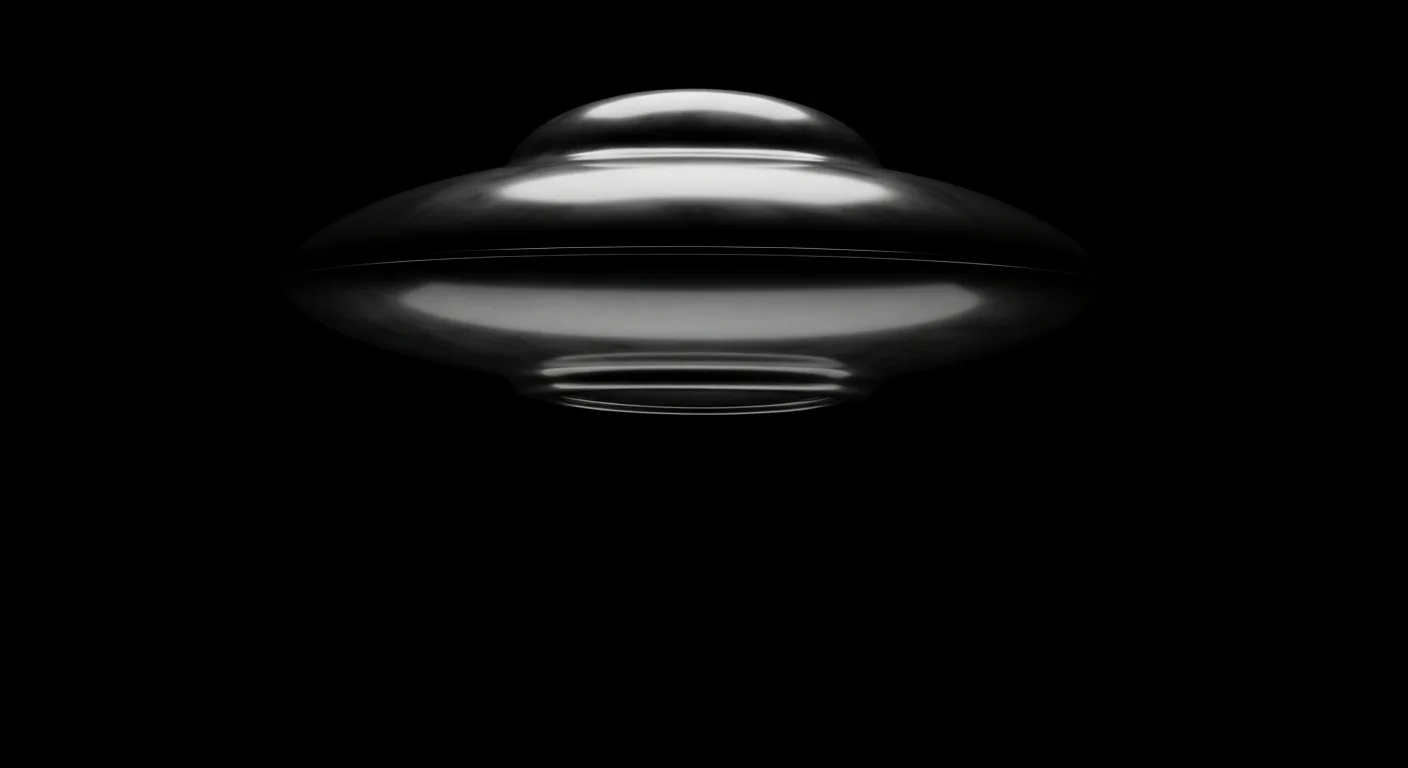
Long before the term “flying saucer” entered the popular vocabulary, long before Roswell and Area 51 became bywords for extraterrestrial mystery, the pilots of the Second World War were encountering something in the skies over Europe and the Pacific that they could not identify, could not explain, and could not outrun. They called them “foo fighters”—mysterious balls of light that appeared without warning alongside their aircraft, matched their speed and manoeuvres with impossible precision, and then vanished as abruptly as they had arrived. The foo fighters never attacked, never communicated, and never left physical evidence of their presence. They simply appeared, accompanied the aircraft for minutes or sometimes hours, and departed. They were witnessed by hundreds of trained military aviators on both sides of the conflict, and they remain, eight decades later, one of the most enduring and puzzling mysteries of the aerial war.
The Crucible of the Skies
To appreciate the significance of the foo fighter reports, one must understand the extraordinary environment in which they were made. The air war over Europe and the Pacific was the most demanding and dangerous form of combat in the Second World War. Bomber crews flying deep into enemy territory faced a gauntlet of antiaircraft fire, enemy fighters, mechanical failure, and sheer physical endurance that made every mission a potential death sentence. Night fighter pilots operated in darkness, navigating by instruments and searching for targets with primitive radar in conditions that taxed human perception to its limits.
These were not people given to flights of fancy. The crews who reported foo fighters were professionals trained to observe, report, and respond to aerial threats with precision and speed. Their lives depended on accurate observation—mistaking a flak burst for an enemy fighter or a star for a guided missile could prove fatal. They knew what antiaircraft fire looked like, what tracer rounds looked like, what enemy aircraft looked like at various distances and angles. They knew the difference between a natural phenomenon and a manufactured object. And when they reported something they could not identify, their reports carried the weight of hard-won expertise.
The stress and fatigue of combat operations have been cited by sceptics as a possible explanation for the sightings—hallucinations born of exhaustion and fear. But the sheer number of reports, their consistency across different units, theatres, and nationalities, and the fact that entire crews often observed the same phenomenon simultaneously argue strongly against individual psychological explanation. Combat stress can produce many things, but it does not typically produce identical hallucinations shared by multiple observers in independent incidents across thousands of miles of front line.
The First Sightings: Europe, Late 1944
The foo fighter phenomenon emerged in the final year of the war, as Allied air operations over Europe reached their peak intensity. The earliest well-documented reports came from crews of the 415th Night Fighter Squadron, a unit equipped with Bristol Beaufighter aircraft and tasked with intercepting German night raiders over France and western Germany.
In November 1944, pilots of the 415th began reporting encounters with strange lights that appeared near their aircraft during night missions. The lights were typically described as round or spherical, glowing with a steady luminosity that was usually orange, red, or warm white. They appeared at various positions relative to the aircraft—off the wingtips, behind, above, or below—and they maintained station with a consistency that was deeply unsettling to the crews who observed them.
Lieutenant Fred Ringwald, the 415th’s intelligence officer, compiled the earliest reports and attempted to find conventional explanations. His initial assumption was that the lights were some form of German weapon—perhaps a new type of antiaircraft device or a remotely guided interceptor designed to track Allied aircraft. This hypothesis seemed plausible given the known German expertise in rocket and jet technology, and it generated genuine concern within Allied intelligence circles.
However, the lights never behaved like weapons. They did not fire on Allied aircraft, did not attempt to collide with them, and did not appear to guide other aircraft or ground batteries toward the observed planes. They simply followed, maintaining position with eerie precision regardless of what the Allied crews did to shake them. Pilots who attempted evasive manoeuvres—diving, climbing, turning sharply—found that the lights matched their movements instantaneously, as if physically tethered to the aircraft. Pilots who attempted to chase the lights found that they accelerated away at speeds that no known aircraft could match, only to reappear moments later at their original station.
The phenomenon was frequent enough and consistent enough that the 415th’s crews developed a resigned familiarity with it. The lights became a regular feature of night operations, discussed in debriefings and reported through channels but ultimately accepted as an inexplicable aspect of their dangerous working environment. It was the crews of the 415th who gave the phenomenon its name, borrowing from a catchphrase used by the character Smokey Stover in a popular comic strip: “Where there’s foo, there’s fire.” The name stuck, and “foo fighter” entered the military lexicon as a designation for the unexplained aerial lights.
Spreading Reports
As word of the 415th’s experiences spread through military channels and informal pilot networks, it became clear that the foo fighters were not confined to a single unit or a single sector of the front. Reports began to emerge from bomber crews, fighter pilots, and reconnaissance aircraft operating across the entire European theatre.
Eighth Air Force bomber crews flying daylight missions over Germany reported seeing metallic-looking spheres or discs that paced their formations at high altitude. These objects were distinct from the glowing lights reported by night fighter crews—they appeared solid, reflective, and structured rather than luminous. Some crews reported seeing them clearly enough to estimate their size at perhaps one to three feet in diameter. The objects maintained formation with the bomber streams, keeping pace with aircraft flying at speeds of 200 miles per hour or more, and showed no response to evasive action or defensive fire.
RAF night bomber crews reported similar encounters over Germany and occupied Europe. The descriptions from British crews were remarkably consistent with those from their American counterparts—glowing spheres of light that appeared near aircraft, matched their speed and altitude, and eventually departed without hostile action. The similarity of the reports across different national forces, operating different aircraft types from different bases on different missions, argues strongly for a genuine, consistent phenomenon rather than isolated misidentifications or unit-specific folklore.
On the Eastern Front, Soviet aircrew reportedly encountered similar phenomena, though the closed nature of Soviet military records has made these reports difficult to verify. German records, captured after the war, revealed that Luftwaffe pilots had been reporting identical encounters—glowing lights that followed their aircraft and could not be identified or intercepted. This was a crucial discovery, because it eliminated the hypothesis that the foo fighters were a German secret weapon. The Germans were as puzzled by them as the Allies were.
The Pacific Theatre
The foo fighter phenomenon was not limited to European skies. In the Pacific theatre, American aircrew reported encounters with mysterious lights during operations over Japan and the island campaigns. The Pacific sightings shared the essential characteristics of the European reports—luminous objects that appeared near military aircraft, matched their manoeuvres, and departed without hostile action—but also included some distinctive features.
B-29 bomber crews flying missions over the Japanese home islands reported glowing objects that accompanied their aircraft during both day and night operations. Some crews described the objects as appearing to investigate their aircraft—approaching closely, circling, or positioning themselves at various angles as if conducting some form of observation. The objects demonstrated the same ability to match aircraft speed and manoeuvres that had been noted in Europe, and they showed the same indifference to evasive action or defensive fire.
Marine Corps and Navy pilots operating over the Pacific islands also reported encounters, particularly during the intense air operations of the final year of the war. These reports were typically less detailed than those from the European theatre, in part because the pace of operations left less time for careful observation and in part because the Pacific air commands were less inclined to take the reports seriously as a potential intelligence matter.
As in Europe, the initial assumption was that the objects were a Japanese weapon or surveillance device. This hypothesis was investigated and discarded—captured Japanese records and post-war interrogations revealed that Japanese pilots had been observing the same phenomena and had assumed they were American weapons. The symmetry of confusion was complete: each side was convinced the lights belonged to the enemy, and each side was wrong.
Characteristics and Behaviour
Across the hundreds of reported encounters in both theatres, the foo fighters displayed a remarkably consistent set of characteristics that, taken together, define the phenomenon and distinguish it from known natural or man-made phenomena.
The objects were typically spherical or disc-shaped, ranging in apparent size from a few inches to several feet in diameter. Their luminosity was steady rather than flickering or pulsing, and their colour was most commonly described as orange, red, or warm white, though some reports mentioned green, blue, or silver-metallic appearances. Night-time encounters emphasised the luminous quality, while daytime sightings more often described metallic or reflective surfaces.
Their flight characteristics were extraordinary. They could match the speed of any aircraft they accompanied, from slow-flying reconnaissance planes to fast fighters. They could change direction instantaneously, with no apparent turning radius or deceleration. They could accelerate from a stationary hover to speeds far exceeding any known aircraft in moments, and they could stop just as abruptly. These performance characteristics ruled out any known technology of the 1940s and would challenge the capabilities of modern aircraft today.
Their behaviour was consistently non-hostile. Despite appearing alongside military aircraft engaged in active combat operations—aircraft that were armed and sometimes willing to fire at the objects—the foo fighters never attacked, never interfered with aircraft operations, and never caused damage. Some crews reported that their instruments behaved erratically in the presence of the objects, but these reports were inconsistent and may have been attributable to the general unreliability of 1940s-era electronics in combat conditions.
The objects appeared to be under intelligent control. Their ability to maintain station relative to manoeuvring aircraft, their apparent interest in observing rather than engaging, and their coordinated movements when multiple objects were present all suggested deliberate, purposeful behaviour rather than the passive drift of a natural phenomenon or the predictable trajectory of a projectile.
Perhaps most remarkably, the foo fighters appeared to be indifferent to human response. Hostile fire had no effect on them. Evasive manoeuvres did not shake them. Attempts to close for a better look were met with effortless withdrawal to a comfortable distance. They came when they chose, stayed as long as they wished, and left on their own terms. The most powerful air forces in the world were entirely unable to influence their behaviour.
The Intelligence Response
The foo fighter reports generated genuine concern within Allied intelligence establishments. The possibility that the objects represented an advanced enemy weapon could not be dismissed out of hand, given the known German programmes in jet aircraft, guided missiles, and rocket technology. If the Germans had developed a device capable of tracking Allied aircraft with the precision demonstrated by the foo fighters, it might represent a precursor to a more dangerous weapon system—perhaps a guided antiaircraft missile or an electronic countermeasure of unprecedented sophistication.
Intelligence teams conducted extensive debriefings of crews who reported encounters, compiling descriptions, sketches, and tactical assessments. The reports were analysed for patterns that might reveal the objects’ origin, purpose, or operating characteristics. Radar data was examined for correlations with visual sightings, though the primitive radar systems of the era provided limited information.
The investigation produced no answers. The objects could not be correlated with any known weapon system, natural phenomenon, or intelligence operation. They did not match the performance characteristics of any aircraft, guided missile, or unmanned device in any nation’s inventory. They did not behave like any known form of electronic warfare or psychological operation. The intelligence community was left with a phenomenon that was well documented, widely observed, and completely inexplicable.
After the German surrender in May 1945 and the Japanese surrender in August, Allied intelligence teams gained access to enemy records and personnel. The expectation was that captured documents would reveal the foo fighters as a secret Axis programme, finally solving the mystery. Instead, the captured records revealed the opposite—the Germans and Japanese had been observing the same phenomenon, conducting their own investigations, and reaching the same dead end. The foo fighters belonged to no one, or to someone that none of the belligerent powers could identify.
Proposed Explanations
In the decades since the war, numerous explanations have been proposed for the foo fighter phenomenon. None has achieved universal acceptance, and each has significant weaknesses.
St. Elmo’s fire—the luminous plasma discharge that can occur on pointed objects in strong electromagnetic fields—has been suggested as a natural explanation. St. Elmo’s fire was well known to aviators and had been observed on aircraft in flight, particularly during storms. However, St. Elmo’s fire typically manifests as a glow on the aircraft itself, particularly on propeller tips, antennae, and wing edges. It does not form independent spheres of light that maintain station at a distance from the aircraft and match its manoeuvres. The foo fighters were reported as separate objects, clearly distinct from the aircraft and moving independently of it.
Ball lightning—a poorly understood natural phenomenon involving luminous spheres that appear during electrical storms—has also been proposed. Ball lightning can appear as a glowing sphere of light roughly the size and colour described in some foo fighter reports. However, ball lightning is extremely rare, short-lived (typically persisting for only a few seconds), and erratic in its movement. The foo fighters were observed repeatedly over a period of many months, persisted for minutes or hours in some cases, and demonstrated controlled, purposeful movement. Ball lightning does not explain these characteristics.
Afterimages and optical illusions caused by antiaircraft fire, searchlights, or cockpit reflections have been suggested as explanations for some sightings. These factors may indeed account for some reports, particularly those involving brief or ambiguous observations. However, they cannot explain extended encounters in which multiple crew members observed the same object from different positions within the aircraft, or daylight sightings of apparently solid, metallic objects.
Psychological explanations—combat stress, fatigue-induced hallucination, mass hysteria—have been applied to the phenomenon but face the same difficulties outlined earlier. The consistency of reports across different units, theatres, nationalities, and time periods is incompatible with individual psychological episodes. Mass hysteria requires social contact and suggestion to propagate, yet many foo fighter reports came from crews who had no prior knowledge of other encounters.
The secret weapon hypothesis—that the foo fighters were an experimental technology of one of the belligerent nations—has been rendered untenable by the post-war discovery that all sides were equally baffled by the phenomenon. No captured documents, no interrogated scientists, no declassified programmes have ever produced evidence that any nation possessed the technology to create objects matching the foo fighter descriptions.
Legacy
The foo fighters occupy a unique position in the history of unidentified aerial phenomena. They constitute the first large-scale wave of UFO sightings by trained military observers, predating the Arnold sighting of 1947 and the subsequent “flying saucer” era by several years. They were observed by hundreds of witnesses, documented through official military channels, and investigated by professional intelligence analysts. They were reported by both sides of the conflict, eliminating the possibility that they were a secret weapon of either.
The foo fighter reports also established several features that would characterise the UFO phenomenon in subsequent decades: objects that demonstrated flight capabilities far beyond known technology, apparent intelligent control, non-hostile behaviour, indifference to human response, and an ability to appear and disappear at will. These characteristics, first documented in the wartime reports of the 1940s, have been reported consistently in the eighty years since.
The transition from the foo fighter era to the “flying saucer” era was remarkably swift. Within two years of the war’s end, Kenneth Arnold’s sighting over Mount Rainier launched the modern UFO phenomenon, and the military observers who had encountered foo fighters over Germany and Japan found their experiences subsumed into a larger and more sensational narrative. But the wartime reports remain foundational—they provide the earliest large-scale evidence that something unexplained was operating in Earth’s atmosphere, observed by some of the most reliable witnesses possible under some of the most demanding conditions imaginable.
The Unanswered Question
Eight decades after the last foo fighter was reported over the burning cities of Germany and the island battlefields of the Pacific, the phenomenon remains without explanation. The balls of light that followed Allied and Axis aircraft through the most destructive conflict in human history have never been identified. No technology of 1944, of 2024, or of any year between has been demonstrated to produce objects matching the foo fighters’ described performance characteristics. No natural phenomenon adequately accounts for their behaviour. No psychological explanation addresses the scope and consistency of the reports.
The men who saw the foo fighters are nearly all gone now, their generation passing into history along with the war they fought. But their reports remain in the archives—hundreds of accounts from bombardiers and navigators, pilots and gunners, intelligence officers and ground crew, all describing the same strange lights that appeared in the most dangerous skies on Earth and watched, silently and inscrutably, as humanity tore itself apart.
What were the foo fighters? The honest answer, after eighty years of investigation and speculation, is that no one knows. They appeared at a moment of supreme human crisis, when the skies were filled with the machinery of destruction and the future of civilisation hung in the balance. They observed everything and interfered with nothing. They demonstrated capabilities that humanity has not matched to this day. And when the guns finally fell silent and the fires burned out, they disappeared—leaving behind nothing but the testimony of the men who saw them and the questions that testimony raised.
Those questions remain open. The skies that were once filled with bombers and fighters are now filled with airliners and satellites, and the technology of observation has advanced beyond anything the wartime generation could have imagined. But the foo fighters have not returned—or if they have, they have not been recognised for what they are. The balls of light that paced the bombers over Germany and the fighters over the Pacific have joined the ranks of historical mysteries that resist resolution, phenomena observed but never explained, witnesses believed but never vindicated.
In the silence of military archives around the world, the reports wait—written in the careful, understated language of men who had seen something they could not explain and wanted nothing more than to be believed. The foo fighters were real to them, as real as the flak and the searchlights and the enemy fighters that tried to kill them every night. Whatever the lights were, wherever they came from, they shared the most dangerous skies in history with the bravest men who ever flew, and they left behind a mystery that the passage of eight decades has done nothing to diminish.