Berlin UFO Sighting, 1945 — FBI Files
In 1945, during the fall of Berlin, unidentified phenomena caused vehicle engines to cease functioning, according to declassified FBI documentation.
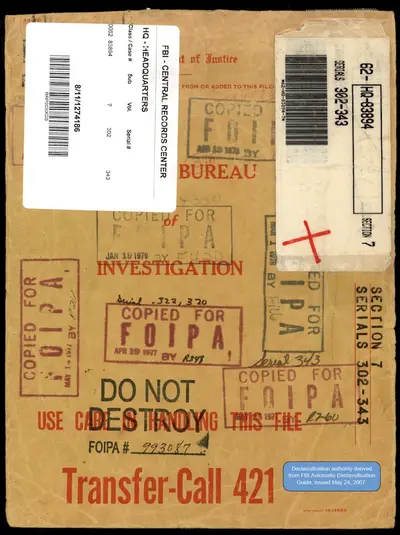
Historical Context
The year 1945 marked a period of unprecedented global instability, as the Second World War reached its climax and the geopolitical landscape of Europe underwent a violent transformation. As Allied forces converged on Berlin, the city became a focal point of intense military conflict, characterized by heavy bombardment, urban warfare, and significant atmospheric disturbances caused by explosions and smoke. During this era, the phenomenon of unidentified aerial phenomena was frequently documented by military personnel, often categorized under the term “foo fighters.” These reports typically involved luminous, orb-like objects that appeared to shadow Allied bombers, causing confusion among aircremen who could not identify the craft as either enemy technology or natural phenomena.
The reporting of such incidents during the mid-1940s followed specific bureaucratic channels. Within the United States, the Federal Bureau of Investigation (FBI) maintained protocols for documenting anomalies that might threaten the security of vital installations or military operations. Field offices in cities such as Knoxville, Albuquerque, and Los Angeles were tasked with routing significant UFO reports to headquarters. This systematic approach ensured that any unexplained aerial or atmospheric event that could potentially involve secret enemy aeronautics was centralized for analysis by federal authorities.
The Berlin Incident
The specific case documented in the 1945 Berlin files details an anomaly that occurred shortly before the fall of the city. Unlike many contemporary reports that focused exclusively on visual sightings of light in the sky, this incident involved a tangible disruption of mechanical operations on the ground. According to the records, the motors of automobiles and trucks stopped unexpectedly throughout the area. This mechanical failure was not instantaneous or permanent, as the engines were eventually restarted after a period of approximately one hour.
The documentation accompanying the engine failures included commentary suggesting that something rare had occurred in the atmosphere. While the specific nature of this atmospheric event was not explicitly defined in the primary report, the simultaneous failure of multiple internal combustion engines suggests a localized phenomenon capable of interfering with electrical or mechanical ignition systems. The released documents do not provide a specific count of the witnesses who observed the engine failures or the atmospheric conditions, leaving the scale of the event’s impact on the local population unquantified.
Analytical Classification
The incident is classified as a visual sighting reported by ground or air observers, though the physical effects on vehicles suggest a broader interaction with the local environment. In the decades following the war, investigators have looked to various conventional explanations for such sightings. During the late 1940s, the presence of high-altitude surveillance projects, such as the Project Mogul series of weather balloons, introduced new variables into the airspace. Other potential candidates for sightings during this period include astronomical objects like Venus or the Moon appearing near the horizon, as well as atmospheric optical phenomena such as sundogs or lenticular clouds.
The official status of the Berlin sighting remains unresolved. Under the protocols of the All-domain Anomaly Resolution Office (AARO), all records released through the Presidential Unsealing and Reporting System for UAP Encounters (PURSUE) are designated as unresolved by default. The federal government has maintained a neutral stance, neither concluding that the event was the result of anomalous technology nor confirming it was a known conventional phenomenon. The possibility of experimental aircraft or rare meteorological events remains a subject of ongoing historical and scientific inquiry within the archive.