Shag Harbour UAP Crash
On October 4, 1967, multiple witnesses saw a large UAP with four lights crash into the waters of Shag Harbour. RCMP, Coast Guard, and Navy divers searched but found nothing. Government documents confirm the incident. Canada's only officially documented UFO case remains unsolved.
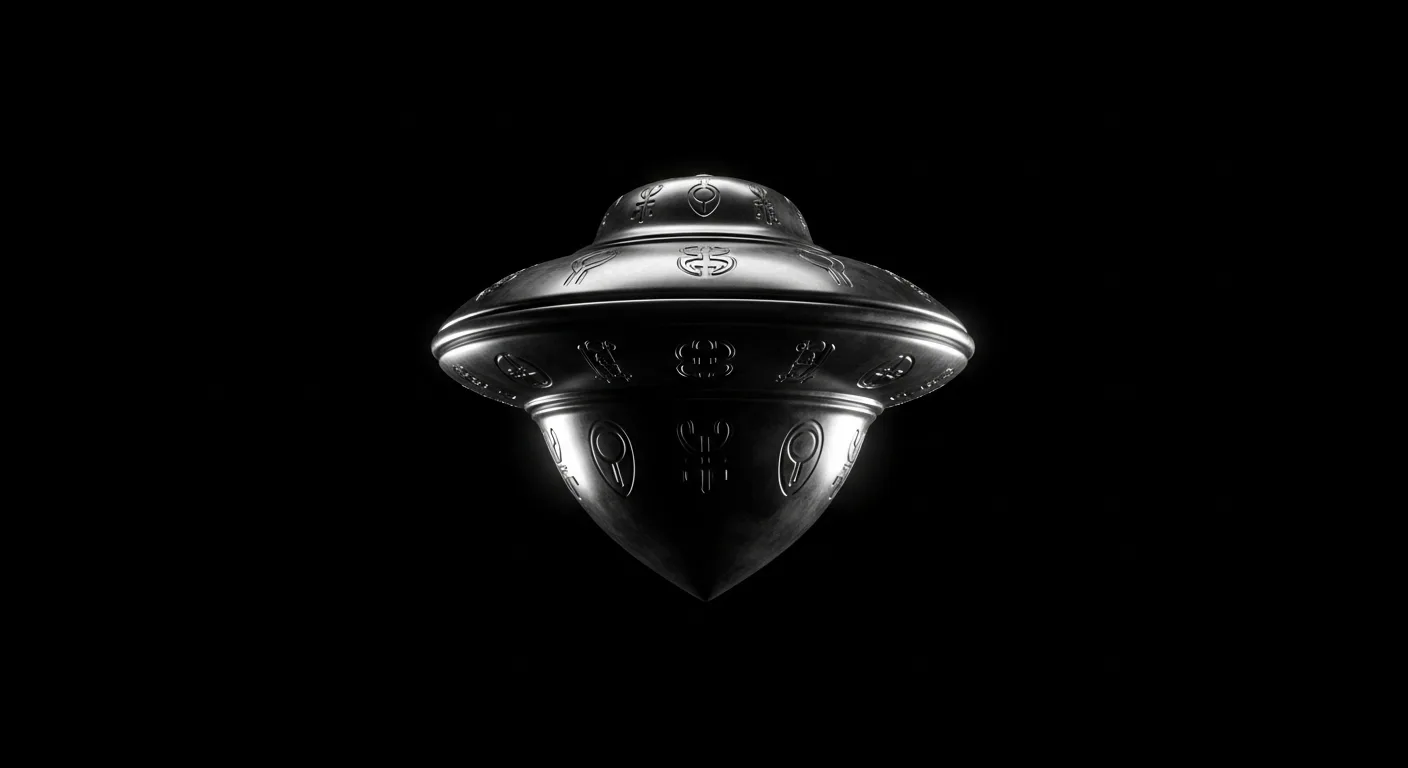
Canada’s Roswell began not with dramatic alien contact or government conspiracy theories, but with the prosaic procedures of search and rescue. On October 4, 1967, multiple witnesses observed an object crash into the Atlantic waters off Shag Harbour, Nova Scotia. What followed was a professional, multi-agency investigation that produced extensive documentation, thorough searches, and absolutely no explanation for what had occurred. The incident remains Canada’s only officially documented Unidentified Aerial Phenomenon crash, its file still open in government archives.
The Sighting
At 11:20 PM on October 4, 1967, the autumn sky over Shag Harbour held something that didn’t belong. Multiple witnesses across the small Nova Scotia fishing village observed four orange lights arranged in a horizontal row, moving together as a single craft approximately 60 feet across. The lights descended toward the water at a controlled angle, their movement deliberate and steady.
Witnesses heard a whistling or humming sound as the object approached the harbour’s surface. The descent continued until the object struck the water with a bright flash approximately half a mile from shore. Unlike an aircraft crash, there was no explosion, no fireball, no debris scattered across the surface. The object entered the water and remained there, its lights still visible beneath the waves.
For several minutes, the orange glow persisted underwater. Then the lights dimmed and went out, leaving only the dark Atlantic and the certain knowledge among witnesses that something had fallen from the sky into their harbour.
The Witnesses
The credibility of the Shag Harbour case depends substantially on who observed the event. These were not UFO enthusiasts primed to see something extraordinary. They were fishermen, residents, and police officers who observed something that defied their experience and reported it through proper channels.
Local residents spotted the descending lights from multiple locations around the harbour. Fishermen who had spent their lives on and around the water, who could distinguish aircraft from boats from natural phenomena, reported seeing something outside their experience.
RCMP officers dispatched to investigate the reports became witnesses themselves. They observed lights in the water and the strange yellow foam that marked the object’s entry point. Police testimony transformed the incident from civilian curiosity to official investigation.
At least 11 primary witnesses provided detailed accounts of what they had observed. Their descriptions were consistent across independent interviews, ruling out collective misperception or coordinated hoax. They saw something, something real, something that entered the water and left traces of its passage.
The Crash
The manner of the object’s entry distinguished this event from typical UFO sightings. The object did not simply fly overhead and disappear. It impacted the water in a specific, observable location, leaving physical evidence.
The orange lights remained visible underwater after impact, suggesting the object maintained some form of integrity and power even after entering the water. When the lights finally went out, they dimmed gradually rather than vanishing suddenly, as if power was failing rather than being destroyed.
Yellow foam appeared on the surface where the object had entered. The foam was approximately 80 feet across, thick, unusual in texture, and impossible to identify. It was clearly residue from something, but what that something was, no one could determine.
The foam floated for hours before finally dissipating. Samples were collected but could not be conclusively analyzed. Whatever had produced the substance was unlike anything in the experience of Coast Guard crews or military investigators.
The Search
Search and rescue procedures activated immediately. Witnesses had seen something enter the water. Lights had been visible beneath the surface. An aircraft crash was the logical assumption.
Coast Guard vessels converged on the indicated location. RCMP officers secured the shoreline and coordinated with military authorities. The Royal Canadian Navy dispatched HMCS Granby with divers to search the sea floor.
The search operation lasted three days. Vessels combed the surface while divers examined the bottom. The yellow foam was found and sampled. But no wreckage was recovered. No aircraft debris. No bodies. No explanation for what had gone into the water.
Air traffic control confirmed that no aircraft were missing in the region. If something had crashed, it was not a known aircraft. The investigation continued without finding anything that could explain what witnesses had observed.
The Documents
What elevates Shag Harbour above typical UFO cases is the official documentation that survived the investigation. When government files were eventually released through freedom of information requests, they confirmed the seriousness with which Canadian authorities had treated the incident.
RCMP reports documented the initial witness accounts and the subsequent investigation. The files used specific terminology: the incident was classified as involving an Unidentified Flying Object. This was not witness speculation but official government designation.
Department of National Defence documents showed multi-agency coordination. Coast Guard, Navy, and RCMP resources were deployed. The investigation was professional and thorough. And the conclusion was stark: the incident could not be explained through conventional means.
The case remains officially unsolved. The government file was never closed in the sense of being resolved. It simply remains open, an acknowledged mystery in Canadian archives.
The Theories
Various explanations have been proposed for what crashed into Shag Harbour, but none have proven satisfactory.
Aircraft crash was ruled out immediately. No aircraft were missing. The search found no wreckage. The object’s descent pattern was inconsistent with a falling plane.
Meteor was considered but rejected. Meteors do not hover, do not display four orange lights in formation, do not leave yellow foam on water surfaces, and do not remain visible underwater after impact.
Military activity was investigated and dismissed. No exercises were being conducted. No weapons tests were underway. Nothing in military inventories matched what witnesses described.
The extended theory suggests the object traveled underwater after impact, moving to a location near military installations before eventually departing. This theory, while intriguing, lacks the documentary support of the initial incident.
The Legacy
Shag Harbour has preserved its connection to the 1967 incident. A museum documents the case. An annual festival commemorates the event. The community has neither hidden from nor exploited its unusual history, simply acknowledged it as part of local heritage.
The original witnesses remained consistent in their accounts throughout their lives. They reported what they saw, cooperated with investigators, and stood by their observations despite occasional skepticism.
Canada Post honored the incident with a commemorative stamp in 2019, official government acknowledgment of its place in Canadian history.
On October 4, 1967, something crashed into the waters off Shag Harbour, Nova Scotia. The Canadian government investigated with military resources. Divers searched the sea floor. Analysts examined strange foam. And when the investigation concluded, the official finding was that an unidentified flying object had entered Canadian waters and could not be explained. The file remains open. The questions remain unanswered. Canada’s only official UAP crash remains a mystery more than fifty years later.
Sources
- Project Blue Book — National Archives — USAF UFO investigation files, 1947–1969
- CIA UFO/UAP Reading Room — Declassified CIA documents on UAP