The Rendlesham Forest Incident: Britain's Most Famous UFO Case
Over three nights in December 1980, U.S. Air Force personnel at a NATO base in England encountered unidentified craft in Rendlesham Forest, producing physical evidence, radiation readings, and official documentation that make this Britain's most compelling UFO case.
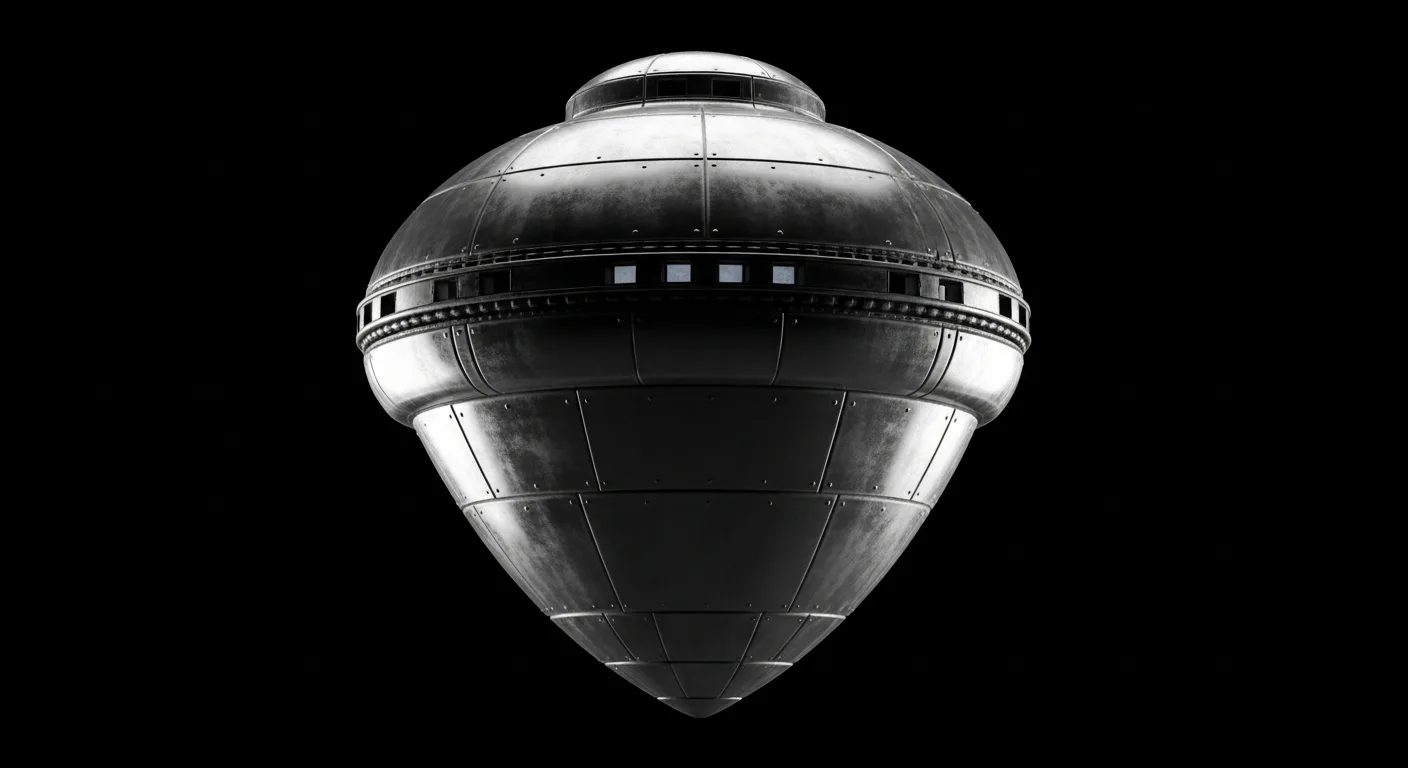
The Rendlesham Forest incident is widely regarded as Britain’s most significant UFO case and one of the best-documented encounters in the global history of unidentified aerial phenomena. Over three consecutive nights in late December 1980, United States Air Force personnel stationed at the twin NATO bases of RAF Woodbridge and RAF Bentwaters in Suffolk, England, reported close encounters with unidentified luminous objects in the dense pine forest that separated the two installations. The witnesses were not civilians or amateur enthusiasts but trained military security personnel serving at one of the most sensitive Cold War installations in Western Europe—a base widely believed to house tactical nuclear weapons. Their testimony is supported by official memoranda, audio recordings made during the events, physical trace evidence, and elevated radiation readings at the alleged landing site. Decades of investigation, debate, and official inquiry have failed to produce a satisfactory conventional explanation.
The Strategic Setting
RAF Woodbridge and RAF Bentwaters were American-operated Royal Air Force stations located in the rural Suffolk countryside, a few miles inland from the North Sea coast. During the Cold War, these twin bases served as a forward operating position for the United States Air Force in Europe, hosting the 81st Tactical Fighter Wing and its fleet of A-10 Thunderbolt II ground-attack aircraft. The bases were among the most strategically important NATO installations in Western Europe, positioned to respond to a potential Soviet advance across the North German Plain.
Although never officially confirmed during the Cold War, it was widely understood—and has since been acknowledged—that the bases housed tactical nuclear weapons in hardened bunkers within the Weapons Storage Area (WSA). The security implications were profound. Any unauthorized incursion into the airspace or perimeter of these installations was treated with the utmost seriousness, and the men who guarded them were elite security police, trained to respond to threats from Soviet special forces to terrorist attacks.
Between the twin bases lay Rendlesham Forest, a dense plantation of Corsican pine managed by the Forestry Commission. At night, the forest was dark, disorienting, and virtually impenetrable to vision—an unsettling environment even for armed military personnel.
Night One: December 26, 1980
The events began in the early hours of December 26, when security personnel at the East Gate of RAF Woodbridge observed unusual lights descending into Rendlesham Forest just beyond the base perimeter. The lights were initially assumed to be from a downed aircraft—a plausible concern given the volume of military and civilian air traffic in the region. Three security police officers were dispatched to investigate: Sergeant Jim Penniston, Airman First Class John Burroughs, and Airman First Class Edward Cabansag.
What the patrol encountered bore no resemblance to any aircraft wreckage. As the men penetrated deeper into the forest, they observed a luminous triangular craft resting in a small clearing. Penniston, who approached closest, described an object approximately three meters across and two meters tall, with a smooth, dark metallic surface that appeared almost glass-like. Colored lights—blue, red, and white—pulsed across its surface in what seemed a deliberate pattern.
Penniston reported that the air near the craft felt electrically charged, producing a tingling sensation and a feeling of resistance, as though he were pushing against an invisible field. He got close enough to observe symbols or markings etched into the craft’s surface—characters he sketched in his patrol notebook that resembled no known writing system. These sketches would later become some of the most scrutinized evidence in the case.
After several minutes, the craft rose silently, moved through the trees with apparent precision, and then accelerated with breathtaking speed into the night sky. Farm animals in the vicinity were reported to be in extreme agitation throughout the encounter. The men returned to base and filed their reports.
The Binary Code
Years after the incident, Jim Penniston revealed that he had filled approximately sixteen pages of his notebook with a sequence of ones and zeros—binary code—that he felt compelled to write down after touching the craft. When the binary sequence was later decoded by researchers, it allegedly produced a message containing geographical coordinates pointing to various locations of archaeological significance around the world, along with the phrase “Exploration of Humanity” and a date in the year 8100. This element of the case remains highly controversial, with skeptics questioning the timing of the revelation and the veracity of the notebook pages.
Physical Trace Evidence
When a team returned to the forest after dawn on December 26, they found physical evidence corroborating the patrol’s report. Three distinct depressions were visible in the soft earth of the clearing, arranged in a triangular pattern consistent with landing gear. Each depression was approximately one and a half inches deep and seven inches in diameter.
The trees surrounding the clearing showed damage. Branches were broken at heights consistent with the passage of a solid object, and scorch marks were visible on the trunks of several pines facing the clearing. The bark appeared to have been exposed to intense heat, though the damage was localized.
Most significantly, radiation measurements taken at the site using a Geiger counter revealed readings substantially above normal background levels. The highest readings were concentrated at the three ground impressions and at the scorch marks on the trees, with levels approximately seven to ten times higher than those taken at control locations elsewhere in the forest. These readings were later confirmed by the UK Ministry of Defence’s own analysis, which noted that the radiation levels were “significantly higher than the average background.”
Night Two and Three: Lieutenant Colonel Halt’s Investigation
The most dramatic events occurred on the night of December 27-28, when Deputy Base Commander Lieutenant Colonel Charles Halt led a team into the forest to investigate the reports from the previous nights. Halt was a seasoned military officer with a no-nonsense reputation, and his decision to personally investigate reflected both the seriousness with which the reports were being treated and his own skepticism about what his men had described.
Halt brought a micro-cassette recorder and documented the investigation in real time, creating an audio record that has become one of the most remarkable pieces of evidence in UFO history. The tape captures Halt and his team measuring radiation at the landing site, observing damage to the trees, and then encountering anomalous lights in the forest.
On the recording, Halt can be heard describing a pulsing red light moving through the trees, occasionally dripping what appeared to be molten material. “I see it too,” Halt states on the tape, his voice betraying genuine surprise. “It’s back again… it’s coming this way… there is no doubt about it… this is weird.” The light broke into multiple objects that moved at high speed through the forest, and at one point, Halt describes a beam of light descending from one of the objects to the ground near his feet.
The team observed the objects for several hours as they maneuvered over the forest and the nearby farmland. At one point, beams of light were directed downward into the Weapons Storage Area of the base—a detail of extraordinary sensitivity, given that this was the location of the presumed nuclear weapons bunkers.
The Halt Memo
On January 13, 1981, Lieutenant Colonel Halt composed an official memorandum to the UK Ministry of Defence describing the events. The memo, classified at the time but later released under the Freedom of Information Act, is a restrained, matter-of-fact document that describes “unexplained lights” in the forest, the physical trace evidence, the elevated radiation readings, and the maneuvering lights observed on the second night. The memo is notable for what it does not say—it makes no claims about extraterrestrial origin and sticks strictly to observable facts. But the facts it describes are extraordinary.
The memo’s release in 1983, obtained by UFO researchers through Freedom of Information requests, made the Rendlesham Forest incident public knowledge for the first time and established it as a case of international significance. Halt has subsequently been more forthcoming about his personal assessment, stating in interviews and public appearances that he believes the objects he observed were under intelligent control and were not of any technology known to the United States or any other nation.
The Lighthouse Theory
The most prominent skeptical explanation for the Rendlesham Forest incident is that the witnesses misidentified the beam from the Orfordness Lighthouse, located approximately five miles from the encounter site on the Suffolk coast. The lighthouse emits a rotating beam that would have been visible through the trees of Rendlesham Forest, and skeptics have argued that disoriented personnel in an unfamiliar, dark forest could have mistaken the regular flashing of the lighthouse for an anomalous light.
Halt and the other witnesses have consistently rejected this explanation, pointing out that they were familiar with the lighthouse and its location and could see it as a separate, distant light throughout the encounter. The lighthouse theory also fails to account for the close-range encounter described by Penniston and Burroughs on the first night, the physical trace evidence, the radiation readings, or the multiple independent witnesses who observed structured objects rather than a distant point of light.
Former Ministry of Defence UFO desk officer Nick Pope, who investigated the case during his tenure at the MoD in the early 1990s, has stated that the lighthouse explanation was considered and dismissed during the official investigation as insufficient to account for the totality of the evidence.
The UK Ministry of Defence Investigation
The British Ministry of Defence investigated the Rendlesham Forest incident through its UFO desk, which was responsible for assessing whether UFO reports had defence significance. The MoD’s official position, maintained for decades, was that the incident was of “no defence significance”—a conclusion that Halt and other participants have dismissed as a bureaucratic evasion designed to avoid the political embarrassment of acknowledging an unexplained incursion at a nuclear-capable military installation.
Internal MoD documents released through Freedom of Information requests reveal that the investigation was more serious than the public position suggested. Defence Intelligence staff assessed the radiation readings and acknowledged their anomalous nature. A series of internal memos discussed the incident in terms that suggested genuine concern, even as the public-facing position remained one of dismissal.
In 2010, the MoD released its complete file on the Rendlesham Forest incident as part of a broader program of UFO file disclosure. The files confirmed that the Ministry had taken the case seriously behind closed doors while maintaining a public posture of indifference.
The Witnesses’ Subsequent Experiences
The aftermath of the Rendlesham Forest incident was difficult for many of the witnesses. John Burroughs experienced serious health problems that he attributed to his close proximity to the craft on the first night, including cardiac issues that required surgery. His efforts to obtain his military medical records from the period were frustrated for years, with the records classified at a level that prevented even Burroughs himself from accessing them—an unusual circumstance that some researchers interpreted as evidence that the records contained information the government wished to conceal.
Jim Penniston experienced recurring nightmares and what he described as a form of post-traumatic stress related to the encounter. Both men have been outspoken advocates for government transparency regarding the incident and have testified before various forums about their experiences.
Lieutenant Colonel Halt, who retired from the Air Force as a colonel, has become one of the most prominent military witnesses to UFO phenomena, speaking at conferences and participating in documentaries. He has stated without equivocation that the objects he observed were extraterrestrial in origin—a remarkable assertion from a senior military officer with nothing to gain and much to lose from such a public stance.
Rendlesham in the Broader Context
The Rendlesham Forest incident occupies a unique position in UFO history for several reasons. The witnesses were military professionals with security clearances and careers that depended on accurate reporting. The events occurred over multiple nights, allowing for repeat observation. Physical evidence was documented, measured, and officially recorded. An official memorandum from the deputy base commander confirmed the essential facts. And an audio recording captured one of the encounters in real time.
The case is often compared to the Roswell incident of 1947, but in many respects the evidence supporting Rendlesham is stronger. Unlike Roswell, where the key evidence consists of decades-old witness testimony about events that were not properly documented at the time, the Rendlesham case was documented contemporaneously by the participants themselves, using the tools available to them—notebooks, cameras, Geiger counters, and audio recorders.
Whatever occurred in Rendlesham Forest in December 1980, it left physical traces in the earth, elevated radiation in the soil, scorch marks on the trees, and an indelible impression on the men who witnessed it. The forest has since become a site of pilgrimage for UFO researchers and enthusiasts, with a marked trail leading to the location of the alleged encounter. The Forestry Commission, in a nod to the location’s unique history, has even installed a replica of the supposed craft at the site. The trees still stand, the lighthouse still turns, and the questions raised by those three extraordinary nights remain unanswered.
Sources
- CIA UFO/UAP Reading Room — Declassified CIA documents on UAP
- UK National Archives — UFO Files — MoD UFO investigation records
- British Newspaper Archive — UK press archive