Arequipa Air Base UFO
A Peruvian Air Force pilot fired upon a UFO hovering near La Joya Air Base. Despite multiple direct hits, the object was unaffected and rapidly ascended to 38,000 feet before disappearing.
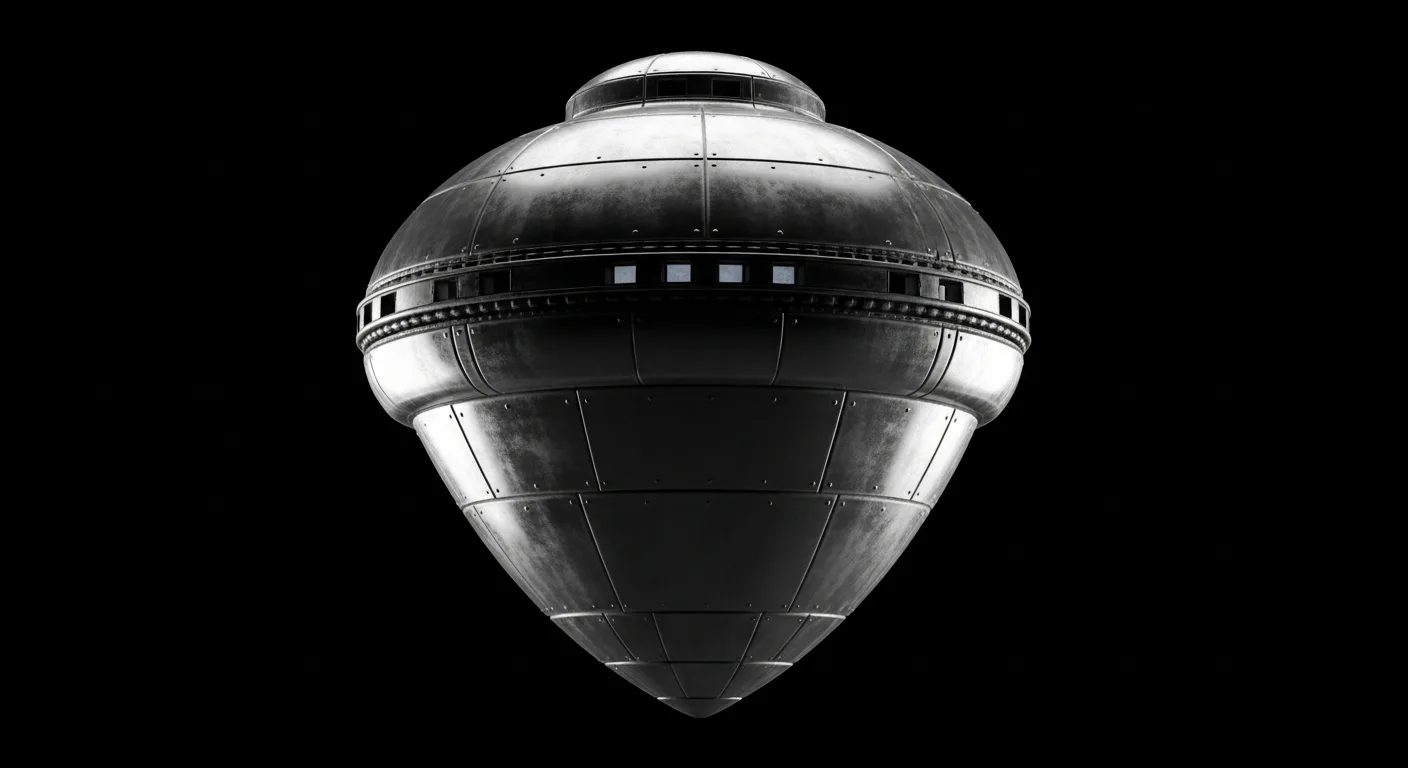
On the morning of April 11, 1980, at La Joya Air Base in southern Peru, an event occurred that would become one of the most dramatic military UFO encounters ever documented. A Peruvian Air Force pilot, Lieutenant Oscar Santa Maria Huertas, was scrambled to intercept an unidentified object that had entered restricted airspace near the base. What followed was extraordinary: the pilot fired sixty-four rounds from his fighter jet directly into the object, observed clear hits, and watched in disbelief as the bullets had absolutely no effect. The object then demonstrated capabilities far beyond any known aircraft before departing at will, all while 1,800 military personnel watched from the ground below.
La Joya Air Base served as a critical installation for the Peruvian Air Force, home to combat aircraft that defended the nation’s airspace. The base maintained strict security over its restricted zones, and any unauthorized intrusion demanded immediate response. When an unidentified object appeared near the base in the early morning hours, the reaction was swift and by the book: scramble a fighter to identify and, if necessary, engage the intruder.
The Intruder
The object first appeared in the dawn sky, hovering near the base in a manner that no conventional aircraft could replicate. Base personnel initially mistook it for a weather balloon, a common enough occurrence at military installations. But this object was hovering in restricted airspace, an unacceptable situation regardless of what it might be. The order went out to intercept and identify.
As observers studied the object more closely, its true nature became apparent. This was no weather balloon. The object was approximately thirty feet in diameter, dome-shaped on top, with a metallic appearance that caught the early morning light. It showed no wings, no rotors, no visible means of propulsion. It simply hung in the air, motionless, as if gravity had no meaning for it.
The Scramble
Lieutenant Oscar Santa Maria Huertas was selected for the intercept mission. A combat pilot flying a Sukhoi Su-22 fighter-bomber, Santa Maria had the training and the aircraft to engage whatever was violating Peruvian airspace. He launched from La Joya with clear orders: identify the object, and if it proved hostile or refused to leave, engage with force.
Santa Maria approached the object at combat speed, his Su-22 loaded with live ammunition. As he closed the distance, he could see the object clearly, hovering with an unnatural stillness that immediately told him this was nothing he had ever encountered before. Following his training and his orders, he positioned himself for an attack run.
The Attack
What happened next has become legendary in UFO research. Santa Maria opened fire with his aircraft’s 30mm cannon, sending sixty-four rounds toward the hovering object. He was close enough to observe the impacts. The rounds struck the object, he was certain of that. He watched the tracers reach their target, saw what should have been devastating hits on something the size of a small building.
Nothing happened. The object absorbed the rounds without any visible effect. There was no explosion, no shrapnel, no damage of any kind. The bullets that should have torn through metal and destroyed the target simply ceased to matter upon contact. It was as if the object existed in a different reality where conventional weapons had no meaning.
The Chase
After absorbing the attack without damage, the object began to move. It rose from its hovering position with acceleration that Santa Maria’s Su-22 could not begin to match. The pilot gave chase, pushing his aircraft to its limits, but the object pulled away effortlessly. It climbed to 38,000 feet in what seemed like moments, reaching altitudes and speeds that the fighter could not approach.
Santa Maria pursued as long as he could, but the encounter had consumed time and fuel. Eventually, he was forced to break off and return to base, watching as the object continued its ascent and then disappeared entirely. The intruder had come, had absorbed a direct military attack without effect, had demonstrated its superiority over Peruvian air defenses, and had departed at will.
The Witnesses
What set the Arequipa incident apart from many UFO cases was the number of witnesses. This was not an encounter observed by a lone pilot whose account could be questioned. Approximately 1,800 military personnel at La Joya Air Base watched the events unfold in the clear morning sky. They saw the object hovering. They saw Santa Maria’s aircraft approach. They saw the attack. They saw the ineffective fire. They saw the object’s ascent and departure.
Eighteen hundred trained military observers, watching a combat engagement with an unidentified object that shrugged off direct hits and demonstrated capabilities beyond any known technology. The mass observation eliminated arguments based on pilot error, misidentification, or psychological stress. What happened at La Joya was seen by too many people to be dismissed or explained away.
Official Acknowledgment
The Peruvian Air Force did not attempt to hide what had occurred. In a display of transparency rare among governments dealing with UFO encounters, Peru acknowledged the incident, documented it, and eventually released the files to the public. Lieutenant Santa Maria was allowed to discuss the encounter openly, and he has done so at international conferences and in interviews, standing by his account decades after the event.
The official position of the Peruvian government is that an unidentified object was engaged by military aircraft and demonstrated capabilities that could not be explained. They do not claim to know what the object was or where it came from. They simply acknowledge that it happened and that they have no explanation for what their pilot encountered and what their personnel witnessed.
The Pilot’s Testimony
Oscar Santa Maria Huertas has maintained his account consistently for more than four decades. He is certain of what he saw and what he did. He fired sixty-four rounds into an object at close range. He observed the impacts. The rounds had no effect. The object then demonstrated flight characteristics impossible for any aircraft he knew of or has learned of since.
Santa Maria’s credibility rests not only on his training and his position but on his consistency and his willingness to stake his professional reputation on his account. He was not seeking attention or profit. He was simply reporting what happened during an officially ordered mission. His testimony has never wavered.
The Implications
The Arequipa incident raises profound questions about the nature of UFO phenomena and their relationship to human military capability. If Santa Maria’s account is accurate, and the mass observation supports it, then an unidentified object demonstrated the ability to render modern weapons completely ineffective. Sixty-four rounds of 30mm ammunition, devastating against any conventional target, were absorbed without effect.
What technology could accomplish this? What material could withstand such an attack? What energy shield or defensive system could neutralize ammunition in flight? These questions have no answers within current human knowledge. The Arequipa incident suggests that whatever operates these objects possesses capabilities so far beyond our own that our most powerful weapons are meaningless against them.
Legacy
The encounter at La Joya Air Base on April 11, 1980, stands as one of the most significant military UFO cases ever documented. A trained combat pilot engaged an unidentified object with direct fire. The attack had no effect. The object demonstrated superior capabilities. Eighteen hundred military witnesses observed the encounter. The government acknowledged the event and released the documentation.
Peru’s transparency in handling this case set an example that few other nations have followed. Rather than denial or cover-up, they chose honesty about an event they could not explain. The Arequipa incident endures as evidence that the UFO phenomenon is real, that these objects can interact with human military forces, and that our weapons are inadequate against whatever technology they represent.
Sources
- CIA UFO/UAP Reading Room — Declassified CIA documents on UAP