Pelotas UFO Sighting
Commercial pilot Haroldo Westendorff observed a massive cone-shaped UFO while flying near Pelotas, Brazil. The object was tracked on radar and estimated to be 100 meters in diameter. A smaller disc emerged from the top before both objects departed at incredible speed.
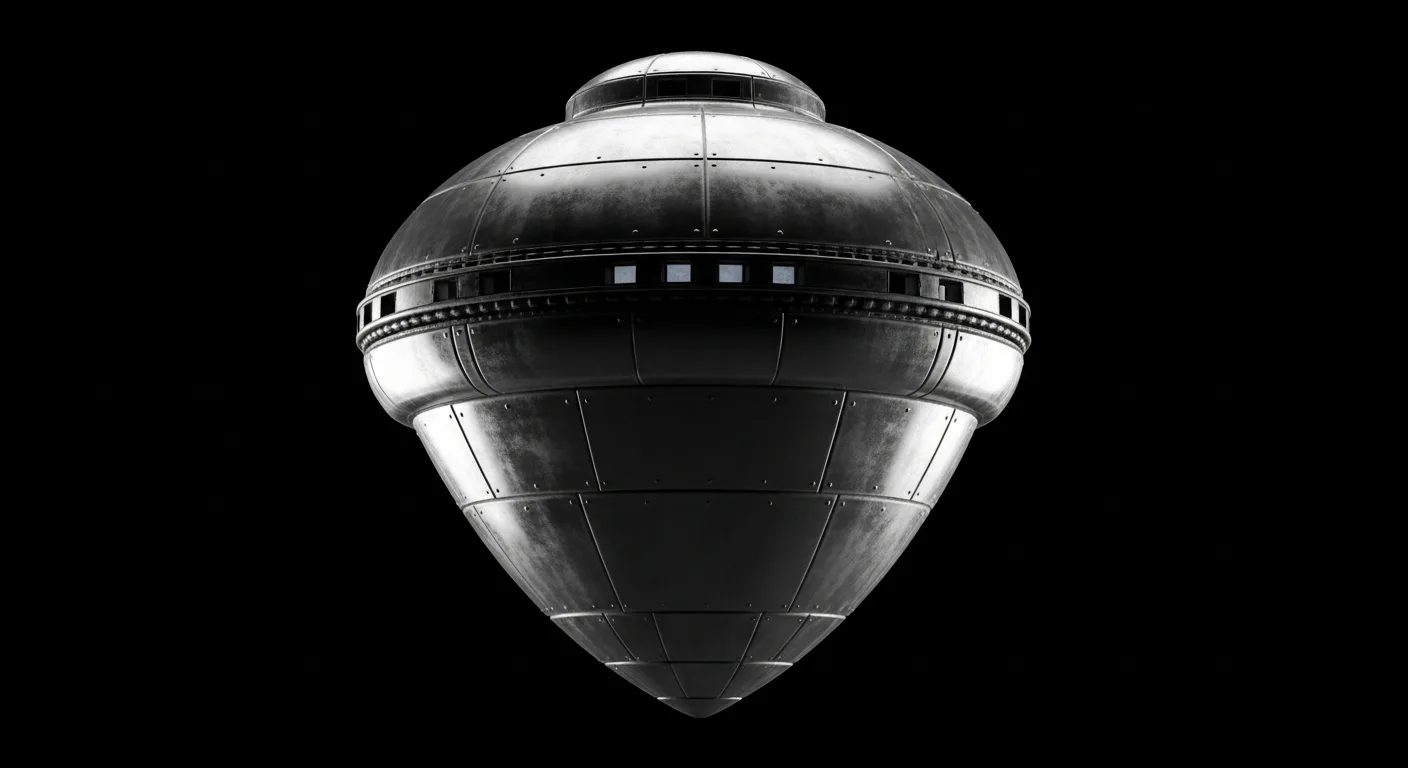
On the morning of November 5, 1996, the skies above southern Brazil became the stage for one of the most compelling UFO encounters ever reported by a professional aviator. Commercial pilot Haroldo Westendorff, a man with thousands of flight hours and an impeccable reputation in Brazilian aviation circles, was flying his personal aircraft near the city of Pelotas when he encountered something that would change his life forever and add another extraordinary chapter to Brazil’s already remarkable history of unexplained aerial phenomena.
The Witness
Haroldo Westendorff was no ordinary observer. As an experienced commercial pilot, he had spent years learning to identify aircraft, assess distances, and maintain composure under pressure. On that fateful November morning, he was piloting his single-engine aircraft through familiar airspace near Pelotas, a city in the state of Rio Grande do Sul. The weather was clear, visibility excellent, and there was nothing to suggest that this routine flight would become anything but ordinary. What Westendorff encountered would test everything he thought he knew about the limits of human technology.
The Object
What materialized before Westendorff’s eyes defied all conventional explanation. Hovering in the sky was a massive cone-shaped craft, its dimensions staggering in their enormity. The pilot estimated the object to be approximately 100 meters in diameter, a structure so vast that it dwarfed any known aircraft. The craft resembled a pyramid or cone, with a brown or grayish coloration that seemed to absorb rather than reflect the morning light. Most remarkably, this enormous structure hung motionless in the sky, exhibiting no visible means of propulsion, no wings, no rotors, no exhaust, nothing that could explain how such a massive object could maintain its position with such apparent ease.
The Launch
As Westendorff watched in astonishment, the encounter took an even more extraordinary turn. From the apex of the cone-shaped mothership, a smaller disc-shaped craft began to emerge. The pilot observed this secondary object separate completely from the larger structure, as if the massive cone had given birth to a smaller vessel. Once free, both objects demonstrated capabilities that seemed to mock the laws of physics as understood by conventional aviation. Without any apparent acceleration phase, both craft departed the area at speeds that Westendorff could only describe as extreme, vanishing from sight in moments that no earthly aircraft could hope to match.
Radar Confirmation
What elevated this sighting from a single witness account to a case of genuine significance was the independent confirmation provided by radar operators in the region. Local air traffic control facilities tracked the object, their instruments recording the presence of something large and unusual in the airspace where Westendorff reported his encounter. The radar data confirmed the object’s approximate size and documented its movements, providing electronic corroboration of what the pilot had witnessed with his own eyes. Air traffic controllers were alerted to the situation, and military authorities were subsequently notified of the anomalous presence in Brazilian airspace.
The Investigation
Following the encounter, Westendorff took the unusual step of officially reporting his experience. He contacted the Brazilian Air Force and cooperated fully with investigators, understanding that his professional reputation was on the line but equally convinced that what he had witnessed deserved official scrutiny. His credibility as a seasoned commercial pilot gave significant weight to his testimony, and media outlets throughout Brazil covered the story extensively. Despite the quality of the witness, the radar confirmation, and the professional investigation that followed, no conventional explanation for the sighting was ever offered by Brazilian authorities.
Brazilian Context
The Pelotas sighting occurred during a period of remarkable UFO activity in Brazil. The year 1996 was already notable for the famous Varginha incident, in which multiple witnesses reported seeing strange creatures following an alleged crash in the state of Minas Gerais. This cluster of high-profile cases followed Brazil’s famous “Official UFO Night” of May 1986, when military jets were scrambled to intercept multiple unidentified objects tracked by radar over several Brazilian states. The Westendorff encounter added to a growing body of evidence that suggested Brazil was experiencing an unprecedented wave of aerial phenomena, one that drew attention from researchers and investigators worldwide and prompted continued discussions about the government’s awareness and response to such events.
Sources
- CIA UFO/UAP Reading Room — Declassified CIA documents on UAP