Trindade Island UFO Photographs
A Brazilian Navy photographer captured images of a Saturn-shaped UFO circling a remote island. The photographs were taken aboard a naval vessel with multiple military witnesses.
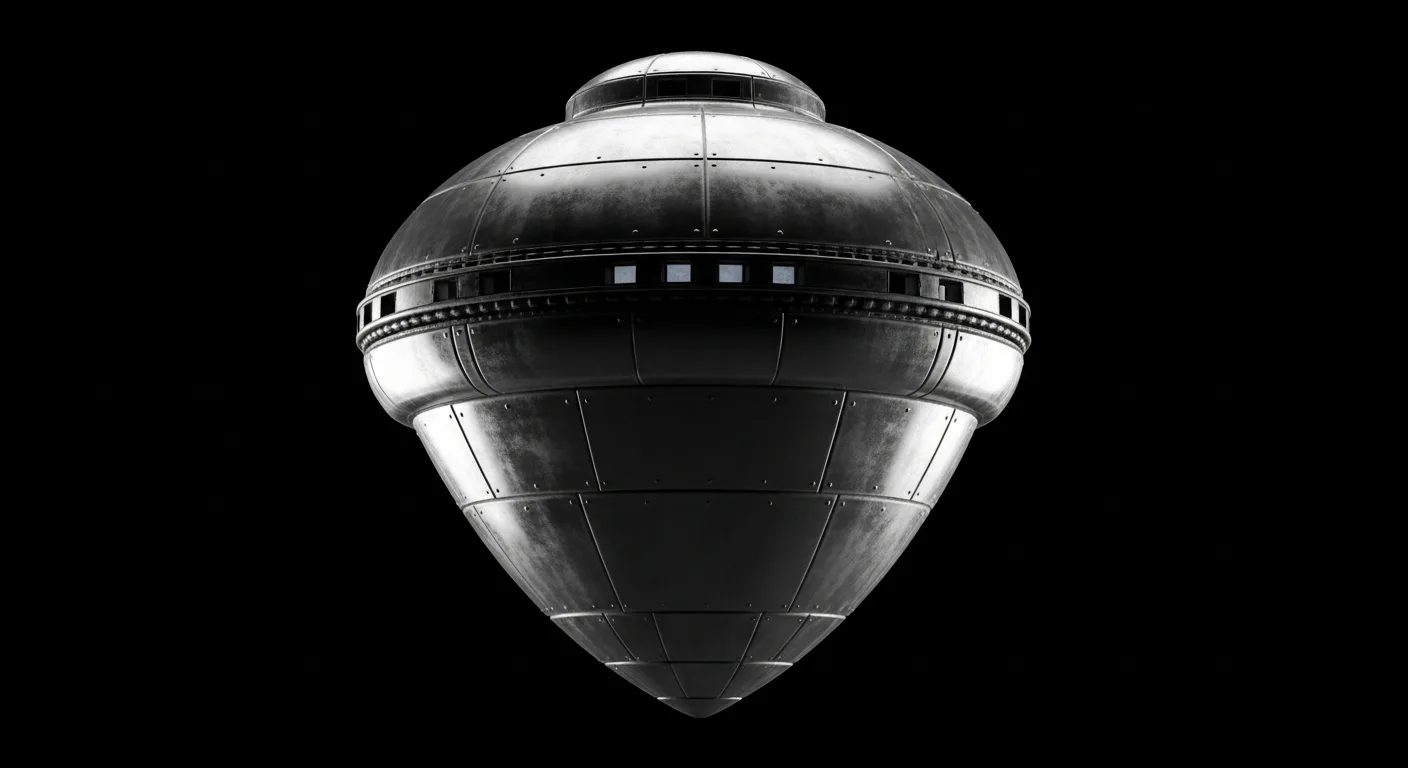
On January 16, 1958, photographer Almiro Baraúna captured a series of photographs showing a Saturn-shaped UFO circling Trindade Island while aboard the Brazilian Navy training ship Almirante Saldanha. The incident was witnessed by approximately 48 crew members and remains one of the most thoroughly investigated UFO photography cases.
The Setting
Trindade Island is a remote, rocky island approximately 680 miles off the Brazilian coast, used by the Brazilian Navy for scientific research and training. The Almirante Saldanha was conducting oceanographic surveys as part of International Geophysical Year activities.
Almiro Baraúna was a civilian photographer aboard to document underwater research.
The Sighting
At approximately 12:15 PM on January 16, crew members noticed an unusual object approaching the island. Baraúna grabbed his camera and captured a sequence of photographs as the object circled the rocky peaks.
The object appeared, moved behind the island’s peaks, emerged on the other side, and departed—all within approximately 20 seconds. Baraúna managed to photograph the sequence despite the rapid action.
The Object
Witnesses and photographs described a craft characterized by a Saturn-shaped design, featuring a disc with a central ring or bulge. The overall appearance was metallic, and the object was estimated to be around 120 feet in diameter. It possessed a dark center band and lighter upper and lower sections, exhibiting a noticeable wobbling motion during its flight, and importantly, there were no visible propulsion systems.
Military Witnesses
The sighting was observed by approximately 48 people aboard the naval vessel, including naval officers, enlisted personnel, technical staff, and civilian scientists.
Captain José Teobaldo Viegas witnessed the object and confirmed Baraúna’s account.
Photograph Development
Baraúna developed the photographs aboard the ship under the supervision of naval personnel. The commander observed the development process, which helped to reduce the possibilities of fabrication.
The photographs showcased a clearly defined, Saturn-shaped object against the sky and island terrain.
Investigation
The Brazilian Navy conducted an extensive investigation, beginning with the analysis of photographs by the Navy’s Photo Reconnaissance Laboratory. They also extensively interviewed witnesses and questioned the ship’s crew about the incident, and meticulously examined the negative for any signs of tampering.
Government Response
In a remarkable move, the Brazilian government released the photographs to the public. President Juscelino Kubitschek personally authorized their publication after being briefed on the investigation.
The Navy’s official statement confirmed the sighting occurred but drew no conclusions about the object’s nature.
Analysis
Various experts examined the photographs.
Supporting authenticity: Military witnesses corroborated the sighting, the development process was supervised, the object appeared consistent across sequential images, and the Naval investigation found no evidence of fraud.
Questioning authenticity: Some analysts questioned the image quality, while alternative explanations were proposed (though none were ultimately satisfactory), and Baraúna had prior experience with trick photography.
Legacy
The Trindade Island photographs remain among the most significant UFO images due to the multiple military witnesses involved, the comprehensive official investigation conducted, the government’s release of the photographs, the supervised development process, and the sequential images documenting the object’s movement.
The case demonstrates how official acknowledgment and investigation can lend credibility to UFO incidents, contrasting with the dismissive approach common elsewhere.
Brazil’s openness in the Trindade case established a pattern of relative transparency that continues in their UFO investigations today.
Sources
- Project Blue Book — National Archives — USAF UFO investigation files, 1947–1969
- CIA UFO/UAP Reading Room — Declassified CIA documents on UAP