Kenneth Arnold UAP Sighting
On June 24, 1947, pilot Kenneth Arnold witnessed nine crescent-shaped UAPs flying at supersonic speeds near Mount Rainier. His description of their movement 'like a saucer skipping on water' created the term 'flying saucer.' This sighting launched modern ufology and sparked the UFO phenomenon.
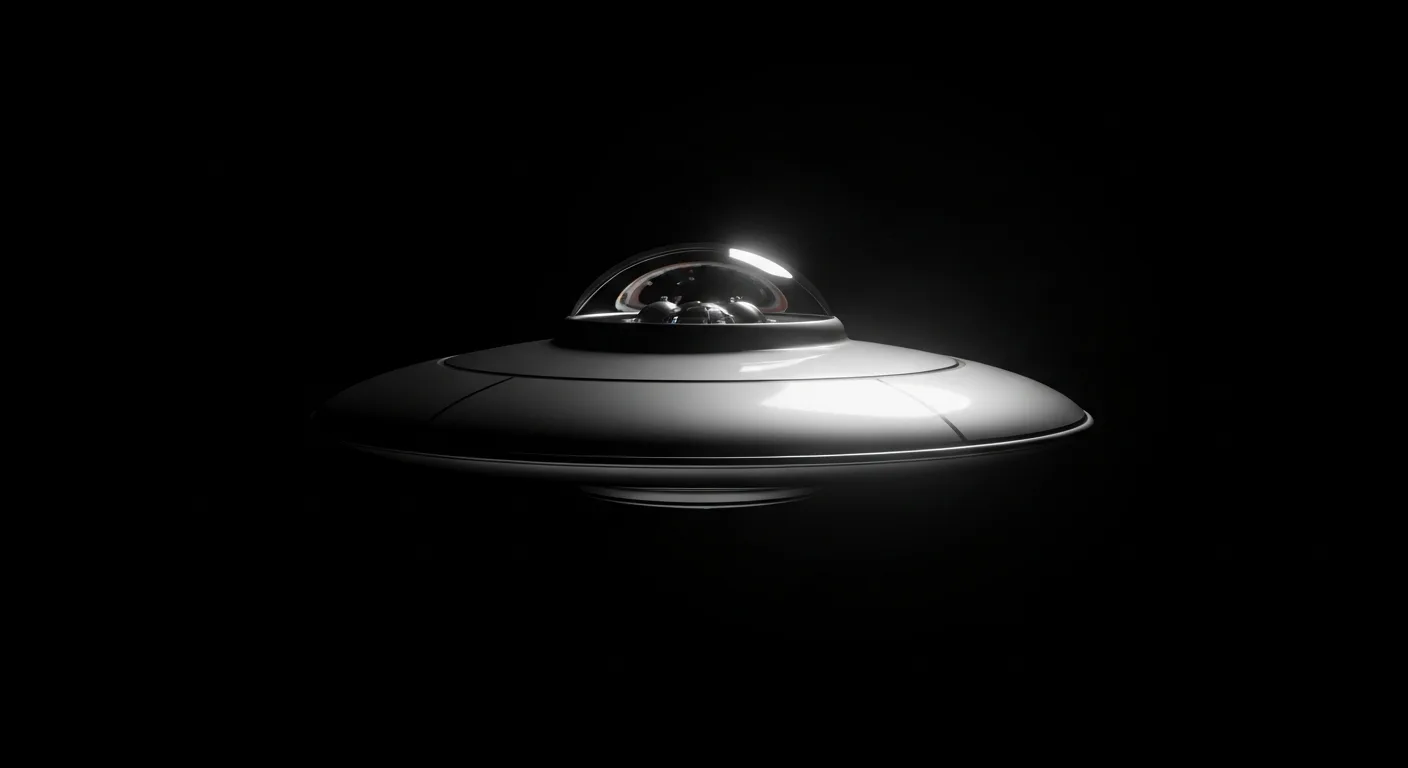
June 24, 1947, represents a turning point in how humanity perceives its place in the universe. On that date, a private pilot named Kenneth Arnold observed something in the skies near Mount Rainier that he could not explain, something that moved faster than any known aircraft and behaved in ways that defied the aviation knowledge of his era. His attempt to describe what he saw inadvertently created the term “flying saucer” and launched the modern UFO phenomenon that continues to capture public imagination more than seven decades later.
The Flight
The circumstances of Arnold’s historic sighting were entirely mundane. He was flying his personal CallAir A-2 aircraft through the Cascade Mountain range of Washington State on a search mission. A Marine Corps C-46 transport plane had crashed somewhere in the mountains, and a substantial reward had been offered for locating the wreckage. Arnold, a practical businessman, hoped to spot the downed aircraft and collect the finder’s fee.
The afternoon of June 24 provided ideal conditions for searching. The weather was clear, visibility was excellent, and Arnold could see for miles in every direction. He flew at approximately 9,200 feet, scanning the rugged terrain below for any sign of the missing transport. Mount Rainier, the massive volcanic peak that dominates the Washington landscape, rose to his left. Mount Adams stood in the distance ahead. Between these two landmarks, Arnold would witness something that would change his life.
Kenneth Arnold
Understanding why Arnold’s account commanded such credibility requires understanding the man himself. Kenneth Arnold was not a UFO enthusiast, not a sensationalist, not someone seeking attention or prone to misidentifying ordinary phenomena. He was a 32-year-old businessman from Boise, Idaho, who operated a successful fire equipment sales company. Flying was both his passion and his business tool, allowing him to cover the vast distances of the Pacific Northwest efficiently.
Arnold had accumulated thousands of hours of flight time by 1947. He was intimately familiar with aircraft of all types, capable of recognizing planes from considerable distances and accurately estimating their speed and altitude. He knew what birds looked like in flight, what reflections and atmospheric phenomena could produce, what conventional aircraft could and could not do. When he reported seeing something extraordinary, he did so with the credibility of an expert witness.
After his sighting, Arnold would be subjected to intense scrutiny, skepticism, and ridicule. He stood by his account throughout, never embellishing, never retreating, never attempting to profit from his unwanted fame. He remained convinced that he had witnessed something genuinely anomalous, though he never claimed certainty about what that something was.
The Objects
Arnold’s attention was first drawn by a flash of light, the sun reflecting off something highly polished in the sky to his north. Looking toward the flash, he saw what he initially assumed must be a formation of military jets. But as he watched, this assumption crumbled.
Nine objects flew in a diagonal, echelon-like formation between Mount Rainier and Mount Adams. They weaved among the smaller peaks of the Cascades, rising and falling in an undulating pattern that struck Arnold as unlike any aircraft flight he had ever witnessed. The objects were flat and thin, highly reflective, catching the sunlight with brilliant flashes as they maneuvered.
Arnold described their shape as crescent or disc-like, though one object in the formation appeared more crescent-shaped than the others. They were clearly not conventional aircraft; they showed no fuselage, no wings in the traditional sense, no visible propulsion system. They moved as a coordinated group, maintaining their formation while executing maneuvers that seemed to flow rather than the controlled, mechanical movements of aircraft.
The Calculation
What transformed Arnold’s sighting from curious to paradigm-shifting was his calculation of the objects’ velocity. As an experienced pilot, Arnold possessed the skills and presence of mind to measure what he was seeing. He noted the time on his cockpit clock when the objects passed Mount Rainier, then again when they reached Mount Adams.
The formation covered the distance between the two mountains, approximately forty-seven miles, in approximately one minute and forty-two seconds. When Arnold landed and worked through the mathematics, the results seemed impossible. The objects had been traveling at speeds between 1,200 and 1,700 miles per hour, depending on the exact distance calculations used.
In June 1947, no aircraft on Earth could approach such speeds. The fastest military jets of the era topped out around 500 mph. The sound barrier itself had not yet been officially broken; Chuck Yeager’s historic supersonic flight would not occur until October of that year. Whatever Arnold had witnessed was performing feats of speed that surpassed human technological capability by a significant margin.
The Interview
When Arnold landed at Yakima, Washington, to refuel, he shared his experience with airport workers. The story spread quickly, and by the time he reached Pendleton, Oregon, journalists were waiting. In describing the objects’ movement to reporters, Arnold used a simile that would reshape the language: they flew “like a saucer if you skip it across water.”
Arnold was describing movement, not shape. He meant that the objects moved with a skipping, undulating motion, dipping and rising as they traveled. But the press seized upon the word “saucer,” and headlines soon screamed about “flying saucers” in the skies over Washington. The term captured public imagination with remarkable speed, and within days, “flying saucer” had entered the American lexicon permanently.
Arnold was initially bemused, then frustrated by the mischaracterization of his description. The objects were not saucer-shaped; they were crescent-shaped or boomerang-shaped. But the damage, if damage it was, had been done. Flying saucers had arrived in American culture, and they would never leave.
The Investigation
The Army Air Force took Arnold’s report seriously enough to conduct an investigation. Officers interviewed Arnold extensively, finding him credible, sober, and genuinely perplexed by what he had witnessed. They could offer no explanation for his sighting that fit the observed facts. The case remained unexplained.
Arnold’s sighting, combined with the flood of reports that followed, prompted the creation of Project Sign in late 1947, the first official government program to investigate unidentified aerial phenomena. Project Sign would evolve into Project Grudge and eventually Project Blue Book, which would continue documenting and analyzing UFO reports for over two decades. The government’s interest in aerial anomalies, sparked by Arnold’s account, continues to the present day.
The Legacy
The Kenneth Arnold sighting did more than create terminology; it created a phenomenon. Within weeks of his report, hundreds of Americans came forward with their own accounts of strange objects in the sky. The famous Roswell incident occurred just two weeks after Arnold’s sighting. A cultural moment had arrived, and America’s relationship with the skies would never be quite the same.
Arnold lived until 1984, consistently maintaining his account without embellishment or retraction. He became involved in UFO research, had additional sightings, and co-authored a book about his experiences. He never claimed the objects were extraterrestrial, only that they defied conventional explanation. That modest, careful assessment remains as valid today as it was on June 24, 1947.
The objects Kenneth Arnold witnessed have never been satisfactorily explained. Conventional explanations, including aircraft, birds, meteors, and atmospheric phenomena, fail to account for the observed speed and behavior. The mystery that began over Mount Rainier endures, a reminder that the skies above us may harbor phenomena we do not yet understand.
Sources
- Project Blue Book — National Archives — USAF UFO investigation files, 1947–1969
- CIA UFO/UAP Reading Room — Declassified CIA documents on UAP
- Chronicling America — Historic US newspapers (1690–1963)