Cape Girardeau UFO Crash
In April 1941, a Baptist minister was called to pray over the victims of a 'plane crash' outside Cape Girardeau. What he found wasn't a plane - it was a circular craft with strange beings inside. If true, this predates Roswell by six years and remains one of ufology's most intriguing claims.
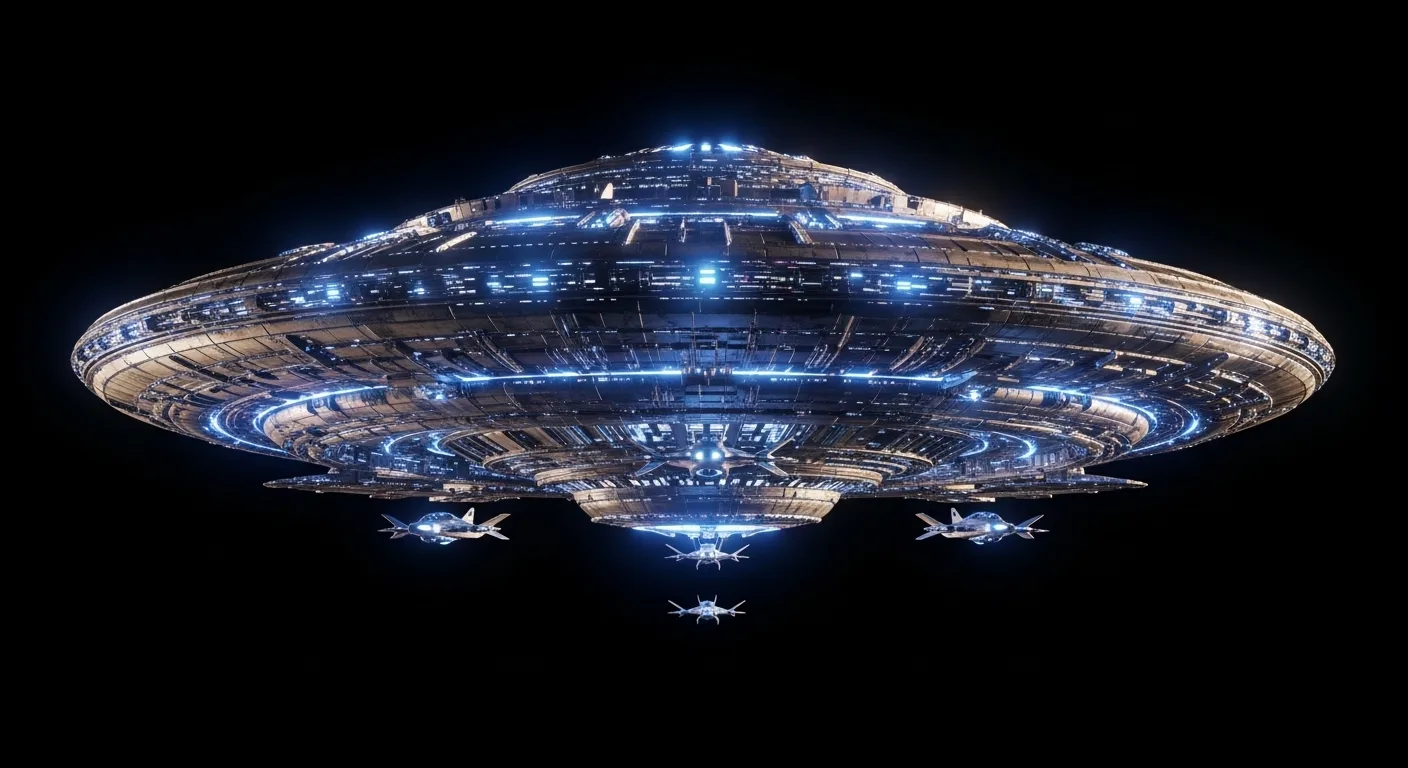
Six years before a rancher near Roswell, New Mexico, found strange debris scattered across his pastureland, and six years before pilot Kenneth Arnold’s famous sighting over Mount Rainier ushered in the modern age of UFO awareness, something is alleged to have come down in a field outside Cape Girardeau, Missouri. The story did not emerge publicly until 1991, when a woman named Charlotte Mann shared an account that had been a closely guarded family secret for half a century. If her testimony is accurate, the Cape Girardeau incident represents one of the earliest — and most remarkable — UFO crash retrievals in American history.
The Night of the Crash
According to Charlotte Mann, her grandfather, Reverend William Huffman, served as a Baptist minister in Cape Girardeau in the spring of 1941. One evening, the local sheriff’s office telephoned the reverend with an urgent request. There had been what they described as a plane crash in a field outside town, and they needed a man of the cloth to come to the scene to administer last rites and pray for the victims. Reverend Huffman, a man of deep faith and a strong sense of pastoral duty, agreed immediately and made his way to the location.
What he found when he arrived bore no resemblance to any aircraft accident he could have imagined. The wreckage was not the twisted aluminum and fabric of a conventional airplane. Instead, it was a disc-shaped craft, circular in form and composed of materials that seemed unlike anything manufactured by human hands. The object had come to rest in the field after what appeared to have been a violent impact, and its structure, though damaged, was sufficiently intact to make its unusual shape unmistakable.
More disturbing than the craft itself were the bodies. Small humanoid beings lay amid the wreckage, their proportions distinctly non-human. Witnesses at the scene described them as having large heads and oversized eyes, with slender limbs and a stature considerably shorter than that of an average adult. The reverend, shaken but determined to fulfill his duty, prayed over the bodies as he had been asked to do. It was, by all accounts, an act of extraordinary composure in circumstances that would have overwhelmed most people.
The Military Arrives
The scene did not remain in civilian hands for long. Military personnel arrived shortly after Reverend Huffman, and their response was swift and decisive. They took control of the crash site, cordoning off the area and beginning the process of removing the wreckage and the bodies. Every civilian present — the reverend, local law enforcement officers, and any bystanders who had gathered — was ordered to maintain absolute silence about what they had witnessed. The men in uniform made it clear that discussing the incident would carry serious consequences.
Before leaving the scene, Reverend Huffman managed to observe a small photograph being taken of the beings and the craft. This detail would become one of the most tantalizing elements of the story, as the reverend reportedly obtained or retained a copy of the photograph and kept it among his personal effects for years afterward.
A Family Secret
Reverend Huffman returned home that night and told his wife what he had seen. The account was so extraordinary that it might have been dismissed as fantasy had it come from a less credible source. But those who knew Huffman described him as a man of unwavering honesty, deeply serious about his religious calling and not given to fabrication or exaggeration. His wife believed him, and the story became a carefully guarded family secret, passed down through the generations in hushed conversations that carried the weight of something profound and forbidden.
The photograph that Huffman had kept was eventually lost under troubling circumstances. According to family accounts, men who identified themselves as government agents visited the reverend’s widow after his death and confiscated the image, along with any other materials related to the incident. Whether these men were genuinely affiliated with a government agency or were acting under some other authority has never been established, but their visit suggests that someone, somewhere, considered the photograph significant enough to retrieve.
Charlotte Mann came forward with the story in 1991, breaking the family’s long silence. She described how her grandmother had confirmed the account on multiple occasions over the years, always consistently and always with the same details. Mann emphasized that her grandfather had nothing to gain from inventing such a story and everything to lose, given the potential damage to his reputation as a clergyman in a conservative community. The consistency of the account across multiple family members and multiple tellings lent it a weight that simple fabrication would be unlikely to sustain.
Historical Significance
The Cape Girardeau incident, if genuine, rewrites the conventional timeline of UFO encounters in the United States. The Roswell crash of 1947 has long been regarded as the foundational event in American ufology, the moment when the possibility of extraterrestrial visitation first entered the public consciousness. But the Cape Girardeau account places a strikingly similar event six years earlier, in a period before the term “flying saucer” existed, before Project Blue Book, and before the cultural framework for understanding such encounters had been established. A Baptist minister in rural Missouri in 1941 would have had no popular mythology to draw upon in constructing such a story, which supporters argue makes the account more credible rather than less.
Skeptics raise legitimate objections. There is no physical evidence — the craft, the bodies, and the photograph have all vanished into government custody or the fog of history. The story rests entirely on the testimony of family members recounting events that occurred decades before they were made public. No independent witnesses have come forward, and no corroborating military or government records have surfaced, though proponents note that such records, if they existed, would almost certainly be classified.
The case remains in a liminal space familiar to students of ufology: too compelling to dismiss outright, too unsupported to confirm. What is not in dispute is that Charlotte Mann’s account has withstood scrutiny for more than three decades without significant contradiction, and that the story she tells — of an honest man called to pray over something he could not explain, and the machinery of secrecy that descended upon the scene — resonates with patterns that would repeat themselves across the American landscape for the rest of the twentieth century.
Sources
- Chronicling America (Library of Congress) — Historic US newspaper coverage (1690–1963)
- Chronicling America — Historic US newspapers (1690–1963)