Raynham, Massachusetts UFO Sighting (April 15, 1966) — FBI Files
An FBI-documented report from April 15, 1966, details a correspondence regarding unidentified flying objects in Raynham, Massachusetts.
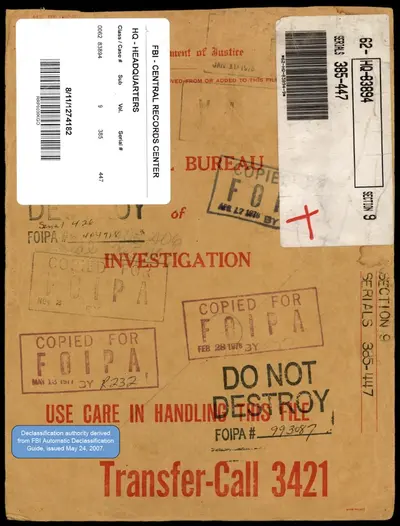
Historical Context
The mid-1960s represented a period of heightened tension within the United States, as the Cold War necessitated rigorous monitoring of the nation’s airspace. During this era, the presence of unidentified aerial phenomena was a matter of significant national security concern, particularly regarding the potential for unauthorized surveillance by adversarial powers. The United States Air Force maintained several investigative programs, most notably Project Blue Book, which served as the primary repository for reports of unidentified flying objects. While the Air Force focused on the technical and aeronautical aspects of these sightings, the Federal Bureau of Investigation (FBI) maintained a secondary role through its monitoring of domestic communications and the protection of vital national installations.
During this period, the geographical landscape of Massachusetts, particularly the industrial and residential corridors of towns like Raynham, was subject to frequent observation by both civilian and military personnel. The era was characterized by a high volume of reported sightings, many of which were attributed to the proliferation of high-altitude reconnaissance technology and experimental aerospace developments. The reporting of such phenomena often triggered a specific bureaucratic workflow, where local field offices would process incoming intelligence and route it to central headquarters according to established protocols designed to safeguard sensitive infrastructure.
The Raynham Incident
On April 15, 1966, an incident involving an unidentified object was recorded in Raynham, Massachusetts. The documentation regarding this event was later released to the public on May 8, 2026, as a result of the Presidential Unsealing and Reporting System for UAP Encounters (PURSUE). The records indicate that the case was handled through the standard investigative channels of the era, specifically involving the FBI’s processing of reports concerning unidentified flying objects.
The specific details contained within the released documentation focus on a communication sent to the Bureau by an individual named Paul Snigier. In his correspondence, Snigier wrote to the FBI regarding the presence of unidentified flying objects. Upon reviewing the letter, the FBI determined that the subject matter of the sighting fell outside their specific investigative jurisdiction. Following the Bureau’s standing protocols, the FBI forwarded the correspondence to the Air Force’s Office of Special Investigations for further review. While the document confirms the existence of the report and the subsequent administrative routing, the released files do not specify the total number of witnesses involved in the sighting.
Analytical Classification
The Raynham case is classified as a visual sighting, a category of phenomenon reported by observers positioned either on the ground or within aircraft. Such reports are common in the historical record of unidentified aerial phenomena, as they rely on the direct optical perception of an object by a human witness. The nature of the report in this instance was processed as a matter of interest to the Air Force’s investigative branches, consistent with the handling of other Cold War-era sightings.
Under the current oversight of the All-domain Anomaly Resolution Office (AARO), all records released through the PURSUE program are designated as unresolved by default. This designation reflects a lack of definitive evidence to categorize the event as either anomalous or conventional. The federal government has maintained a position of neutrality, neither confirming the presence of non-conventional technology nor concluding that the sighting was the result of known human-made objects.
In the context of 1966, investigators frequently considered several conventional candidates for such sightings. These included the observation of experimental aircraft, the presence of weather balloons—specifically those associated with the Project Mogul series—and various atmospheric optical phenomena such as lenticular clouds or sundogs. Additionally, astronomical bodies such as the Moon, Venus, or meteors appearing near the horizon were often scrutinized as potential sources for reported unidentified objects. The Raynham report remains part of this broader historical archive of unverified aerial observations.