Salem, Massachusetts UFO Sighting (August 1, 1952) — FBI Files
An investigation into a 1952 Coast Guard photograph depicting unusual lights over Salem, Massachusetts, as documented in declassified FBI files.
Historical Context
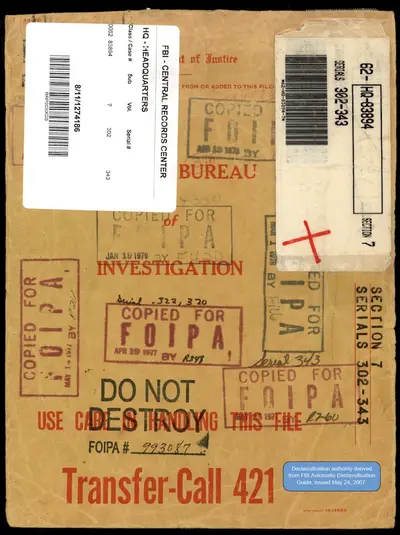
The summer of 1952 occurred during a period of heightened atmospheric and geopolitical tension in the United States. Following the 1947 Kenneth Arnold sighting and the subsequent Roswell incident, the American public and various government agencies were increasingly preoccupied with reports of unidentified flying objects. This era, often characterized by the emergence of “flying saucer” culture, coincided with the early stages of the Cold War, where the possibility of advanced Soviet aerospace technology necessitated rigorous monitoring of the national airspace. During this time, the Federal Bureau of Investigation maintained specific protocols for handling reports that might impact the security of vital installations or military assets. Field offices in cities such as Knoxville, Albuquerque, and Los Angeles were tasked with routing such anomalies to headquarters to ensure a centralized intelligence response.
The geography of Salem, Massachusetts, provided a significant backdrop for such observations. As a historic maritime hub with a high density of coastal infrastructure, the region was subject to frequent monitoring by maritime and aerial patrols. The presence of the United States Coast Guard in the area meant that personnel trained in surveillance and photography were positioned to observe the skies over the Atlantic coastline.
The Incident of August 1, 1952
On August 1, 1952, an incident involving an unidentified object was recorded by U.S. government investigators. The details of this event remained largely shielded from public view for decades, only becoming accessible on May 8, 2026, through the Presidential Unsealing and Reporting System for UAP Encounters (PURSUE). The documentation pertains to an observation made in the daylight sky over Salem.
The primary evidence presented in the case consists of a photograph captured by a Coast Guard photographer. The image depicts four unusual lights positioned within the daytime atmosphere. While the photographer asserted that the photograph was taken over the Salem area, the document does not specify the total number of witnesses who may have observed the lights or corroborated the sighting.
The scientific community’s reaction to the evidence was characterized by skepticism. A Harvard astrophysicist reviewed the photograph but ultimately dismissed the image as inconclusive. This dismissal was based on the absence of supporting scientific data required to verify the nature of the lights or their precise altitude and composition.
Classification and Investigation
The case is categorized as an unidentified object incident involving photographic evidence. Within the framework of modern archival analysis, the event is classified as an anomaly. Under the current standards of the All-domain Anomaly Resolution Office (AARO), all records released via the PURSUE program are designated as unresolved by default. This designation indicates that the federal government has not reached a definitive conclusion regarding the origin of the lights. The investigation has not confirmed that the objects were anomalous in nature, nor has it confirmed that they were of conventional origin.
The difficulty in resolving such cases often stems from the limitations of mid-century photographic technology and the lack of multi-sensor corroboration. In the context of the early 1950s, researchers often struggled to distinguish between unidentified aerial phenomena and known atmospheric or man-made objects.
Potential Explanations
When evaluating sightings from this period, investigators consider several conventional candidates. During the late 1940s and early 1950s, the United States was engaged in various high-altitude surveillance programs, such as the Project Mogul series, which utilized specialized weather balloons to detect Soviet nuclear tests. Such balloons were known to be frequent subjects of misidentification.
Other atmospheric optical phenomena could potentially account for the appearance of multiple lights, including sundogs, which are caused by the refraction of light through ice crystals, or lenticular clouds. Furthermore, astronomical objects such as the Moon, Venus, or meteors appearing near the horizon can create deceptive visual effects in daylight. Experimental aircraft testing also remained a persistent variable in the identification of unidentified objects during this era of rapid aerospace development.