Pretoria, South Africa UFO Sighting (February 6, 1966) — FBI Files
Two South African police officers reported a flaming, copper-colored saucer landing on a highway near Pretoria in February 1966.
Historical Context
The sighting in Pretoria, South Africa, occurred during a period of heightened global tension characterized by the Cold War. During the mid-1960s, the presence of unidentified aerial phenomena was frequently monitored by various international intelligence agencies due to fears regarding advancements in aerospace technology and the potential for clandestine surveillance. In the United States, the investigation of such phenomena was largely centralized through the Air Force’s Project Blue Book, though the scope of reporting extended far beyond American borders when incidents intersected with the interests of U.S. installations or diplomatic security.
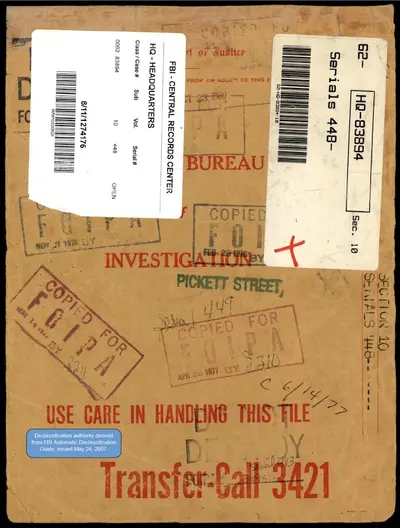
The documentation for this specific event was maintained by the Federal Bureau of Investigation. Under the Bureau’s standing protocols for the protection of vital installations, various field offices—including those in Knoxville, Albuquerque, and Los Angeles—were tasked with routing UFO reports to headquarters. This administrative process ensured that any aerial anomaly that could potentially threaten or involve sensitive government assets was cataloged within the federal intelligence framework. The release of this specific file on May 8, 2026, was made possible through the Presidential Unsealing and Reporting System for UAP Encounters (PURSUE), a program designed to provide public access to previously classified or restricted documentation regarding unidentified phenomena.
The Incident
On February 6, 1966, an encounter took place near Pretoria, South Africa, involving a large, unidentified object. The primary witnesses to the event were two South African police officers who observed the object as it descended toward Earth. According to the official records, the object appeared as a flaming, saucer-shaped entity that landed on a highway in the vicinity of the city. The physical characteristics of the craft were noted for their distinct appearance, described as being approximately 30 feet in diameter with a shiny, copper-colored surface. One specific notation within the file describes the object as a shiny copper-colored object that resembled a giant wae top.
The behavior of the object following its landing was equally notable to the observing officers. After making contact with the ground, the object took off silently at great speed. This departure was accompanied by visible physical effects, specifically flames shooting out of its underside. The kinetic energy or thermal output of the craft’s ascent resulted in tangible damage to the environment, leaving behind a burned section of the highway and scorched grass in the immediate area of the landing site. While the document contains descriptions of figures or beings associated with the object, the specific number of witnesses to the entire event is not specified in the released text.
Analytical Classification
The Pretoria incident is classified as an unidentified-object case involving potential biological or humanoid components, as the reports include mentions of figures associated with the craft. In the broader study of mid-century aerial phenomena, such cases are often analyzed alongside other documented sightings of landed craft that left physical impressions on the landscape, such as scorched earth or depressions.
As of the current assessment, the status of the case remains unresolved. Under the mandates of the All-domain Anomaly Resolution Office (AARO), all records released through the PURSUE program are designated as unresolved by default. The federal government has not reached a conclusion regarding whether the event was the result of anomalous technology or conventional means. Within the scientific and intelligence communities, conventional explanations for sightings of this era typically include the observation of experimental aircraft, the movement of weather balloons—such as those utilized in the Project Mogul series—or atmospheric optical phenomena like lenticular clouds and sundogs. Additionally, astronomical events involving the Moon, Venus, or meteors near the horizon are frequently considered as possible contributors to reports of bright, moving objects. The Pretoria case remains part of the unverified archive of such phenomena.