Betty Hill Star Map
During hypnosis, Betty Hill drew a star map she claimed to have been shown during her abduction. In 1969, amateur astronomer Marjorie Fish matched it to the Zeta Reticuli system.
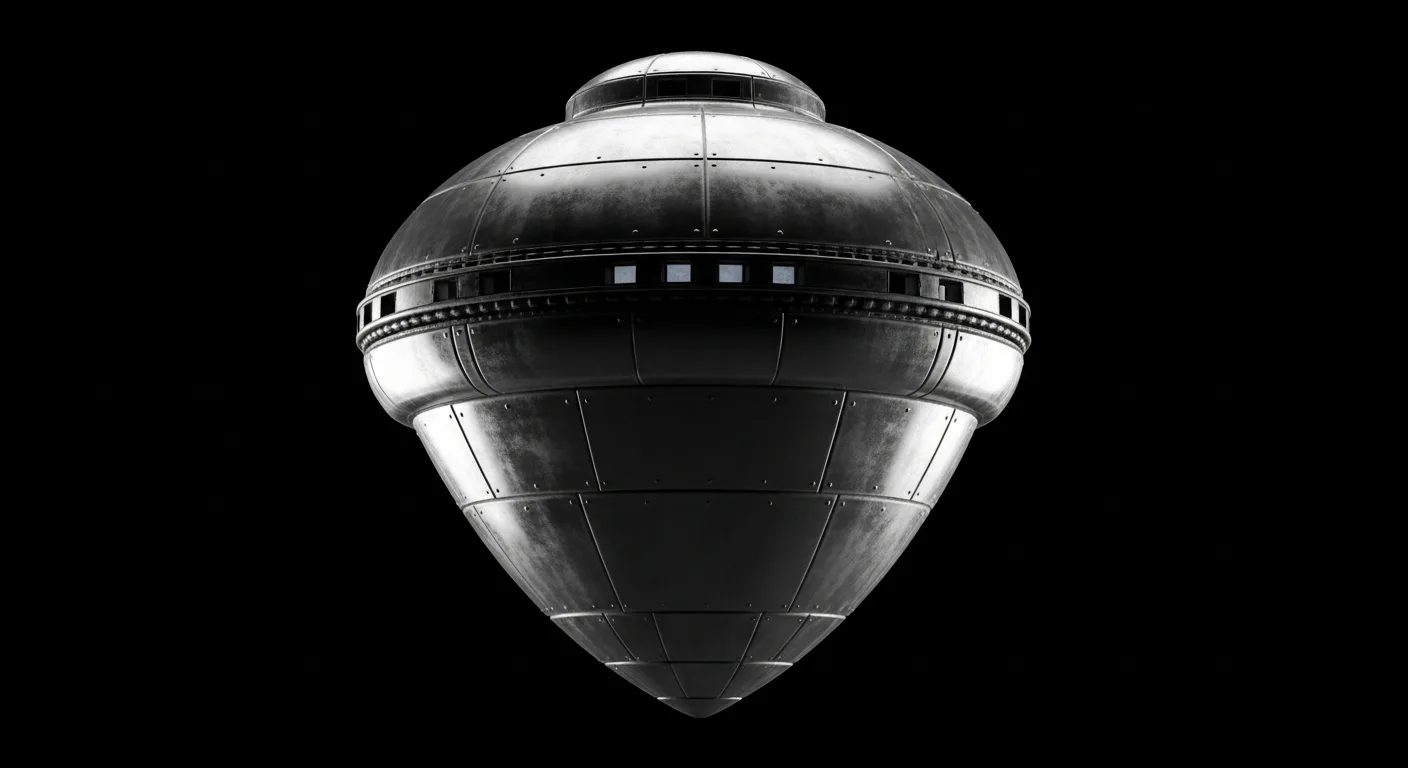
During hypnotic regression sessions following their alleged 1961 abduction, Betty Hill recalled being shown a star map aboard the craft. She drew the map from memory, showing trade routes between stars. In 1969, amateur astronomer Marjorie Fish claimed to have identified the pattern as matching the Zeta Reticuli system.
The Original Experience
On September 19-20, 1961, Betty and her husband, Kenneth, were abducted, according to their accounts. During these sessions, Betty was shown the star map, and she recalled the experience further during examination. She communicated with what she perceived to be a leader of the beings and ultimately remembered the details under hypnosis.
The Map Session
Under the guidance of Dr. Benjamin Simon during hypnotic regression, Betty recalled the star map. She drew the map from her memory, meticulously detailing the star patterns she had observed. These patterns indicated specific trade routes between the stars, as she remembered them.
What Betty Was Shown
According to Betty Hill, the star map she drew presented a three-dimensional representation of the celestial scene. Stars were shown connected by lines, with some of these lines being solid and others being broken. She described the map as indicating both trade routes and expedition routes across the star system.
The Drawing
Betty’s subsequent drawing of the star map displayed a distinct cluster of stars. Connecting lines were drawn to establish the relationships between these stars, forming a specific pattern that she recalled from her experience. The drawing was created post-hypnosis, representing her best attempt to accurately record the information she had received.
Marjorie Fish
In 1969, Marjorie Fish, an Ohio schoolteacher and amateur astronomer, began to study Betty Hill’s map. She sought to match the pattern she observed to a known celestial configuration, and eventually, she identified a potential candidate.
Her Method
Marjorie Fish constructed 3D models of nearby stars, allowing her to examine the patterns from different perspectives. She carefully considered the various angles and looked for a configuration that matched the original star map, with a particular focus on identifying sun-like stars.
The Match
Fish ultimately identified the Zeta Reticuli system as the likely match. This system consists of two sun-like stars, located approximately 39 light-years away. She determined that the pattern of the stars in the system matched the pattern on Betty’s map, particularly when viewed from a specific angle.
The Zeta Reticuli System
The Zeta Reticuli system is composed of two stars: Zeta 1 and Zeta 2. These stars form a binary system, meaning they orbit around each other, and they are remarkably similar to our own Sun. They are found in the southern constellation Reticulum and are believed to potentially harbor planets.
Analysis Support
Initially, Carl Sagan expressed interest in the star map, finding the prospect intriguing. However, he later became more skeptical, raising statistical questions and contributing to an ongoing debate.
Supporting Arguments
Fish’s supporters point to the fact that the pattern matches well with the observed characteristics of the stars in the Zeta Reticuli system. They argue that the stars are of an appropriate type, that the distance between them is reasonable, and that the lines on the map make sense within the context of a potential star system. They also cite a specific prediction related to the map as evidence.
Skeptical Analysis
Critics of the star map analysis argue that there are many possible matches for the pattern, suggesting that the selection of the Zeta Reticuli system may have been influenced by a bias. They contend that the pattern is not unique and that the statistical likelihood of finding such a match by chance is high. They accuse proponents of “cherry picking” evidence to support their claims.
Astronomical Updates
Later research has led to updated star data, with some of the previously identified matches becoming less precise. Conversely, other matches have improved in accuracy, further fueling the ongoing debate. As of now, there is no consensus on the validity of the star map.
Carl Sagan
The astronomer Carl Sagan initially expressed intrigue about the star map, appearing in a documentary related to the Hill abduction case. However, he later became skeptical, arguing that there were too many possible patterns and that he was not convinced of its authenticity.
The Implications
If the Betty Hill star map is considered valid, it would suggest the existence of a genuine extraterrestrial encounter. It would also provide a specific origin point for the experience and offer predictive information, potentially leading to a testable hypothesis. The claim, of course, remains extraordinary.
Significance
The Betty Hill star map is significant for several reasons. It represents a testable prediction, providing valuable data for astronomical analysis. Its continued research and association with the Zeta Reticuli system contribute to ongoing scientific engagement.
Legacy
The Betty Hill star map remains one of the most intriguing aspects of the Hill abduction case. Whether the map represents a genuine coincidence or evidence of extraterrestrial contact, it stands as a rare instance of an abduction claim producing potentially testable astronomical data, fostering ongoing discussion and speculation.
Sources
- Project Blue Book — National Archives — USAF UFO investigation files, 1947–1969
- CIA UFO/UAP Reading Room — Declassified CIA documents on UAP
- UK National Archives — UFO Files — MoD UFO investigation records
- Chronicling America — Historic US newspapers (1690–1963)