Watertown, Massachusetts UFO Sighting (May 9, 1953) — FBI Files
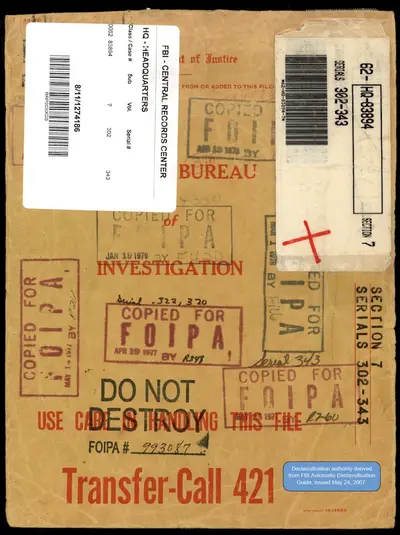
An FBI file documents a 1953 report from a Watertown, Massachusetts, resident regarding the sighting of flying saucers.
Historical Context
The early 1950s represented a period of heightened atmospheric and geopolitical tension in the United States. Following the end of World War II, the onset of the Cold War introduced a pervasive fear of aerial incursions by adversary nations. This era was characterized by the rapid advancement of aerospace technology and the emergence of sophisticated surveillance capabilities. During this decade, the phenomenon of unidentified flying objects, or UFOs, became a significant subject of public concern and government scrutiny. The United States Air Force maintained various investigative programs, most notably Project Blue Book, to categorize and analyze reports of anomalous aerial phenomena. These investigations were often integrated into broader national security frameworks, as the presence of unidentified objects near sensitive military installations or populated urban centers was viewed through the lens of potential espionage or technological breakthroughs.
The geographic region of Watertown, Massachusetts, situated within the Greater Boston area, was part of a highly industrialized and strategically significant corridor. During the mid-twentieth century, the New England area hosted numerous technological hubs and defense-related infrastructures. Such proximity to potential high-value targets meant that any reported aerial anomaly was subject to standardized reporting protocols. At the time, the Federal Bureau of Investigation (FBI) maintained a structured system for handling such reports. Field offices in cities such as Knoxville, Albuquerque, and Los Angeles were tasked with collecting intelligence and routing UFO-related communications to headquarters. This process ensured that any sighting that could potentially impact the protection of vital installations or national security was documented and shared with the appropriate military and intelligence agencies.
The Watertown Incident
On May 9, 1953, an incident involving an unidentified object was recorded in Watertown, Massachusetts. The primary source of this documentation is a letter written by Mrs. Robert H. Davisson, a resident of the area, addressed to the FBI. In her correspondence, Mrs. Davisson reported observations concerning flying saucers. While the specific details of the sighting, such as the trajectory, duration, or physical characteristics of the objects, are not detailed within the specific FBI document, the existence of the report is officially documented. The content of the letter was described by investigators as self-explanatory, though the lack of descriptive depth in the summary prevents a granular reconstruction of the visual event.
The FBI officially acknowledged receipt of the correspondence from Mrs. Davisson. Following established Bureau protocols for the handling of unidentified aerial phenomena, the agency forwarded the report to the United States Air Force for further review and technical analysis. This transfer of information was a standard procedure during the Cold War, ensuring that civilian reports were integrated into the military’s broader investigative efforts. The released documentation does not specify the total number of witnesses involved in the sighting, leaving the scale of the observation unquantified. This specific case file remained part of the federal archives until its release to the public on May 8, 2026, as part of the Presidential Unsealing and Reporting System for UAP Encounters (PURSUE).
Analytical Framework and Classification
The Watertown case is classified as a visual sighting reported by ground or air observers. In the broader context of mid-century aerial phenomena, such sightings are frequently compared to other documented cases of the era, which often involved similar patterns of civilian reporting to federal authorities. The investigation of such sightings typically weighed the possibility of anomalous technology against known conventional phenomena. During this period, many reports were attributed to the Project Mogul series of high-altitude balloons, which were designed to detect Soviet nuclear tests, or to the presence of experimental aircraft testing.
As of the current release of these records, the All-domain Anomaly Resolution Office (AARO) designates all records released under the PURSUE program as unresolved by default. The federal government has maintained a neutral stance regarding the Watertown sighting, neither concluding that the event was caused by anomalous entities nor confirming a conventional origin. Potential conventional explanations for sightings during this period include atmospheric optical phenomena, such as sundogs or lenticular clouds, as well as astronomical objects like Venus, the Moon, or meteors appearing near the horizon. The ambiguity of the Watertown document reflects the broader challenges faced by investigators in reconciling civilian observations with the technological and atmospheric realities of the 1950s.