Trindade Island UFO Photos
A photographer aboard a Brazilian Navy ship captured four photos of a Saturn-shaped UFO. The Brazilian President authorized their release. Multiple crew members witnessed the object.
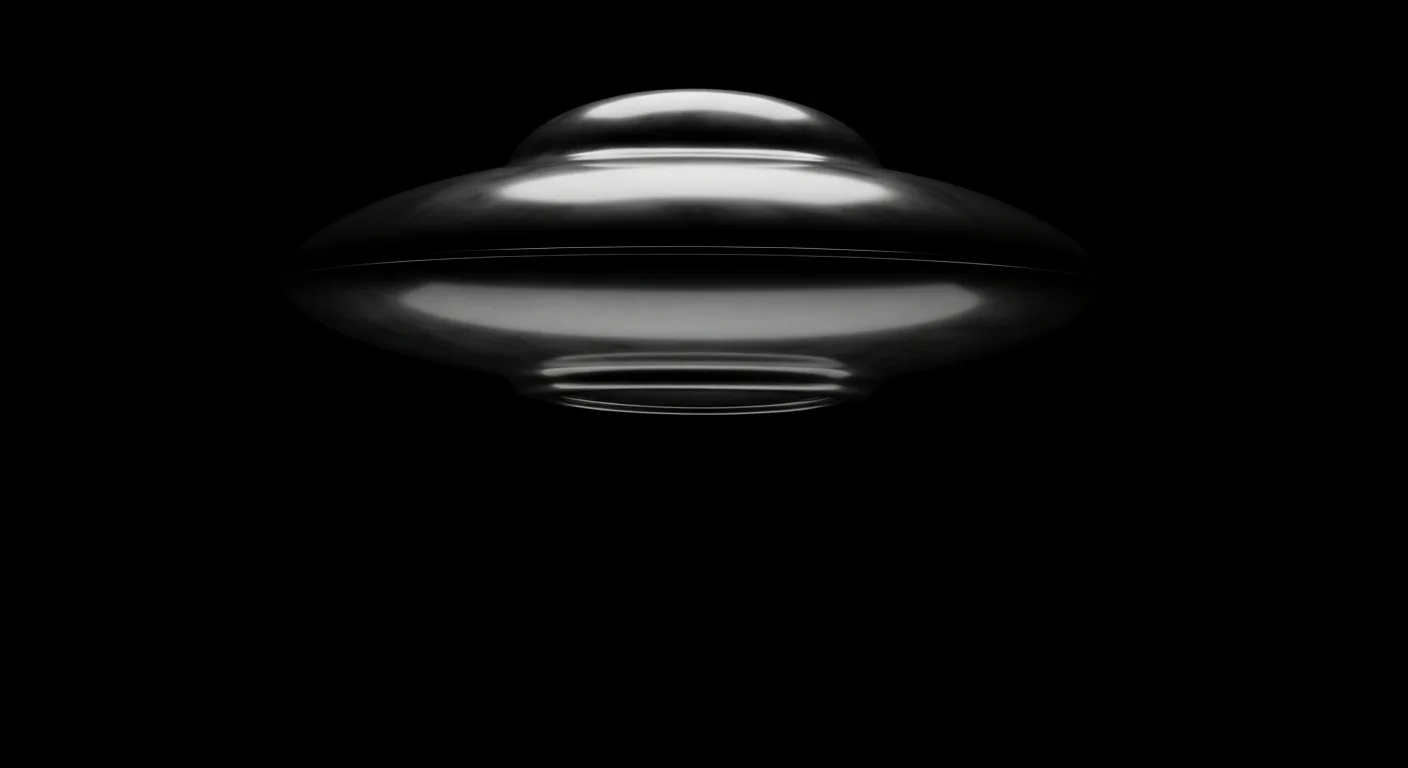
The Brazilian Navy vessel Almirante Saldanha lay anchored off Trindade Island in the South Atlantic, her crew engaged in scientific work for the International Geophysical Year. It was a routine January day in 1958, the tropical sun beating down on the deck and the volcanic peak of the island rising in the middle distance. Then someone shouted and pointed at the sky, and the routine ended. What happened in the next twenty seconds would produce four photographs that remain among the most famous and controversial UFO images ever captured.
The Setting
Trindade Island lies roughly 680 miles off the coast of Brazil, a remote volcanic outcrop in the South Atlantic that serves as a Brazilian naval station. In January 1958, the research vessel Almirante Saldanha was anchored near the island as part of Brazil’s contribution to the International Geophysical Year, a coordinated worldwide scientific effort to study the Earth. The ship carried Navy personnel and civilian scientists conducting oceanographic and meteorological research.
Among those aboard was Almiro Baraúna, a professional photographer who had been brought along to document the underwater research being conducted around the island. Baraúna was an experienced photographer, familiar with his equipment and with the demanding conditions of maritime photography. He had his Rolleiflex camera ready for use throughout the expedition.
The Sighting
According to documented accounts, the encounter occurred at approximately noon on January 16, 1958. The ship was preparing to depart when crew members on deck noticed something unusual in the sky approaching the island. Word spread quickly, and men rushed to the rail to see what others were pointing at.
The object appeared grayish in color, with a distinctive shape unlike any aircraft the witnesses had seen. It had a central body with a ring or flange surrounding its midsection, giving it a Saturn-like appearance. The object moved through the air toward Trindade’s volcanic peak, flew behind the mountain briefly, reappeared on the other side, and then departed at high speed. The entire sighting lasted approximately twenty seconds.
Baraúna heard the commotion and grabbed his camera. Working quickly in the excitement, he managed to capture four photographs of the object as it passed across the sky and around the island. The pressure of the moment was intense, with crew members shouting and the object moving quickly, but Baraúna succeeded in recording sequential images of the encounter.
The Photographs
The four photographs that Baraúna captured show a distinct Saturn-shaped object at different points in its passage past the island. The first image shows the object approaching, still some distance from the mountain peak. The second captures it flying behind the peak, partially obscured by the terrain. The third shows it reappearing from behind the mountain. The fourth documents its departure, the object now moving away from the island.
The object in the photographs displays the same characteristics that witnesses described: a central dome or body surrounded by a ring or flange, grayish in color against the sky. The images show the object from slightly different angles as it moved, consistent with a three-dimensional object rather than a flat projection or optical illusion.
The photographs immediately became the subject of intense scrutiny. They represented some of the clearest UFO images ever captured, taken by a professional photographer in front of numerous witnesses, and they demanded investigation.
Investigation and Authentication
The Brazilian Navy took the photographs with the utmost seriousness. Captain José Teobaldo Viegas, commanding officer of the Almirante Saldanha, ordered the film developed immediately while the ship was still at sea. Baraúna processed the film in the ship’s darkroom while naval officers watched the entire procedure, ensuring that no manipulation or double exposure could occur without their knowledge.
The negatives were confiscated for analysis by Navy technicians once the ship returned to port. Experts examined the images for any sign of tampering, double exposure, or other photographic trickery. Their conclusion was that the photographs appeared genuine, with no evidence of manipulation. The lighting on the object was consistent with the environmental lighting in the scene. The object’s apparent size and position changed appropriately across the four images.
The case attracted the attention of the highest levels of the Brazilian government. President Juscelino Kubitschek personally reviewed the photographs and the investigation findings. In an extraordinary decision, the President authorized the release of the photographs to the press, reportedly stating that the Brazilian Navy possessed a large number of UFO photographs and that this case could be considered authentic. This presidential endorsement gave the Trindade photographs an official imprimatur that few UFO images have ever received.
Witness Testimony
Approximately forty-eight people aboard the Almirante Saldanha reportedly witnessed the object during its brief appearance. These witnesses included Captain Viegas and other naval officers, enlisted personnel, and civilian scientists participating in the research mission. The diversity of witnesses, including trained military observers and scientists, lent credibility to the accounts.
The witnesses’ descriptions aligned with what the photographs showed. They described a grayish, Saturn-shaped object that approached the island, passed behind the peak, reappeared, and departed. The consistency between independent witness accounts and the photographic evidence created a strong documentation of the event.
Debate and Analysis
The Trindade photographs have been analyzed repeatedly over the decades since they were taken. Supporters of their authenticity point to the multiple witnesses, the controlled development process observed by naval officers, the technical analysis finding no evidence of manipulation, and the government’s willingness to authenticate and release the images.
Skeptics have raised various objections over the years. Some have questioned whether all forty-eight claimed witnesses actually saw the object, suggesting that the excitement on deck might have led some to claim they saw something they did not. Others have proposed that the photographs might have been created through double exposure or other photographic techniques, though Navy analysts found no evidence of this. Later researchers have re-examined the images with modern tools, with varying conclusions.
What is certain is that the Brazilian Navy never retracted its authentication of the photographs. The official position of the Brazilian government remained that the photographs were genuine and the encounter unexplained.
Legacy
The Trindade Island photographs occupy a special place in UFO history. The combination of multiple sequential photographs, numerous military and civilian witnesses, immediate official investigation, controlled film development, and presidential authorization for release created a case with more official validation than almost any other UFO incident on record.
The Saturn-shaped object in Baraúna’s photographs has become an iconic image, reproduced in countless books, documentaries, and articles about unexplained aerial phenomena. Whether genuine evidence of something unknown or an elaborate deception that fooled the Brazilian Navy, the photographs remain compelling and unresolved.
Over the volcanic peak of Trindade Island, something passed through the sky on a January afternoon, and a photographer with quick reflexes captured it four times. The Brazilian Navy investigated, the Brazilian President authenticated, and the world saw images of something it could not explain. The object remains unidentified, the photographs remain controversial, and the twenty seconds of that sighting continue to be debated more than half a century later. Whatever flew past that remote South Atlantic island, it left behind a permanent record of its passing.
Sources
- Project Blue Book — National Archives — USAF UFO investigation files, 1947–1969
- CIA UFO/UAP Reading Room — Declassified CIA documents on UAP