Little Hollywood, California UFO Sighting (August 27, 1954) — FBI Files
An investigation into an unidentified object incident in Little Hollywood, California, documented an event involving inexplicable alterations to residential…
Background
On August 27, 1954, in the Little Hollywood neighborhood of California, U.S. government investigators recorded an unidentified-object incident that remained classified for decades. The documentation of this event was later released to the public on May 8, 2026, as part of the Presidential Unsealing and Reporting System for UAP Encounters (PURSUE). This case emerged during the height of the Cold War, a period characterized by intense national security concerns regarding aerial surveillance and unidentified aerial phenomena. During this era, such incidents were frequently investigated under the auspices of the United States Air Force’s Project Blue Book or its predecessor programs.
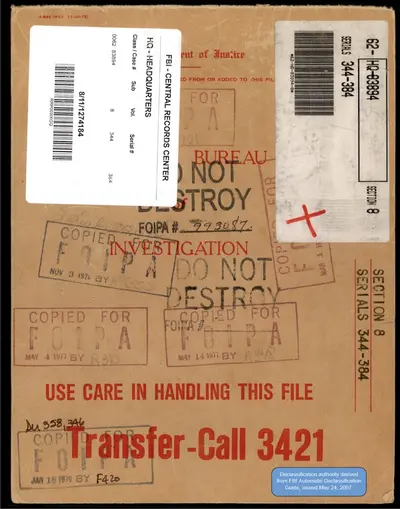
The administrative handling of the report followed established federal procedures for the era. The case was filed with the Federal Bureau of Investigation, which utilized a standardized reporting structure. Field offices in Knoxville, Albuquerque, and Los Angeles, among others, were tasked with routing UFO reports to headquarters. This protocol was maintained to ensure the protection of vital installations and to monitor potential threats to national airspace. The bureaucratic nature of these reports reflects the period’s preoccupation with identifying whether unidentified objects represented technological advancements by foreign adversaries or atmospheric anomalies.
The Incident
The primary details of the event involve a phenomenon that affected the physical properties of residential structures within the Little Hollywood community. Residents experienced a bizarre occurrence in which approximately half of the homes in the area had their exterior paint inexplicably altered. The document records that houses changed colors in unusual ways, with one specific residence turning pink and another taking on an appearance resembling a marble cake.
While the physical changes to the architecture were documented, the released files do not specify the exact number of witnesses who observed the phenomenon or the changes to their properties. The nature of the report suggests a visual sighting reported by ground or air observers, focusing on the tangible, albeit inexplicable, alterations to the neighborhood’s aesthetic.
Analytical Context
The classification of this event remains subject to ongoing federal review. All records released under the PURSUE program are designated as unresolved by the All-domain Anomaly Resolution Office (AARO) by default. To date, the federal government has not concluded that the events in Little Hollywood were anomalous, nor has it concluded that they were conventional, leaving both possibilities open for investigation.
In the broader context of mid-century aerial phenomena, investigators often considered several conventional candidates for such sightings. During the late 1940s and 1950s, the deployment of the Project Mogul series of high-altitude balloons created significant confusion regarding unidentified objects in the upper atmosphere. Other frequent explanations included experimental aircraft, atmospheric optical phenomena such as sundogs and lenticular clouds, or the presence of bright astronomical objects like Venus, the Moon, or meteors appearing near the horizon. However, the specific physical effects recorded in the Little Hollywood case, involving the alteration of exterior paint, present a distinct set of characteristics that differentiate it from standard visual sightings of lights or objects in the sky.